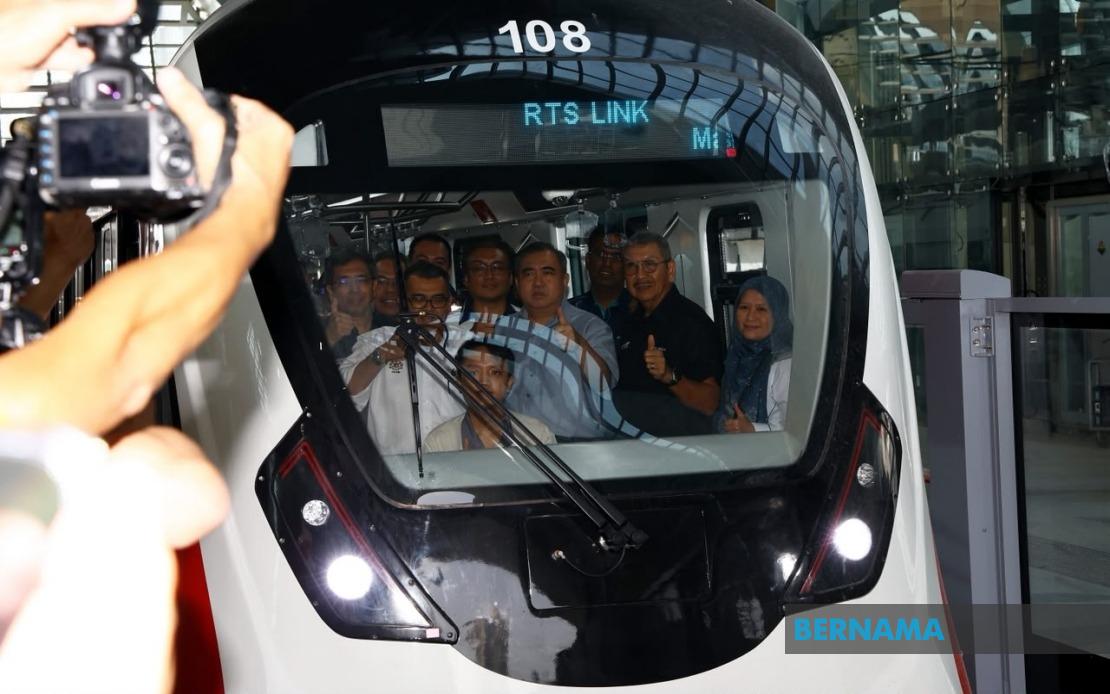
The Malaysian government will invest RM60 million to construct a dedicated bridge linking the upcoming Bukit Chagar RTS Link Station directly to the KTMB Komuter network in Johor Bahru. Transport Minister Anthony Loke announced the initiative following a site inspection, confirming that the Ministry of Economy has approved the project, which will be executed under the Transport Ministry's oversight. This infrastructure investment represents a strategic effort to eliminate friction points in the region's public transport ecosystem and encourage seamless transfers between rail services.
The bridge represents more than just a physical connection between two transport terminals. Currently, passengers alighting from KTMB Komuter trains must navigate through JB Sentral station to access the Bukit Chagar RTS Link station—a circuitous route that discourages multi-modal journeys and wastes passenger time. By enabling direct pedestrian access, the government aims to catalyse a shift in commuter behaviour, making the combined Komuter-RTS journey an attractive alternative to private vehicle use. For residents across Johor Bahru's sprawling metropolitan area, this represents a meaningful improvement in transport accessibility and journey efficiency.
According to Loke, the infrastructure project is scheduled for completion within approximately 12 months, positioning the bridge for opening well before the RTS Link commences scheduled operations on January 1 next year. The compressed timeline reflects the government's commitment to ensuring that transport connectivity improvements are ready in tandem with the flagship cross-border rail project. This coordinated approach demonstrates a maturation in Malaysia's long-term transport planning, where ancillary projects are sequenced to maximise the utility of major infrastructure investments at launch.
The Bukit Chagar RTS Link Station itself represents a major regional transport milestone. The 4.2-kilometre rapid transit system will connect the station directly with Woodlands North in Singapore, with capacity to serve up to 10,000 passengers per hour in each direction. For Malaysian commuters and cross-border workers, this seamless connection promises to significantly reduce travel time to Singapore while providing a more convenient and potentially cost-effective alternative to road-based border crossing methods. The station's completion of physical construction and entry into the critical testing and commissioning phase indicates that the project remains on schedule.
Beyond the bridge itself, the government is pursuing a comprehensive transport ecosystem upgrade centred on Bukit Chagar. The Stage Bus Service Transformation (SBST) 2.0 initiative will inject at least 200 new buses into service, creating dedicated routes from residential neighbourhoods across Johor Bahru toward the Bukit Chagar station. This feeder bus network addresses a critical gap in the current transport system, where the absence of reliable first-and-last-mile connections has historically limited the appeal of rail-based travel. By providing convenient bus connections from residential areas directly to the RTS Link, the government targets a substantial increase in ridership while reducing traffic congestion.
The SBST 2.0 expansion reflects broader Southeast Asian trends toward integrated public transport networks that prioritise passenger convenience over modal silos. Transport authorities across the region have increasingly recognised that individual transport modes achieve maximum effectiveness only when connected within coherent, user-friendly networks. The bus service expansion is expected to commence operations coinciding with the RTS Link opening, enabling effective passenger distribution and preventing bottlenecks at the new station. However, the agreement with the bus operator remains under finalisation, with final approval pending from the Ministry of Finance—a procedural step that underscores the complexity of coordinating multiple stakeholders in major infrastructure projects.
The vision for Bukit Chagar extends beyond the bridge and bus integration to establish a comprehensive multi-modal transport interchange. The station will function as an integrated hub connecting the RTS Link, KTMB Komuter, bus services, e-hailing platforms, and JB Sentral station itself. This multi-modal approach recognises modern passenger preferences for flexibility and choice in transport options. For business and leisure travellers crossing into Singapore, the availability of multiple transport choices at a single location enhances the experience and strengthens Johor Bahru's position as a regional economic hub. The interconnected hub concept also facilitates better pedestrian flow and reduces the friction that passengers might otherwise encounter navigating between disconnected transport terminals.
The construction phase achievements reported by Loke underscore the project's advancement. The RTS Link building, the Customs, Immigration and Quarantine (CIQ) complex, and the station structure itself have all reached substantial completion. The project's current phase focuses on system integration testing and trial operations to validate that all technological and operational systems function correctly before public opening. This methodical approach to commissioning, while potentially extending timelines, reflects international best practice in ensuring safety and reliability for high-capacity transit infrastructure. The systems integration testing phase will be particularly critical given the cross-border nature of the service and the regulatory complexity inherent in coordinating Malaysian and Singaporean customs and immigration procedures.
For Malaysian travellers and cross-border commuters, the Bukit Chagar RTS Link represents a transformational shift in regional mobility. The January 1 opening marks a watershed moment in Malaysia-Singapore transport integration, offering unprecedented convenience for those regularly traversing the border. The RM60 million bridge investment, whilst significant, represents a small fraction of the overall RTS Link project cost yet carries outsized importance for user experience and overall project success. Without this connector bridge, the RTS Link would function in isolation, its benefits constrained by poor integration with existing transport networks.
The project also carries implications for property development and urban planning across Johor Bahru. Areas with convenient access to the integrated Bukit Chagar transport hub will likely attract substantial residential and commercial investment, as developers recognise the value proposition of locations offering efficient access to both Malaysian and Singaporean employment and commercial centres. The government's coordinated investment across transport infrastructure, bus networks, and station design suggests a deliberate strategy to position Johor Bahru as a competitive regional economic centre capable of attracting talent and investment based on superior transport connectivity.
From a broader policy perspective, the Bukit Chagar project exemplifies how Southeast Asian nations are responding to urbanisation pressures and cross-border economic integration through integrated transport investments. Malaysia's willingness to commit RM60 million specifically to improve connectivity between the RTS Link and existing Komuter services demonstrates a philosophical shift toward viewing transport systems as networks rather than isolated projects. This systems thinking approach, if extended across Malaysia's transport sector, could yield substantial long-term benefits in urban mobility, emissions reduction, and economic productivity.

