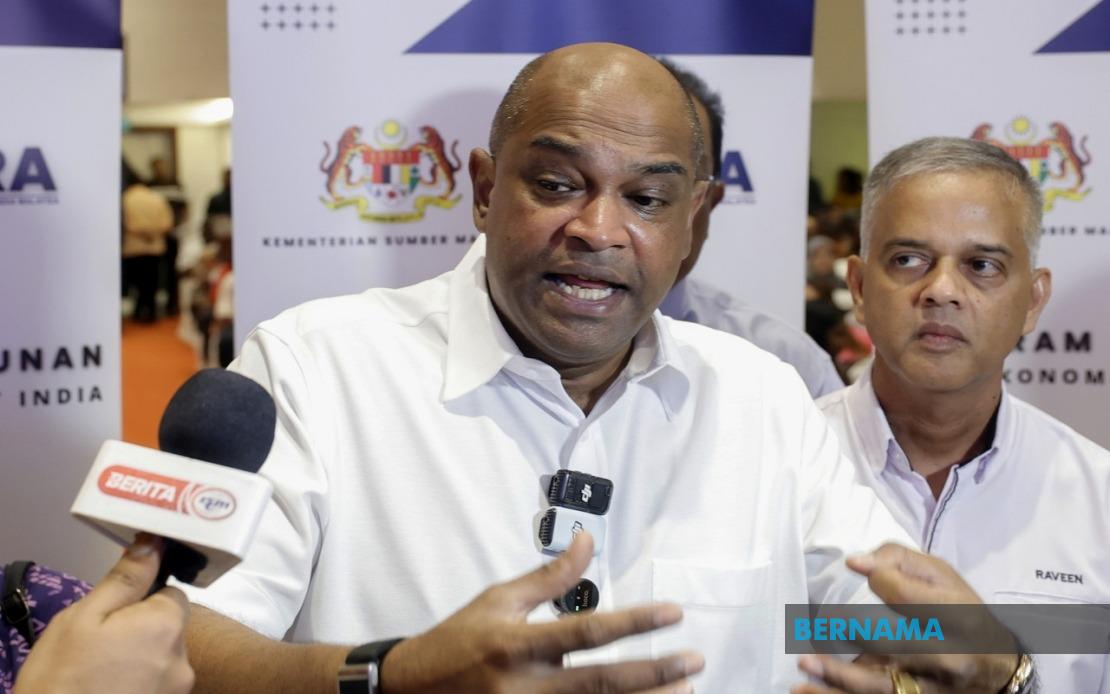
The Malaysian government is channelling RM6.7 million into three distinct programmes designed to accelerate the socio-economic development of the Indian community, Human Resources Minister Datuk Seri R. Ramanan announced at a handover ceremony in Kuala Lumpur. The investment reflects the authorities' commitment to inclusive development and targeted assistance for minority communities facing persistent educational and economic challenges.
The Tuisyen MADANI 2026 Programme represents the educational component of this initiative, establishing 28 tuition centres across seven states to provide intensive academic support to secondary school students preparing for their crucial examinations. The scheme will benefit 2,343 students enrolled in Sijil Pelajaran Malaysia (SPM) and Sijil Tinggi Persekolahan Malaysia (STPM) programmes, offering free tuition spanning five months from August through December. This intervention specifically targets a critical juncture in students' academic trajectories, where examination performance determines access to tertiary education and professional pathways.
Receiving an allocation of RM2.63 million, the tuition programme operates on the principle that financial constraints should not impede academic achievement. By removing cost barriers to supplementary education, the initiative seeks to narrow the educational attainment gap observed within the Indian community compared to national averages. Beyond immediate test preparation, the scheme acknowledges that families struggling with tuition fees face compounded financial pressure during the examination season, making such subsidised support a meaningful intervention in household budgeting.
Parallel to education, the government is addressing entrepreneurial development through the Uyarvu MADANI initiative. Under Series I of the 2026 B40/M40 Indian Entrepreneurs Grant Programme, 128 business proprietors have been selected to receive grants totalling more than RM3.05 million. These awards span three categories—micro-level operations, growth-stage enterprises, and high-impact ventures—recognising the diverse scale and maturity of Indian-community businesses. The differentiated approach acknowledges that a street food vendor requires different support mechanisms than an established manufacturing concern.
According to Ramanan, these grants directly strengthen operational capabilities and enhance competitive positioning in crowded market segments. For micro and small enterprises, capital injections often translate to equipment upgrades, inventory expansion, or technology adoption that would otherwise remain financially inaccessible. The grants thus function as market participation enablers, particularly for entrepreneurs from lower-income backgrounds who encounter credit constraints even when operating viable businesses. The initiative also implicitly recognises that Indian-community MSMEs generate employment and economic activity within their communities, creating multiplier effects beyond individual recipients.
The minister emphasised that MITRA-sponsored grants represent merely one avenue of support available to Indian entrepreneurs. Complementary funding mechanisms exist through SME Bank, Bank Rakyat, and Amanah Ikhtiar Malaysia, creating a broader ecosystem of financial access. This multi-channel approach reflects understanding that entrepreneurial success rarely depends on a single funding source; rather, serial applications across programmes and institutions often determine ultimate capitalisation levels. The ecosystem framing also encourages entrepreneurs to pursue cumulative support rather than viewing MITRA grants as terminal interventions.
The third pillar comprises the Dharma MADANI Programme, allocating RM1.04 million across 52 Hindu places of worship in Series 4. An additional 324 temples are scheduled to receive funding shortly, eventually bringing the total beneficiary count to 676 across the series. This religious infrastructure support acknowledges that temple management bodies, despite performing essential cultural and social functions, frequently operate with constrained budgets. Improved facilities enhance community gathering spaces and support ceremonies integral to cultural identity and cohesion.
The religious infrastructure investment carries implications extending beyond physical maintenance. Temples in many Malaysian communities serve functions beyond worship, providing counselling services, educational programmes, and social support networks. Better-maintained facilities strengthen these broader community functions. The funding also signals government recognition of religious sites as legitimate beneficiaries of development expenditure, affirming pluralistic allocation principles.
The three-programme bundle demonstrates a comprehensive approach acknowledging that community development operates across multiple dimensions simultaneously. Educational intervention addresses human capital formation; entrepreneurship grants target wealth creation and economic participation; religious facility support sustains cultural institutions. Taken together, the portfolio signals systematic rather than ad-hoc engagement with community development priorities, though questions persist regarding programme scalability and whether current allocations meet underlying demand.
During the same announcement, Ramanan commented on Subang Member of Parliament Wong Chen's resignation from the PKR, characterising the decision as disappointing to the party and constituency voters. Noting that PKR had supported Wong's three electoral attempts before his 100,000-vote-majority victory on the party ticket, Ramanan expressed frustration at what he termed unwarranted abandonment despite considerable party backing. Yet he affirmed respect for Wong's autonomy, acknowledging the MP's freedom to pursue alternative political affiliations, reflecting broader Malaysian political norms permitting relatively fluid party movements among elected representatives.
The MITRA allocations, while representing meaningful investment in targeted community development, require contextualisation within broader resource distribution patterns. Whether similar comprehensive multi-programme support reaches other minority communities and whether allocation levels adequately address underlying development gaps remain important questions for policy analysts and community advocates monitoring inclusive development outcomes across Malaysia's diverse population.

