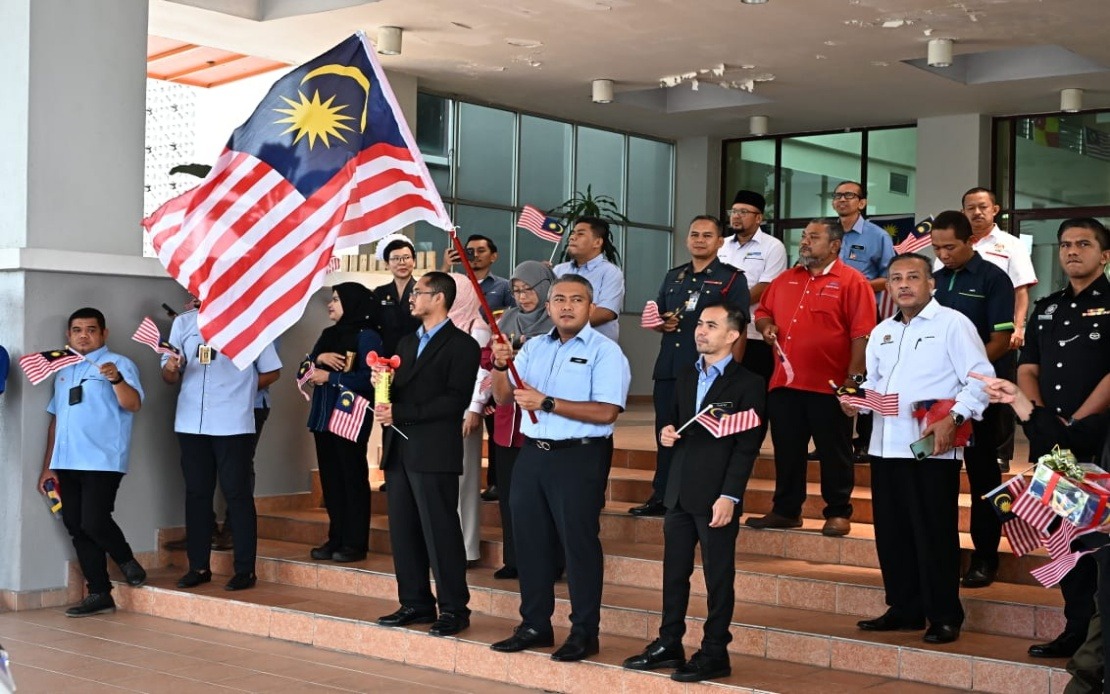
Preparations for Malaysia's 2026 National Day and Malaysia Day celebrations have moved into high gear with a coordinated patriotism campaign that underscores how fostering national pride requires sustained effort across all sectors of society. The Kembara Merdeka Jalur Gemilang (KMJG) X Arena Penggerak Komuniti (JAGO) 2026 initiative, launched in Selangor this month, exemplifies a growing recognition among government bodies and private enterprises that building unity and strengthening the Malaysian identity demands collaborative action rather than isolated institutional efforts.
The campaign represents the latest iteration of an annual tradition that has become synonymous with Selangor's approach to National Month observance. According to Herlina Ainizawati Zakaria, Assistant Director of the Selangor Information Department's Cyber Media Branch, the partnership deliberately spans multiple agencies and sectors to demonstrate that patriotism transcends departmental boundaries and professional backgrounds. This inclusive messaging strategy reflects a deliberate shift towards comprehensive communication approaches that position national pride as a collective endeavour rather than a top-down directive.
At its core, the initiative centres on the symbolic journey of the Jalur Gemilang, Malaysia's national flag, which travels between designated locations to catalyse community engagement and heighten awareness about flag protocol and national symbolism. Rather than treating flag distribution as a mere ceremonial exercise, organisers have integrated the flag's journey into a broader framework encompassing patriotic education, community mobilisation, and cultural celebration. This multifaceted approach suggests an understanding that sustained patriotism requires repeated exposure to national symbols, interactive participation, and grassroots ownership of the celebrations.
The Central Zone operations unveiled three strategic pit-stop locations: Wisma Persekutuan Klang, the Klang District and Land Office, and AEON Bukit Tinggi Shopping Centre in Klang. The selection of these venues reflects deliberate spatial planning intended to maximise community accessibility and reach diverse demographic segments. By positioning events at civic administration centres, land offices, and high-traffic commercial spaces, planners sought to embed patriotic messaging into the everyday environments where Malaysians work, shop, and conduct official business.
Approximately 50 participants representing 10 different government agencies and private-sector organisations mobilised for the campaign's launch, including the Klang Selatan and Klang Utara District Police Headquarters, the Klang Royal City Council, and the Klang District Civil Defence Force. This inter-agency composition signals institutional commitment to unified messaging and suggests that police, municipal authorities, and civil defence organisations recognise patriotism initiatives as falling within their organisational remits. The participation of private enterprises alongside government bodies further normalises business-sector engagement with national identity campaigns.
Underlying the entire initiative is the One House One Jalur Gemilang (1R1JG) campaign, which seeks to encourage households throughout Selangor to display the national flag during National Month as a visible expression of civic pride. This domestic-scale patriotism initiative recognises that national identity manifests not only in public gatherings but in private spaces where family units exercise agency regarding symbolic representation. By framing flag display as a personal choice reflecting pride in Malaysian identity rather than an obligation imposed from above, the campaign attempts to cultivate voluntary participation grounded in emotional attachment rather than regulatory compliance.
For Selangor's Information Department, these coordinated efforts form part of a broader communication strategy designed to deliver national messaging through creative, inclusive channels that resonate with diverse audiences. Rather than relying solely on traditional broadcast or print media, the department leverages physical flag-journey ceremonies, community engagement events, and multi-sector partnerships to create immersive experiences that reinforce patriotic themes. This experiential approach reflects contemporary understanding that messaging effectiveness depends not merely on message content but on the contexts and communities through which messages circulate.
The timing of the 2026 campaign launch, occurring well before the actual National Day and Malaysia Day celebrations, suggests deliberate strategic planning intended to build momentum and sustain patriotic engagement over extended periods. By initiating campaigns years in advance, organisers create opportunities for sustained community dialogue, iterative refinement of messaging approaches, and broad institutional preparation. This extended timeline contrasts with more compressed campaign schedules and indicates confidence in the initiative's potential for long-term impact on national consciousness.
For Malaysia's broader context, the Selangor model demonstrates how state-level initiatives can operationalise federal aspirations regarding national unity and patriotic sentiment. As Malaysia continues navigating questions about national identity amid ethnic and religious diversity, multi-sector patriotism campaigns that emphasise shared citizenship rather than partisan concerns acquire particular significance. By positioning the Jalur Gemilang as a symbol transcending factional divisions and capable of uniting disparate communities, the initiative articulates an inclusive vision of national pride.
The emphasis on creative communication and community participation suggests recognition that contemporary patriotism cannot rely on formulaic rhetoric or top-down exhortation. Instead, effective national identity campaigns must provide avenues for genuine community participation, acknowledge diverse perspectives on what patriotism means, and create spaces where citizens actively construct expressions of national pride rather than passively consuming state messaging. The integration of commercial venues, police cooperation, and civil society participation reflects this understanding.
Looking forward, the success of initiatives like KMJG X JAGO 2026 will depend substantially on whether participating institutions sustain engagement beyond inaugural events and whether grassroots communities translate exposure to campaigns into tangible expressions of patriotic sentiment. The challenge lies not in launching well-coordinated campaigns but in translating institutional cooperation and symbolic gestures into deepened public commitment to national cohesion and identity. As Malaysia approaches its crucial 2026 celebrations, such campaigns will test whether coordinated state action can meaningfully strengthen emotional attachments to national symbols and shared citizenship.

