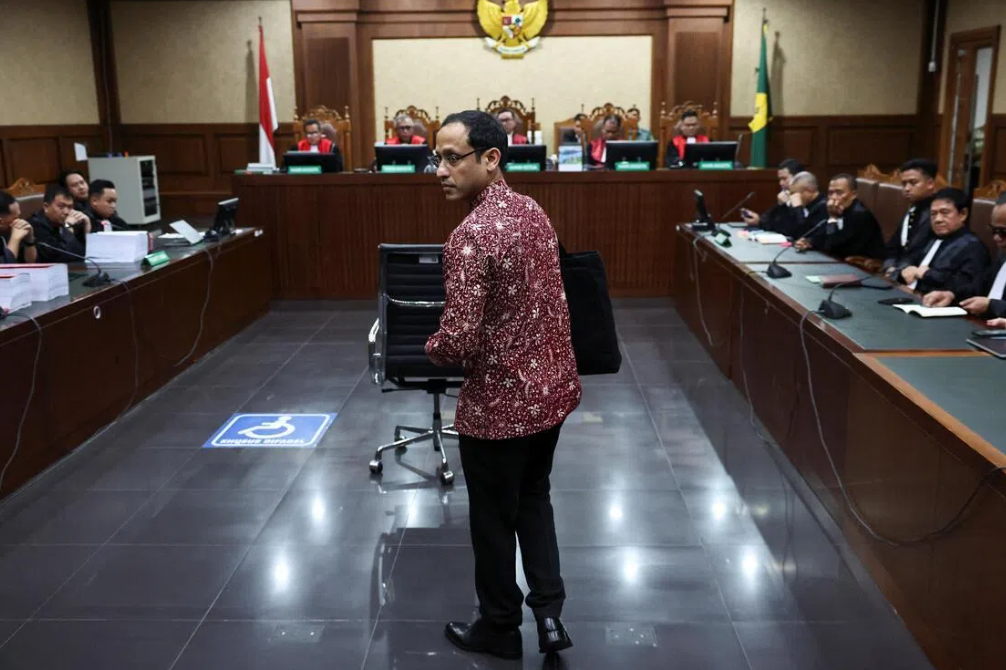
Nadiem Makarim, the Harvard-educated technology entrepreneur who founded Indonesia's first unicorn start-up Gojek and served as education minister under former president Joko Widodo, has been handed a decade-long prison sentence in connection with a school laptop corruption case that has captivated Indonesian public attention for months. The Jakarta Corruption Court delivered its verdict on June 30, concluding one of Indonesia's most closely-watched trials in recent memory and effectively ending the political career of a figure once celebrated as a symbol of a new breed of technocratic leaders willing to serve the state.
In addition to the 10-year jail term, Makarim faces financial penalties totalling more than 810 billion rupiah in restitution, with an 1 billion rupiah fine imposed separately. The court has stipulated that should he fail to pay the restitution amount—roughly US$45 million—he will serve an additional five-year prison sentence. This multi-layered punishment underscores the severity with which the judges viewed his conduct and the extent of alleged financial harm caused to the state.
Chief judge Purwanto delivered the ruling by finding Makarim guilty of abusing his ministerial authority to benefit specific parties, stating that the manner and purpose of the Chromebook procurement policy "were proven to contain an abuse of authority intended to unlawfully benefit certain parties." The five-judge panel determined that Makarim had deliberately steered the laptop purchasing initiative and acted with the intention of strengthening the strategic business relationship between Google and Gojek's parent company, PT Aplikasi Karya Anak Bangsa. Such conduct, the court concluded, violated the fundamental oath of office that ministers must uphold.
The scandal centres on a programme to purchase approximately 1.1 million Chromebook laptops between 2020 and 2022, a period when Indonesian schools abruptly transitioned to remote learning due to the Covid-19 pandemic. Prosecutors argued that the procurement scheme resulted in approximately 2.18 trillion rupiah in losses to the state treasury and that Makarim personally benefited to the tune of around 809 billion rupiah through his involvement with Gojek's corporate structure. They presented evidence suggesting that Google's strategic investments in Gojek may have influenced the decision to prioritise Chromebook devices—a claim that Makarim consistently denied throughout the trial and which Google itself has not responded to with any indictment.
The prosecution had sought considerably harsher penalties, requesting an 18-year prison sentence, the same fine that was ultimately imposed, and 5.6 trillion rupiah in restitution. Prosecutors also referenced internal ministry studies conducted in 2018, before Makarim assumed office, which had concluded that Chromebook laptops would prove ineffective in Indonesia's remote and rural regions where internet connectivity remains unreliable. Furthermore, they cited an August 2019 group chat as evidence of discussions about a Chromebook-centric digitalisation strategy before his formal appointment to the cabinet, suggesting premeditation.
The fall of Makarim represents a remarkable reversal of fortune for a man who had built an empire and earned considerable public esteem. Before entering government in 2019, Makarim had transformed Gojek from a motorcycle-taxi service into a sprawling super app offering courier delivery, food delivery, digital payments through its GoPay platform, and numerous other services. By the time he joined Widodo's administration, Gojek had achieved unicorn status—a valuation exceeding US$10 billion—and became a flagship example of Indonesia's technological and entrepreneurial potential. His recruitment into the cabinet was widely seen as an attempt to inject technology-driven modernisation into Indonesia's often-traditional bureaucracy.
Yet the very digitalisation agenda that defined his ministerial tenure ultimately became the basis for his downfall. The Chromebook procurement programme, intended to keep education systems functioning during the pandemic's most disruptive phase, instead became the centrepiece of corruption allegations filed against him in January 2026. Throughout the trial, which lasted approximately five months, Makarim maintained that the accusations were baseless and that the programme had been executed in good faith during an unprecedented national crisis. His defence team emphasised that roughly 97 percent of the 1.1 million Chromebooks had been successfully delivered to 77,000 schools across Indonesia by 2023, and argued that Makarim personally received no financial benefit from the procurement.
The trial itself became a remarkable cultural phenomenon within Indonesia, attracting unprecedented public engagement for a corruption case. Dozens of Gojek motorcycle-taxi drivers attended court sessions to demonstrate solidarity with their former company founder, while court proceedings were livestreamed to accommodate public interest. Social media users organised watch parties for the hearings, and the court received multiple amicus curiae briefs—legal submissions from parties with an interest in the outcome—supporting Makarim's position. The government-owned media outlets provided extensive coverage, and Makarim's appearances in court, including one memorable session when he arrived wearing a Gojek driver's jacket before changing into traditional blue batik, became newsworthy events in their own right.
Makarim's family background, characterised by prominence and public service, further contextualised his descent into legal jeopardy. His father, Nono Anwar Makarim, is a respected lawyer, while his maternal grandfather was an Indonesian independence fighter. These connections to Indonesia's political and intellectual establishment amplified the shock value of his conviction, suggesting that even those from well-connected families were not exempt from the judicial system's reach. This aspect of the case resonated particularly with middle-class Indonesians who had followed his trajectory from entrepreneur to minister with considerable interest.
As the trial progressed, Makarim framed the proceedings as carrying significance far beyond the specifics of laptop procurement. In his defence plea delivered on June 23, he contended that the case would establish a precedent regarding how young Indonesians viewed public service and whether talented professionals from outside the political establishment would remain willing to enter government. Addressing the judges directly, he posed a rhetorical question: "Is this country still safe for us to serve?" His argument suggested that a conviction would send a chilling message to Indonesia's educated elite about the risks of leaving lucrative private-sector careers to serve the state. On the eve of sentencing, Makarim released a statement through his legal team expressing continued faith in the judicial process despite months of legal proceedings, writing: "After five months on trial, I still believe in justice."
The conviction's implications extend beyond Makarim himself and touch on broader questions about Indonesia's capacity to prosecute high-profile corruption cases, the judiciary's willingness to impose substantial sentences on prominent figures, and the complex relationship between technology entrepreneurs and the Indonesian state. The case has demonstrated that even individuals with extraordinary business success and intellectual credentials cannot operate with impunity within Indonesia's anti-corruption framework. Simultaneously, it raises questions about the timing of the prosecution, the standards applied to pandemic-era emergency procurement decisions, and whether the courts' interpretation of Makarim's actions reflects a fair assessment of the circumstances surrounding remote learning's implementation during an unprecedented global health crisis.
For Malaysia and other Southeast Asian nations monitoring Indonesia's governance trajectory, the Makarim case offers instructive lessons about the vulnerabilities facing technocratic reformers entering government, the persistence of corruption investigations even against the most prominent figures, and the risks inherent in programmes perceived to benefit particular corporate interests. As Indonesia's judicial system finalises this high-stakes case, the broader question of whether talented professionals will continue to view public service as a viable career path remains unresolved—a concern that transcends Indonesia's borders and resonates throughout Southeast Asia's aspiring meritocratic governance structures.

