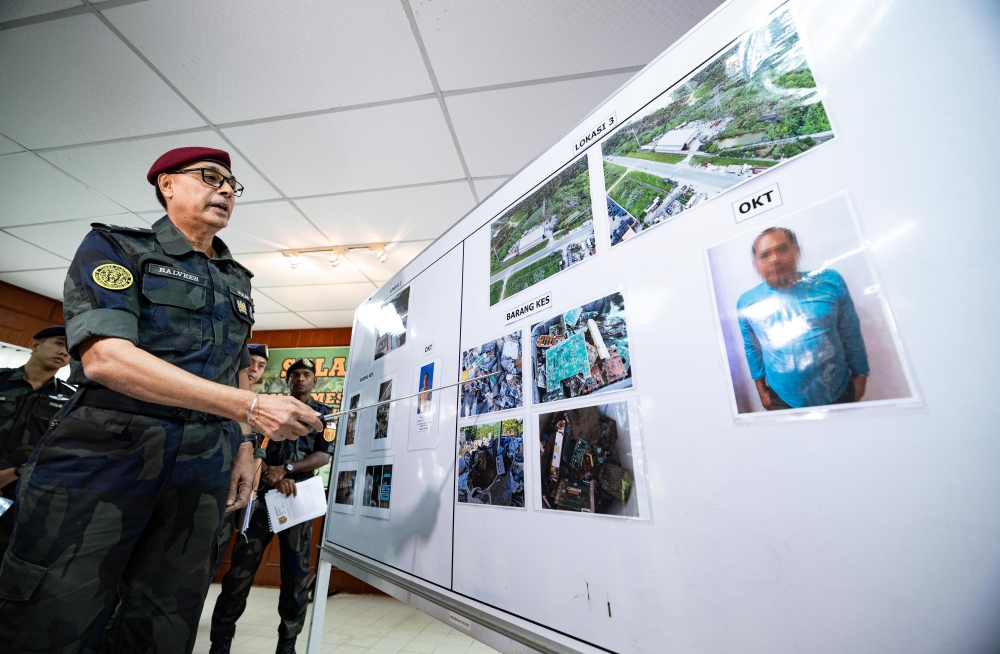
Malaysia's General Operations Force Northern Brigade has dismantled a significant illegal electronic waste operation in Ipoh, confiscating 120,220 kilogrammes of discarded electronics worth RM9.39 million and placing 14 individuals under arrest. The enforcement action represents a substantial blow against criminal networks trafficking in hazardous materials that pose serious environmental and public health risks across the country.
The raids, executed as part of a coordinated investigation into organised e-waste trafficking, targeted multiple locations suspected of functioning as collection and processing hubs for improperly handled electronic refuse. The scope of the seizure underscores the scale at which illegal operators have been moving contraband materials through Malaysia's informal waste management channels, often destined for uncontrolled dismantling facilities where valuable components are extracted without regard for environmental protocols or worker safety.
Electronic waste contains hazardous substances including lead, mercury, cadmium, and brominated flame retardants that leach into soil and groundwater when disposed of improperly. When processed in unregulated settings, workers face direct exposure to toxic compounds while handling fractured circuit boards and corroded battery cells. Malaysia's position as a regional manufacturing hub means substantial quantities of obsolete electronics accumulate from industrial and consumer sources, creating recurring demand among criminal syndicates seeking profitable outlets beyond legitimate recycling channels.
The Ipoh operation highlights the persistent challenges authorities face in detecting and disrupting e-waste trafficking networks that exploit gaps between production and disposal infrastructure. While Malaysia has established legal recycling frameworks and designated certified facilities, enforcement capacity remains stretched across the northern territories. Criminal operators maintain operational flexibility by constantly shifting locations and using informal networks to connect collectors with unscrupulous processors, making sustained investigation and surveillance demanding.
The suspects detained during the raids face investigation under environmental legislation governing hazardous waste management and international conventions on transboundary movement of dangerous substances. Penalties for illegal e-waste trafficking can include substantial fines and imprisonment terms, though prosecution timelines often extend considerably as authorities compile evidence and trace supply chain connections. The cases will likely proceed through courts in Perak, where environmental crime investigations have become increasingly specialised as judicial capacity improves.
For Malaysian manufacturers and retailers, the operation signals intensifying regulatory scrutiny of producer responsibility frameworks that assign obligation to supply chain participants for end-of-life product management. Extended producer responsibility schemes in Malaysia increasingly require importers and manufacturers to fund or operate collection and recycling programs, reducing incentives to channel devices toward illegal processors. Compliance costs have risen accordingly, though legitimate recycling companies argue enforcement against underground competitors remains inadequate.
The geographic focus on Ipoh reflects broader patterns of e-waste concentration in industrial zones across Perak and Selangor, where manufacturing clusters generate substantial volumes of manufacturing scrap and obsolete equipment. Criminal networks have systematically targeted these regions, establishing informal collection points that accumulate materials for batch processing. The Ipoh seizure represents intervention at a distribution node rather than at source, suggesting that upstream prevention measures designed to discourage initial illegal collection require strengthening.
Regional considerations amplify Malaysia's enforcement priorities, as neighbouring countries have similarly struggled with uncontrolled e-waste proliferation exacerbated by cross-border smuggling. Transnational syndicates exploit regulatory differences between jurisdictions, routing materials through porous borders and exploiting enforcement resource disparities. Cooperation through regional frameworks remains inconsistent, though recent initiatives involving Indonesia, Thailand, and Vietnam have established greater information sharing on trafficking routes and suspect networks operating across multiple nations.
The seizure demonstrates that GOF Northern Brigade operations have adapted to address environmental crime as a significant organised criminal enterprise rather than treating e-waste violations as minor administrative matters. Dedicated task forces combining enforcement personnel with environmental specialists have improved detection rates and investigation quality. However, the persistence of large-scale operations suggests criminal profitability continues exceeding detention risks, particularly when sentencing outcomes remain modest relative to trafficking volumes and resale values.
Longer-term solutions require investment in domestic recycling capacity, technical training for workers in licensed facilities, and consumer awareness programs explaining environmental consequences of informal disposal routes. Malaysia's commitments under Basel Convention obligations regarding hazardous waste movement have prompted some regulatory modernisation, yet implementation gaps persist between legislative frameworks and field enforcement. The Ipoh operation demonstrates that detection and prosecution, while important, function as incomplete deterrents without complementary measures addressing underlying supply and demand economics.
The 14 arrests and the RM9.39 million valuation reflect methodology combining material volume assessment with component value recovery calculations, indicating authorities now employ more sophisticated asset quantification during enforcement operations. This approach strengthens prosecutorial positions by demonstrating scale of criminal proceeds, potentially influencing sentencing recommendations and asset forfeiture applications. As environmental crime investigation capabilities continue developing across Malaysia's enforcement agencies, successful operations like the Ipoh raids provide templates for expanding geographic coverage and response capacity in states where e-waste trafficking remains entrenched.

