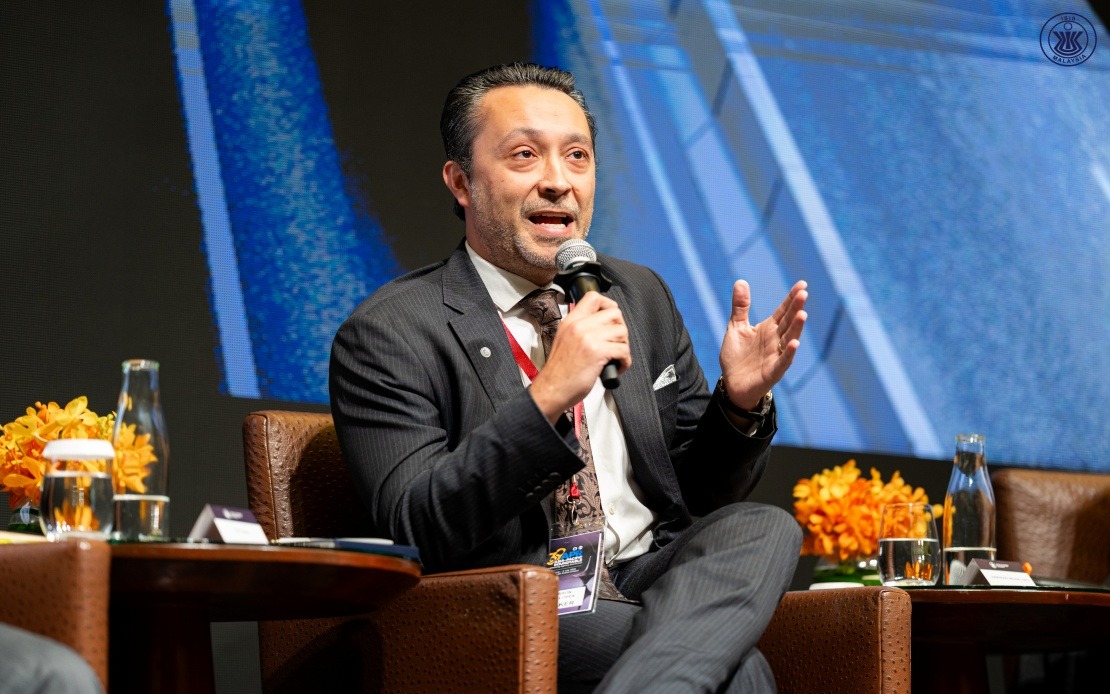
The evolving architecture of global governance demands that rising middle powers—among them Malaysia, Brazil, India, Indonesia, Turkey, and Mexico—consciously define their strategic interests rather than defaulting to the preferences of long-established Western nations. This assertion came from international scholars gathered at the 39th Asia-Pacific Roundtable in Kuala Lumpur, where discussions centred on how countries might navigate the tumultuous transition between competing visions of world order.
Dr Dawisson Belém-Lopes, a professor of international and comparative politics at Brazil's Federal University of Minas Gerais, drew a critical distinction between the trajectories and aspirations of these two categories of middle powers. The fundamental difference, he explained, lies not merely in economic capacity or diplomatic influence but in political orientation and historical memory. Emerging powers, predominantly located across the Global South, operate from fundamentally different reference points than their counterparts in Europe, North America, and developed Asia-Pacific nations. Their post-colonial experiences, varying relationships with Western institutions, and development imperatives create distinct worldviews that cannot be collapsed into a single category.
The Global South's historical discomfort with the post-1945 liberal international order has been evident in decades of reform proposals and institutional experimentation. Countries in this group have consistently argued that structures created in the aftermath of World War Two reflect the interests and ideological preferences of victorious powers rather than universal principles of equity and representation. From the United Nations Security Council's permanent membership to the governance architecture of the International Monetary Fund and World Bank, the institutional landscape has long embodied asymmetries that developing nations have sought to address. The emergence of alternative platforms such as BRICS, the Shanghai Cooperation Organisation, and various regional financing mechanisms reflects this impulse to create institutional spaces where Global South priorities receive greater weight.
Belém-Lopes emphasised that contemporary Global South countries now command resources and institutional leverage unavailable to their predecessors during the Cold War era. This accumulation of capacity—whether measured in economic output, technological advancement, or diplomatic coordination—creates unprecedented opportunity for autonomous policy formulation. Rather than viewing the current period as one of disorder or chaos, he characterised it as a moment where previously marginalised voices could shape outcomes in ways that had not been possible within the rigid bipolar or Western-dominated unipolar structures of earlier decades.
The unravelling of the post-war system is proceeding along multiple trajectories simultaneously, according to Peter Varghese, chancellor of the University of Queensland and former secretary of Australia's Department of Foreign Affairs and Trade. The American-led international order that dominated for nearly eight decades is experiencing simultaneous pressure from structural forces and policy shifts. While the current United States administration's "America First" orientation accelerates certain dynamics, Varghese cautioned that deeper causes are reshaping the international environment. China's sustained economic growth and technological advancement, the gradual shift toward multipolar distribution of power, and the declining appeal of the Washington Consensus in developing regions all represent long-term trends that transcend any single government's policies.
The weakening of consensus around liberal economic models that once seemed hegemonic reflects changing assessments of which institutional arrangements best serve national development. Simultaneously, the resurgence of identity politics and cultural nationalism in multiple regions indicates that technocratic, universalist approaches to governance face mounting challenges from movements prioritising local values and national particularities. These competing currents create profound uncertainty about what structures might eventually replace the declining Western-led framework.
Varghese cautioned that constructing a functioning multilateral order to succeed the current system would require years of negotiation, experimentation, and institution-building. The mere existence of agency—the capacity to act independently—represents a necessary but insufficient condition for creating workable alternatives. Instead, he advocated for countries to concentrate on strengthening cooperation within their own regions and across cross-regional partnerships. This networked, polycentric approach acknowledges that a single global system comparable to the post-1945 architecture may prove neither achievable nor desirable for many stakeholders.
The persistence of Asia's centrality in any emerging order was underscored by Dr Ken Jimbo, professor of international relations at Keio University in Japan. Despite fluctuations in Washington's strategic priorities, the United States continues to regard Asia-Pacific partnerships as essential to advancing American objectives. Japan's particular position exemplifies this dynamic: Tokyo remains substantially dependent on maintaining a rules-based international order that guarantees freedom of navigation, protects commercial networks, and provides security architecture against potential regional threats. Even administrations adopting nationalist or protectionist rhetoric domestically have generally recognised that maintaining regional alliance networks serves fundamental American interests.
This assessment suggests that Asian nations, including Malaysia, occupy pivotal positions within the transitional period. The region's economic dynamism, its role as a crucial node in global supply chains, its strategic location commanding vital shipping routes, and its demographic weight confer considerable negotiating leverage. Yet this leverage remains contingent on coordinated, strategic thinking about what outcomes these nations hope to achieve. Whether Asian countries act to preserve a rules-based system, reshape existing institutions, or construct new frameworks will substantially determine the character of the emerging international order.
The implications for Malaysia specifically merit careful consideration. As a middle power with substantial stakes in maritime security, regional trade arrangements, and technological advancement, Malaysia's interests align neither fully with established Western powers nor exclusively with rising Asian competitors. The nation's participation in multiple institutional frameworks—ASEAN, the East Asia Summit, APEC, and various economic partnerships—positions it as a crucial connector across Asia-Pacific divides. Strategic autonomy, as emphasised by the Brazil-based scholar, suggests that Malaysia should evaluate each institutional engagement and foreign policy commitment through the lens of whether such involvement advances Malaysian interests as defined by Malaysian policymakers rather than by external powers.
The 39th Asia-Pacific Roundtable, organised by the Institute of Strategic and International Studies Malaysia under the theme "Accelerating Agency and Action," brought together scholars and practitioners to contemplate how nations might navigate these treacherous transitions. The consensus emerging from these deliberations suggests that the era of automatically deferring to established powers or assuming that one prescriptive model should guide all countries has decisively ended. What remains to be determined is whether countries from the Global South and rising Asia can develop sufficient coordination and clarity of purpose to shape outcomes according to their own priorities.

