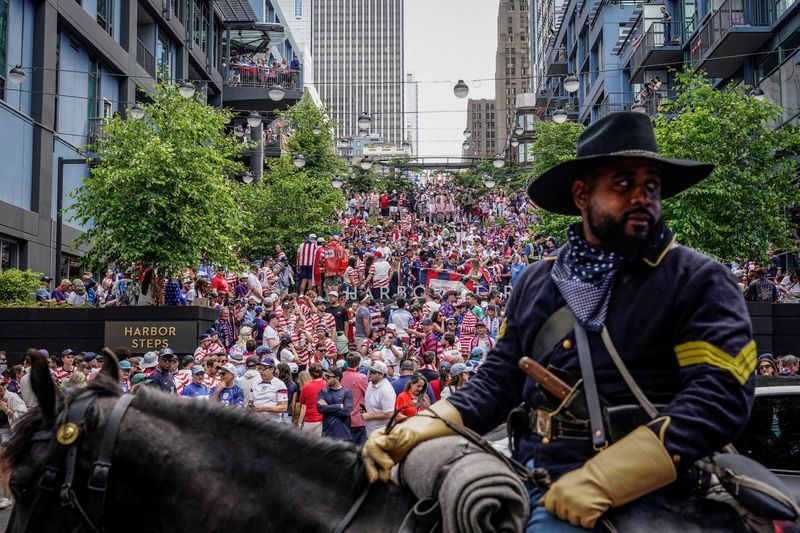
The 2026 FIFA World Cup has transformed 16 cities scattered across North America into vibrant hubs of international football culture, with Reuters photographers embedded across every training facility and match venue documenting both the sporting spectacle and the human stories unfolding off the pitch. From Mexico City to Vancouver, the tournament is revealing how deeply embedded soccer is in different communities and how the world's most popular sport serves as a bridge between cultures often divided by geography and policy.
Mexico's two World Cup host cities showcase the sport's central role in national identity. In the capital, photographer Raquel Cunha discovered that football extends far beyond Estadio Azteca's iconic walls, permeating neighbourhoods where communities have physically reshaped their spaces to accommodate soccer pitches. The legendary stadium, which has hosted two World Cup finals, remains the focal point, yet the sport's true significance emerges in how ordinary residents have woven it into the fabric of daily life. Guadalajara presents a different dimension of Mexican football culture, with locals still carrying memories of Pelé's 1970 visit and recently honouring the Brazilian icon with a statue. Photographer Ivan Arias observed how visiting Colombian fans and Mexican supporters transcended typical rivalries, attending each other's celebrations and creating genuine friendships that lasted beyond match day—a phenomenon that illustrates how football can temporarily dissolve national boundaries and foster human connections.
Monterrey reflects a more casual approach to football consumption, where the sport integrates seamlessly into social gatherings, from backyard barbecues to neighbourhood bars where residents congregate to watch matches. This informal integration suggests that Mexican cities don't view the World Cup as an extraordinary imposition but rather as a natural extension of existing sporting traditions deeply rooted in community identity.
In the United States, the tournament's impact varies significantly by city character and demographic composition. Miami, with its substantial Latin American population, has experienced the World Cup less as a novel event and more as an amplification of the city's existing cultural landscape. Photographer Amanda Perobelli noted that despite oppressive heat and humidity challenging those covering events outdoors, visiting fans have demonstrated remarkable enthusiasm, suggesting that climatic challenges dissolve in the face of football passion. Texas cities have embraced the tournament with characteristic grandeur. Phil Noble observed that everything about the Texan experience reflects the state's reputation for scale—from massive stadium capacities to six-lane highways to enormous barbecue servings, all accompanied by an unexpectedly welcoming attitude toward Mexican fans who are omnipresent and often cheer for visiting nations when Mexico isn't playing. Hannah McKay captured a particularly poignant moment when she witnessed Lionel Messi break the men's World Cup goal-scoring record before packed, emotionally charged crowds, illustrating how the tournament creates spaces for historic athletic achievements.
Atlanta's unconventional stadium design, featuring a retractable roof and set-back seating unusual for football, has nevertheless generated palpable atmosphere. The fan zones have drawn crowds, restaurants are full of patrons watching matches, and local businesses report booming activity, suggesting that infrastructure matters less than community engagement. Los Angeles has experienced perhaps the most distinctive transformation. Daniel Cole observed that the World Cup has disrupted the city's typical car-centric isolation, drawing residents and visitors into communal street experiences. The tournament has created opportunities for various diaspora communities—Iranians, South Koreans, Mexicans, and others—to publicly celebrate their cultural heritage in ways that feel increasingly significant given recent shifts in American immigration policy. San Francisco's experience parallels this pattern, with photographer Carlos Barria noting how immigrant communities have embraced their ancestral cultures through flags, food, and language, while simultaneously introducing many Americans to cultural experiences they might otherwise never encounter. This cultural exchange, Barria suggests, represents the World Cup's deeper purpose beyond the sport itself.
Kansas City, straddling two states, demonstrates how football integrates with a broader American sports landscape. Baseball, American football, and soccer coexist in community affections, with photographer Kai Pfaffenbach observing overwhelmingly positive atmospheres centred on bringing people together for celebration and shared enjoyment. Philadelphia presents a striking contrast to football-dominated nations. Photographer Siphiwe Sibeko, accustomed to South Africa's intense football atmosphere, noted that World Cup presence in Philadelphia remains largely confined to match days and areas immediately surrounding the stadium, suggesting that in many American cities, football competes for attention rather than commanding it. New York epitomises the multifaceted entertainment experience the tournament provides, with Norwegian fans performing their Viking row chants, Latin American supporters flooding Times Square for pre-match celebrations, and the coincidental New York Knicks NBA championship creating a compressed window of major sporting euphoria.
Boston offers a generational perspective. Photographer Brian Snyder, who covered the 1994 World Cup when the United States last hosted the tournament, observed a dramatically increased outpouring of fan enthusiasm compared to three decades earlier. Beyond the well-publicised Scottish Tartan Army presence, local communities of Haitian, Moroccan, and Cape Verdean descent have mobilised to support their nations, demonstrating how the tournament activates dormant cultural identities within diaspora communities. Toronto's experience included an unexpected wildlife dimension when photographer Bernadett Szabo encountered a falcon family nesting near the stadium, a reminder that major sporting events unfold within broader natural ecosystems often overlooked by human participants.
The western Canadian cities display varying levels of engagement. Vancouver, according to photographer Agustin Marcarian, has maintained a more subdued atmosphere, lacking the obvious transformation visible elsewhere, suggesting that geographic distance from traditional football strongholds or different cultural sporting priorities may influence tournament integration. Seattle, conversely, has embraced festive street atmosphere near its stadium, with fans making deliberate efforts to display American colours and vendors providing comprehensive food offerings. Photographer Albert Gea interpreted this as reflecting a distinctly American approach to sports as complete entertainment experiences rather than singular athletic moments.
Across all 16 cities, the 2026 World Cup emerges not merely as a sporting tournament but as a catalyst for cultural expression, community mobilisation, and temporary reconfiguration of urban spaces. For regions like Malaysia and Southeast Asia, the North American experience demonstrates how major sporting events can activate dormant cultural identities within diaspora communities, facilitate cross-cultural friendships among international supporters, and generate significant economic activity. The tournament's success in relatively unfamiliar football markets suggests that football's global expansion capacity remains substantial, with proper infrastructure and community engagement capable of transforming even traditionally non-football-centric cities into enthusiastic participants in the world's most watched sporting spectacle.

