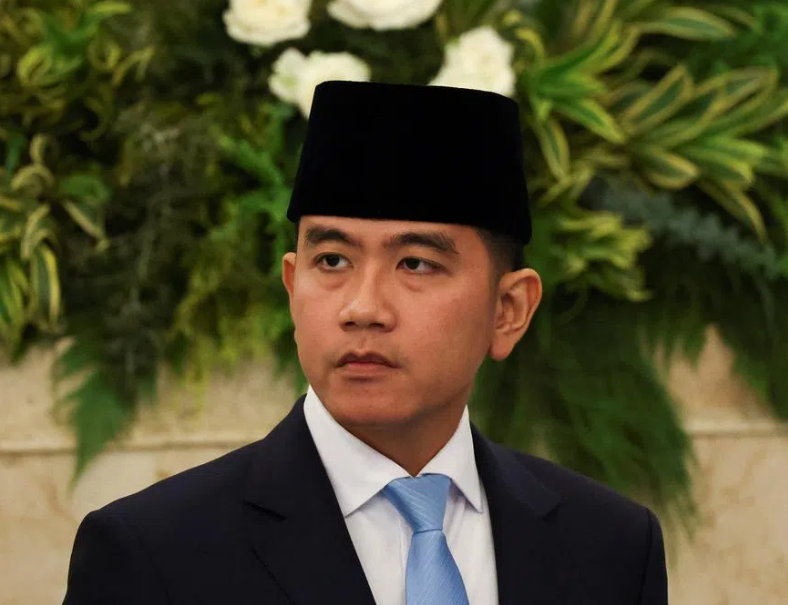
Vice-President Gibran Rakabuming Raka has begun cultivating a public image as a responsive government leader willing to engage with young critics, inviting student protesters to the palace for consultations and bringing select university representatives on official trips to eastern Indonesia. The outreach comes as student-led demonstrations across the archipelago have intensified scrutiny of two flagship Prabowo Subianto government initiatives: the free meals programme and the Red and White Cooperative scheme, which aims to establish thousands of village-run businesses. The move has thrust the 38-year-old vice-president into greater public prominence at a pivotal moment when his role within the administration remains poorly defined.
Just three days after students took to Jakarta's streets demanding policy reforms, Gibran convened a closed-door meeting with university representatives to discuss their research and concerns. In remarks following the discussion, a student leader from Bung Karno University praised the vice-president's receptiveness, reporting that Gibran had committed to auditing student findings and presenting them to President Prabowo. The gesture appeared designed to project an image of accessible leadership willing to hear dissenting voices. However, social media reactions revealed significant skepticism about the encounter's authenticity, with observers questioning whether the carefully selected student participants truly represented Indonesia's largest and most influential campuses. Critics noted that involvement of students from more prominent universities would have lent greater credibility to the engagement.
Analysts at Jakarta's Center for Strategic and International Studies view Gibran's outreach as part of a deliberate effort to cultivate political influence and visibility ahead of Indonesia's next presidential election cycle. By positioning himself as a bridge between public opinion and government policy, the vice-president appears to be constructing a political identity distinct from his role within the current administration. Researchers note that this strategy carries particular significance given Gibran's ambiguous position within the Prabowo cabinet since taking office in October 2024. While nominally linked to high-profile assignments including Papua's development and the new capital city Nusantara, he has remained largely peripheral to major policy formulation, lacking the substantive portfolio that previous vice-presidents often wielded.
The timing of Gibran's engagement coincided with a major scandal affecting one of the programmes under his supposed purview. The National Nutrition Agency, which oversees the free meals initiative, became embroiled in corruption allegations that resulted in the replacement and arrest of its chief, along with two former deputies, on suspicion of procurement irregularities. During a visit to a primary school in East Nusa Tenggara on June 18, Gibran acknowledged shortcomings in programme implementation and called for governance improvements. He also instructed officials to accelerate rollout in areas with adequate infrastructure and pledged to address local grievances. These actions suggested an attempt to demonstrate responsiveness to public concerns while subtly distancing himself from the scandal's more problematic aspects.
Yet multiple researchers interviewed for this analysis contend that Gibran's actual leverage over these programmes remains severely constrained. The National Nutrition Agency reports directly to President Prabowo, while the Red and White Cooperative initiative operates as a presidential priority coordinated across multiple ministries and agencies outside the vice-president's direct authority. Unlike his predecessors who often controlled substantial policy portfolios, Gibran has not been granted comparable responsibilities. This structural reality suggests his public engagement around these initiatives, however visible, may reflect an attempt to claim relevance rather than evidence of genuine decision-making power. Padjadjaran University's Irman Lanti observed that "all indications show that Gibran has not been involved in the free meals and Cooperative programmes, which are apparently more under the control of the military and the police."
Questions about the engagement's genuine character intensified following revelations that student participants received monetary payments. Local media outlets Kompas and Tribunnews reported in late June that students who attended the palace meeting subsequently acknowledged receiving between 2 million and 20 million rupiah. The Presidential Palace indicated it was investigating the claims, but the source and purpose of the funds remain officially unexplained. These disclosures transformed what the administration had presented as an organic encounter between student critics and receptive government leadership into something resembling a carefully orchestrated public relations exercise. Observers noted that the students invited did not represent Indonesia's largest campuses, further undermining claims of authentic engagement with representative youth opinion.
The payments controversy reflects broader analytical assessments questioning whether Gibran's outreach represents substantive policy responsiveness or sophisticated image management. Researchers at CSIS argue the vice-president is employing what might be termed "performative governance"—using relatively low-cost visibility tactics to maintain public attention and demonstrate relevance without necessarily achieving meaningful policy influence. By engaging student critics directly, Gibran generates positive media coverage and projects an impression of accessibility that distinguishes his persona within a cabinet where he otherwise lacks significant decision-making authority. The strategy appears calculated to build political capital ahead of potential future electoral ambitions, particularly given speculation that he may enter the 2029 presidential race, though he has not publicly stated such intentions.
For Malaysian observers and regional analysts, Gibran's situation illustrates broader challenges facing vice-presidents in Southeast Asian systems where the role can become politically marginalised depending on presidential preference and power dynamics. While Gibran benefits from his family connection to Joko Widodo's political legacy and possesses significant wealth and organisational resources, his actual institutional influence appears limited compared to his public visibility. The phenomenon of high-profile engagement with protesters combined with constrained actual authority mirrors challenges that other regional leaders have navigated when seeking to build personal political platforms distinct from their nominal positions. His approach of direct citizen engagement, while unconventional for a sitting vice-president in Indonesia, reflects growing pressure on political figures to demonstrate responsiveness to youth activists and public opinion.
The free meals scandal that prompted student protests highlights why such engagement carries political significance even without substantial policy leverage. Public confidence in government programmes depends partly on perceptions of accountability and willingness to address concerns. By publicly acknowledging shortcomings and pledging improvements, Gibran contributes to damage control efforts even if operational decisions remain elsewhere. This dynamic suggests that while his actual authority over these programmes remains limited, his role in shaping their public reception and political sustainability may be more substantial than strict institutional analysis would indicate. The question for Indonesia's political future becomes whether such engagement genuinely serves to improve governance or whether it primarily functions as a tool for personal political advancement.
Moving forward, analysts predict Gibran will likely continue employing this engagement strategy, particularly as 2029 approaches and the political space for presidential contenders begins expanding. His youth, wealth, family background and administrative platform offer distinct advantages in building a personal political brand. However, the sustainability of this approach depends on whether such outreach eventually translates into perceived policy influence or whether the gap between his visible engagement and actual authority grows sufficiently large to undermine his credibility. The student payment revelations suggest that maintaining an authentic public persona while leveraging state resources for political positioning presents genuine difficulties. For regional observers, Gibran's trajectory offers insights into how ambitious political figures navigate constrained institutional roles while attempting to construct personal political futures within personalised Southeast Asian political systems where formal authority structures often matter less than perceived influence and public standing.