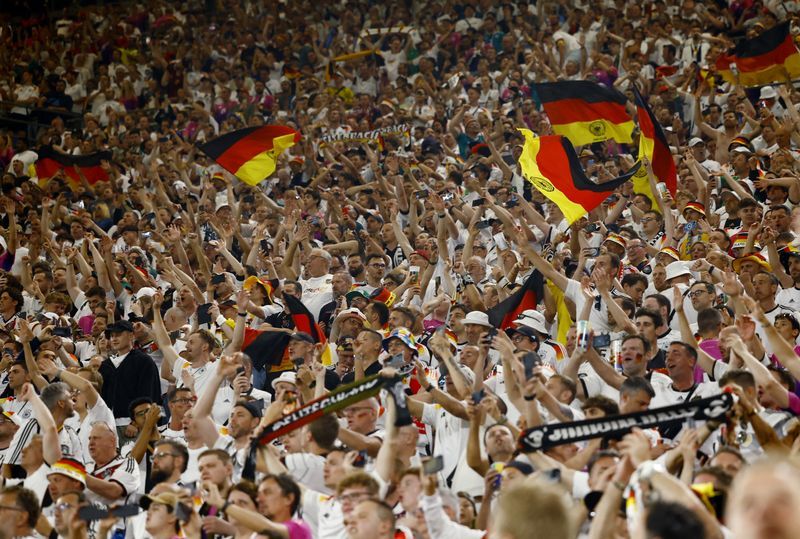
German law enforcement agencies have launched an extensive investigation into suspected ticket allocation irregularities surrounding Euro 2024, with searches extending to the offices of the Deutscher Fußball-Bund, the country's football governing body. The operation, confirmed by Bild newspaper on Wednesday, represents a significant development in what appears to be a complex administrative inquiry into how match tickets were distributed during the continental championship held across Germany earlier in 2024.
The scope of the investigation encompasses multiple locations throughout Germany, though authorities have been cautious about disclosing specific details regarding the full extent of their operations. While police and prosecution officials acknowledged that searches were occurring at several sites across the country, they refrained from publicly highlighting the DFB headquarters as a focal point, preferring instead to maintain a measured public stance on the investigation's direction and targets.
According to reporting by Bild, the inquiry centres on a German national and a French national among other individuals who are subjects of the investigation. This suggests the alleged violations may have involved cross-border coordination or participation, potentially extending beyond domestic actors within the German football administration. The involvement of foreign nationals adds complexity to what appears initially to be a straightforward administrative matter concerning ticketing procedures.
Ticket allocation for major football tournaments has become an increasingly scrutinised area of governance within European football administration. The Euro 2024 championship, hosted on German soil, carried heightened expectations for transparency and fairness in how the limited supply of match tickets would be distributed among fans, corporate entities, and various stakeholders. Any suggestion of irregular allocation processes can undermine public confidence in tournament management and the institutions responsible for overseeing such events.
The DFB, as Germany's national football association, operates under significant public scrutiny given the sport's cultural importance within the country and across the broader European football landscape. Investigations into its operational procedures, particularly those touching on high-profile tournaments, carry implications for how the organisation is perceived internationally and its continued standing within European football governance structures.
Such inquiries typically examine whether established procedures for ticket distribution were properly followed, whether favoured treatment was granted to certain parties, or whether individuals exploited their positions within the administrative apparatus to secure allocations that should have been allocated through standard channels. These concerns have surfaced periodically in connection with major sporting events globally, as the combination of limited ticket availability and significant demand creates conditions where administrative malfeasance can potentially occur.
For Malaysian readers and the broader Southeast Asian sporting community, the developments underscore how governance standards in European football administration are subject to rigorous examination and legal oversight. The willingness of German authorities to investigate the country's own national football body reflects institutional independence and accountability mechanisms that shape how major sports organisations operate across developed democracies.
The timing of such investigations, conducted well after the tournament concluded, is typical of thorough administrative inquiries that require careful examination of documentation and coordination among multiple stakeholders. Authorities must piece together complex financial and logistical arrangements to identify whether any regulations were circumvented or improper advantages granted to particular individuals or entities.
The investigation's progression will likely determine whether the concerns are substantive violations requiring prosecution, or whether findings ultimately suggest procedural irregularities that warrant administrative corrective measures rather than criminal action. Either outcome carries significance for how the DFB structures its future tournament involvement and ticket distribution protocols.
As Euro 2024 generated considerable attention across European and global markets, including in Southeast Asia where German football maintains substantial support, any findings regarding administrative misconduct could influence perceptions of tournament integrity and the institutions managing them. The inquiry represents an important moment for demonstrating that even prestigious national football bodies remain subject to appropriate legal scrutiny and oversight mechanisms.

