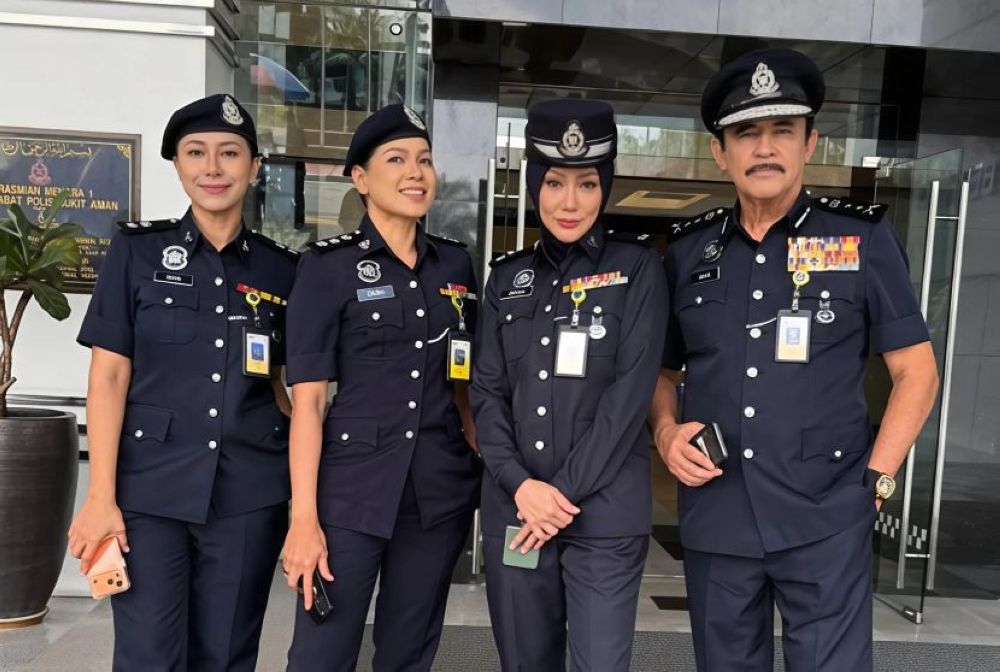
The producer of the highly anticipated Gerak Khas 2.0 drama has made the difficult decision to cut an actress from the series after she was arrested on drug-related charges, a move that underscores the production's commitment to protecting the reputation of both the project and the Royal Malaysia Police. Datuk Yusof Haslam, head of Skop Production, confirmed that all remaining scenes involving the actress have been removed from the 26-episode drama, which is now over 90 percent complete with only approximately two weeks of production work remaining.
The actress in question was detained following a police raid conducted by the Dang Wangi district police headquarters on July 7, during which she tested positive for three types of drugs. The timing of the incident—occurring just days after the drama's premiere—created an unexpected crisis for the production team, forcing them to make swift decisions about how to manage her involvement in the remaining episodes. With her character appearing in scenes scheduled through Episodes 23 and 24, the production crew moved quickly to eliminate all footage featuring her, a substantial undertaking given the advanced stage of filming.
Yusof's explanation of the removal process reveals the pragmatic constraints facing the production at this late stage. Rather than attempting to reshoot or rewrite around the actress's character, the decision was made to excise her entirely from the final episodes. The producer acknowledged that had the team possessed prior knowledge of her involvement with illegal substances, she would never have been cast in the first place. This assertion carries weight given that the actress had previously worked on other Skop Production projects without incident, making her sudden legal troubles a complete surprise to the filmmakers.
The swift and uncompromising response from Yusof sends a clear message about professional accountability within the Malaysian entertainment industry. When the actress reportedly attempted to appeal the decision or offer explanations for her conduct, Yusof flatly rejected these overtures, telling her that it was simply too late to repair the damage. This hardline stance reflects the gravity with which the producer views the intersection of artistic integrity and personal conduct, particularly when a project is so closely associated with a government institution like the PDRM.
Yusof emphasised that he had repeatedly warned all personnel involved in the production about maintaining disciplinary standards and avoiding activities that could compromise the drama's image or that of the police force itself. These reminders were delivered from the project's inception, reflecting an understanding that this particular drama carried special responsibilities given its nature as a police procedural. The fact that the actress chose to ignore these explicit warnings makes her removal not merely a business decision but a reinforcement of standards the producer had attempted to establish from the outset.
Beyond the individual consequences for the actress, Yusof framed her removal as an instructional moment for the entire cast and crew. He underscored the broader lesson that personal choices have professional repercussions, particularly in an industry where public perception matters enormously. His comments about the difficulty of controlling individual behaviour—analogising it to raising children—acknowledge the limits of institutional oversight while simultaneously maintaining that consequences must follow breaches of conduct.
The producer's remarks also reveal a gendered dimension to the industry's moral scrutiny. Yusof specifically noted that women in public-facing roles face particularly harsh judgment from audiences, a reflection of social attitudes that extend beyond the entertainment sector into broader Malaysian society. His warning that the actress should avoid venues like nightclubs, framed as advice aimed at protecting her reputation, illustrates the different standards of behaviour often expected of female performers compared to their male counterparts.
The cast assembled for Gerak Khas 2.0 includes established names such as Hans Isaac, Erra Fazira, C. Kumaresan, and Salina Saibi, alongside the three actresses portraying police inspectors: Tisha Shamsir, Nabiha Aimi, and Emily Elizabeth. The drama represents a significant investment for Skop Production and presumably for the broadcaster, making the decision to remove an actress just weeks before the series concludes production a testament to how seriously the team takes reputational concerns.
This episode raises broader questions about the intersection of personal conduct and professional opportunity in Malaysia's entertainment industry. While accountability for illegal drug use is unquestionable, the swift and complete removal of an actress underscores how thoroughly a single serious lapse can erase previous professional achievements and relationships. Yusof's observation that people quickly forget the good things an individual has accomplished once a major mistake occurs reflects a sometimes unforgiving dynamic in public perception management.
For Malaysian audiences and the regional entertainment industry more broadly, the Gerak Khas 2.0 situation demonstrates how productions navigate unexpected crises involving cast members. The near-completion status of filming made options limited—reshaping the narrative around an absent character would have been extraordinarily difficult and costly. Yet the decision also reflects institutional priorities, suggesting that association with law enforcement conduct matters enough to warrant significant production complications.
The timing of the actress's arrest, coinciding with the drama's premiere, compounds the challenge for the production team. Rather than enjoying the positive momentum of a new series launch, the team has instead confronted negative publicity and the necessity of damage control. Going forward, the removal of her scenes will likely pass largely unnoticed by viewers unfamiliar with the behind-the-scenes drama, though industry insiders will certainly be aware of the production decisions that shaped the final product.

