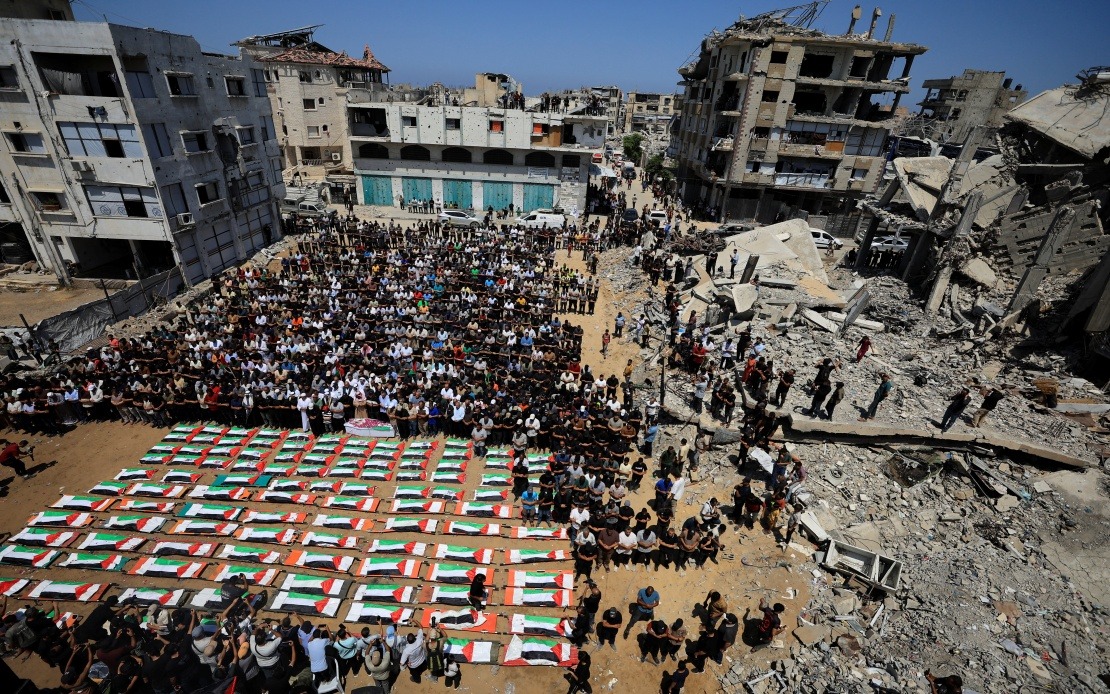
The people of Gaza find themselves trapped in an exhausting rhythm of anticipation and letdown. For Saeed Helles, a 55-year-old father of five, the pattern has become painfully familiar. His 13-year-old daughter Saja lies in a Gaza City hospital, clutching a doll while undergoing cancer treatment. What should be a straightforward path to life-saving care abroad has instead become an agonising limbo, dependent on the vagaries of diplomatic negotiations that seem perpetually stuck in stalemate. Each day of negotiating delay translates directly into reduced chances of recovery for vulnerable patients like Saja, whose condition cannot accommodate the leisurely pace of political talks.
When Hamas announced its acceptance of the mediators' proposal for the second phase of ceasefire negotiations, residents across Gaza experienced a genuine wave of relief. The prospect of border crossings reopening promised not only an end to hostilities but concrete pathways for medical evacuations, reconstruction efforts, and family reunifications. Families began preparing documents, packing possessions, making plans. For people whose lives have been suspended in crisis for months, even a glimmer of normalcy felt achievable. Helles began arranging his daughter's travel documents for Egypt, where she could access the specialised oncological treatment unavailable in Gaza's battered medical infrastructure.
That cautious optimism proved short-lived. When representatives of the so-called Board of Peace, led by high representative for Gaza Nickolay Mladenov, met with Israeli Prime Minister Benjamin Netanyahu, their subsequent statements introduced fresh ambiguities and conditions that complicated what had seemed a clear path forward. The Israeli position, as articulated through the board, introduced a sequential dependency: forces would withdraw beyond the Yellow Line only after a comprehensive decommissioning process completed. This process would require dismantling both light and heavy weapons and destroying tunnel networks—preconditions that shifted the timeline and introduced variables potentially outside any single party's control.
Hamas maintained its position that progress on these second-phase elements hinged on Israel halting military operations entirely, fully implementing the first phase agreements, and withdrawing comprehensively from Gaza. The gap between these positions, though couched in technical language, represents a fundamental disagreement about sequencing and trust. For ordinary Palestinians, these abstract negotiating positions translate into concrete suffering. Every week of further talks means another cohort of patients goes without essential medicines. Every month of continued military operations prevents displaced families from assessing their destroyed homes, let alone beginning reconstruction.
The humanitarian toll has become starkly quantified. According to Mohammed Abu Nada, medical director of the Gaza Cancer Centre, approximately 11,000 cancer patients face severe medicine shortages while around 4,000 patients with valid medical referrals remain unable to leave Gaza. The statistics reveal a creeping medical catastrophe: roughly three cancer patients die daily due to inadequate treatment access. Abu Nada's warnings about deepening humanitarian crisis carry particular weight given that Gaza's health system was already fragile before recent conflicts. Border crossing restrictions remain the chokepoint preventing any meaningful medical evacuations.
Beyond the immediate medical emergency lies another form of suffering—the displacement of hundreds of thousands from their homes. Mariam Qudaih, a 46-year-old mother of four, was displaced from eastern Khan Younis in southern Gaza. She represents the psychological toll of perpetual displacement. Even though her home now exists only as rubble, she held onto a dream of returning to that land, of standing among the ruins and beginning again. She had reassured her four children that the second phase would enable their return, and they began talking excitedly about seeing their destroyed home once more. That psychological reconstruction, built on fragile diplomatic hopes, collapsed as negotiations faltered once again.
The cyclical pattern of hope and disappointment has created a particular form of exhaustion among Gaza's population. Each negotiating breakthrough generates genuine optimism; each subsequent complication resets expectations to zero. Families who prepared travel documents must pack them away. Children who began mentally rehearsing homecomings must adjust to continued displacement. The emotional cost of these repeated cycles extends beyond immediate suffering, creating what might be termed diplomatic trauma—a learned scepticism about any promise of resolution. For a population that has endured months of conflict, this emotional rollercoaster compounds the physical hardships they have already experienced.
Political analysts observing Gaza's situation have identified the structural problem at the negotiating table. Mustafa Ibrahim, a Gaza-based political analyst, notes that the linkage between Israeli withdrawal and weapons decommissioning introduces asymmetrical leverage. Israel's conditioning of withdrawal on completed disarmament effectively gives the Israeli side control over the second phase's timeline. Any dispute about disarmament progress provides justification for delayed withdrawal. This structure fundamentally undermines confidence in mediators' proposals and perpetuates uncertainty among Palestinians who desperately need clear, binding commitments.
The broader regional implications deserve consideration, particularly for other Southeast Asian nations monitoring Middle Eastern developments. Countries with significant Palestinian diaspora communities or development interests in the region face pressure to advocate for humanitarian corridors and ceasefire enforcement. Malaysia, with its vocal support for Palestinian causes, faces particular scrutiny regarding its diplomatic engagement and advocacy. The stalled negotiations suggest that mediation mechanisms alone prove insufficient without binding guarantees and enforcement mechanisms. International partners become increasingly frustrated when diplomatic processes fail to translate into humanitarian relief.
For ordinary Gazans, these geopolitical considerations remain abstract. The immediate reality is visceral: a father watching his daughter's condition deteriorate while paperwork sits unsigned; a mother explaining continued displacement to confused children; cancer patients dying without adequate medicines. The second phase ceasefire, once imagined as a turning point, increasingly appears merely as another negotiating stage likely to extend indefinitely. The population's capacity for hope, already severely tested, continues eroding with each passing week of stalemate.
The humanitarian crisis unfolds not through dramatic collapse but through slow degradation. Medical systems function at diminished capacity. Displaced populations exhaust psychological reserves. Patients miss critical treatment windows. These individual tragedies accumulate into a collective catastrophe. Until negotiators can translate diplomatic language into concrete action—open border crossings, allow medical evacuations, permit returns—the people of Gaza will continue experiencing the exhausting pendulum between hope and despair. The second phase may technically be under discussion, but for those awaiting medical care or desperate to return home, the negotiations feel increasingly like a cruel abstraction disconnected from urgent human need.

