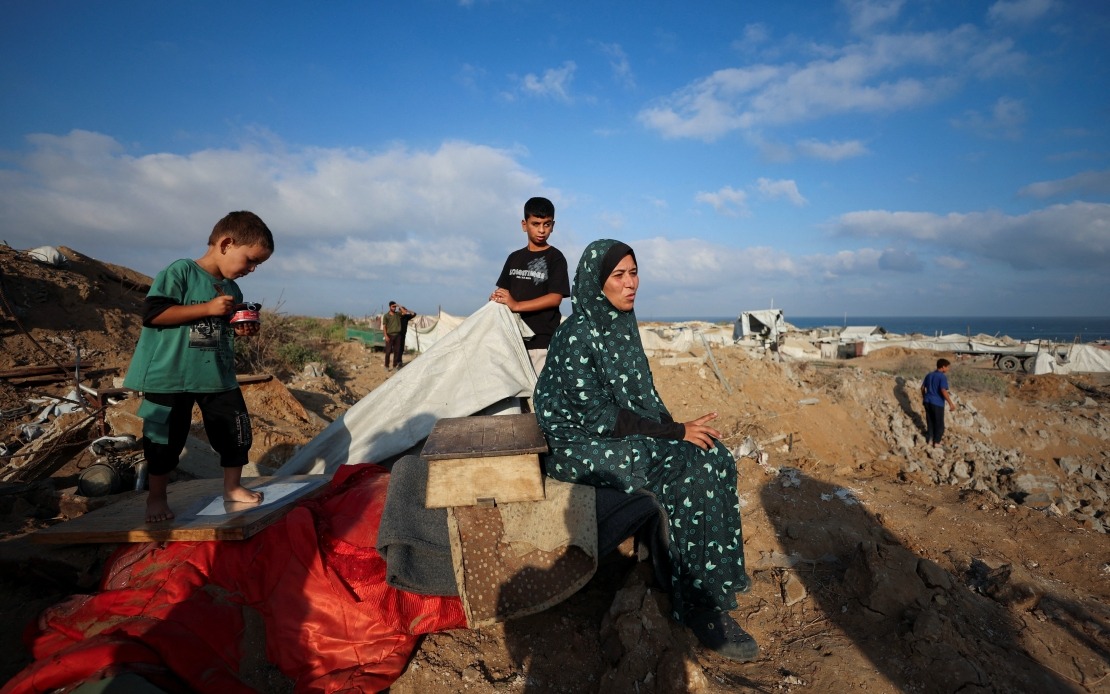
The humanitarian situation in Gaza is deteriorating despite modest recent improvements, with nearly 1.4 million Palestinians now expected to endure severe food insecurity through December 2026. This figure represents a significant jump from the 1.2 million recorded between mid-April and June, underscoring how fragile gains made through international aid delivery have become. The Integrated Food Security Phase Classification (IPC), released in late July, paints a grim picture of a population where roughly two-thirds face crisis-level conditions or worse, with the analysis suggesting that without sustained external support, the humanitarian emergency could engulf nearly the entire territory.
The projections reveal the scale of Gaza's structural collapse across multiple dimensions beyond food alone. The analysis indicates that approximately 212,000 individuals remain trapped in emergency-phase conditions, representing the most severe category of food insecurity where families have exhausted coping mechanisms. All five of Gaza's governorates have been classified as facing crisis-level food shortages, meaning no region has escaped the impact of prolonged conflict and economic breakdown. This comprehensive territorial classification demonstrates that the hunger crisis is not localised to specific areas but has become a universal feature of daily life across Gaza's population centres.
The October 2025 ceasefire created a temporary window through which humanitarian organisations expanded food assistance programmes, with aid workers managing to reach approximately 1.49 million beneficiaries in May alone. This represented a noteworthy achievement in logistical coordination, allowing distributions to scale up meaningfully. However, the analysis emphasises that even this expanded assistance proved insufficient to meet actual nutritional requirements, with ration sizes remaining below recommended daily caloric intakes. The gap between what organisations can deliver and what populations actually need reflects both the sheer magnitude of displacement and loss across Gaza and the resource constraints that limit how much aid can realistically be provided at current funding levels.
The underlying economic devastation emerges as perhaps the most concerning element of the assessment. Data collected for the IPC analysis found that 83 per cent of Gaza households report having absolutely no income source, a figure that captures the near-total collapse of productive economic activity. This means that the vast majority of families possess no means to purchase food through markets and remain entirely dependent on international handouts for survival. Livelihoods have been systematically destroyed through years of conflict, displacement, and restrictions on movement and commerce, leaving a population with no pathway toward self-sufficiency or dignity through work. Without employment opportunities, even modest increases in food aid delivery cannot address the fundamental vulnerability of Gaza's economic structure.
The sustainability of recent improvements appears increasingly questionable as funding constraints bite harder on aid operations. Since February, humanitarian food assistance has declined measurably, with the IPC attributing this regression to shrinking donor contributions and operational uncertainties facing international organisations working in Gaza. These agencies face mounting bureaucratic hurdles, security concerns, and political pressures that discourage sustained engagement. The fragility of current arrangements means that the modest progress achieved through the ceasefire window could evaporate rapidly, potentially plunging the territory into even worse conditions than those prevailing before October 2025. Aid workers warn that operations remain contingent on maintained international commitment, which cannot be taken for granted.
The counterfactual painted by the IPC analysis starkly illustrates how dependent Gaza has become on external assistance. Without humanitarian food aid, the organisation projects that approximately 1.9 million people—representing roughly 90 per cent of the entire population—would face high levels of acute food insecurity. This scenario underscores how thoroughly market mechanisms and local production have ceased functioning as food distribution mechanisms. Even the most basic survival needs now rest entirely on whether international donors continue allocating resources and whether access corridors remain open. The mathematical reality suggests that Gaza cannot sustain itself, and any disruption to aid flows would translate directly into mass hunger affecting nearly everyone.
Children represent the most vulnerable population within this crisis, with projections indicating that 74,200 children under five will require treatment for acute malnutrition by April 2027. Among these cases, 11,432 involve severe malnutrition, a distinction that means symptoms include visible wasting, swelling, or other clinical indicators requiring intensive medical intervention. Malnutrition during early childhood causes permanent developmental damage, affecting cognitive capacity, immune function, and physical growth trajectories. The scale of projected cases suggests that an entire generation risks experiencing nutritional trauma that will have lifelong consequences, even if hunger is eventually addressed. Additionally, 24,600 pregnant and breastfeeding women require urgent nutritional support, as deficiencies during pregnancy and lactation threaten both maternal health and infant development.
The IPC's recommendations emphasise that reversing negative trends will require comprehensive action rather than piecemeal responses. Sustained humanitarian access through maintained funding and political commitment forms the foundational requirement, but analysts stress that expanded nutrition programmes specifically targeted at vulnerable groups must accompany general food assistance. Beyond immediate relief, the analysis highlights that a permanent cessation of hostilities represents a prerequisite for addressing root causes driving food insecurity. Without a durable political settlement, even robust aid delivery remains a temporary measure against structural problems that only political resolution can address. The implied message warns that the humanitarian system cannot function as a substitute for peace.
For Southeast Asian observers and policymakers, the Gaza situation illustrates humanitarian challenges at scales and intensities that regional institutions remain ill-equipped to address unilaterally. The crisis demonstrates how warfare destroys economic systems, creates absolute dependence on external assistance, and generates vulnerabilities affecting entire populations. Malaysia and other regional countries have contributed to Gaza relief efforts, yet the IPC data suggests that meaningful improvement depends on global coordination, sustained funding, and political solutions—areas where individual nations have limited influence. The protracted nature of the crisis, now stretching beyond years, also raises questions about burden-sharing, donor fatigue, and the limits of humanitarian assistance when underlying conflicts remain unresolved.

