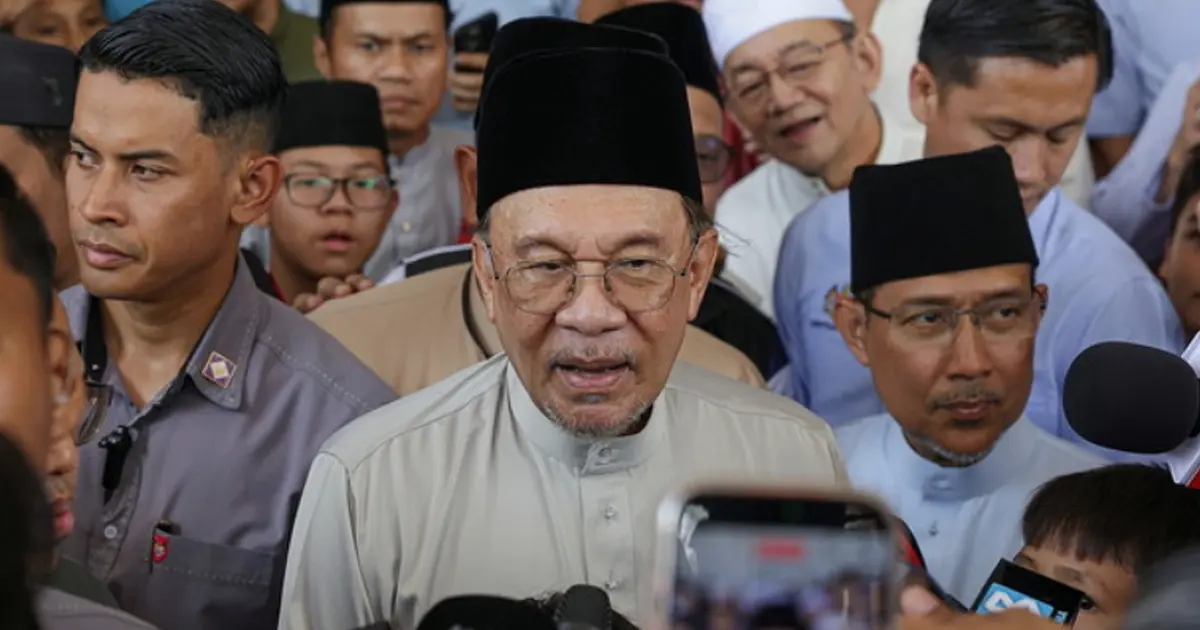
Prime Minister Anwar Ibrahim has moved to assure Malaysians that the complete findings of the Royal Commission of Inquiry (RCI) into Tabung Haji have been made public in their entirety, with no modifications or suppression of content. The clarification comes as the government seeks to demonstrate its commitment to transparency and accountability in investigating the pilgrim fund's operations and governance issues.
The Tabung Haji RCI, formally known as the Lembaga Tabung Haji, has long been a subject of public scrutiny and concern. The fund, which manages savings and investments for Malaysian Muslims preparing for the Hajj pilgrimage, accumulated significant financial challenges over recent years that prompted calls for an independent investigation. The establishment of the RCI represented a significant institutional step toward examining the fund's management practices, internal controls, and the circumstances that led to its financial difficulties.
Anwar's explicit confirmation that the report underwent no editorial intervention carries particular weight given broader questions about government transparency that have circulated in Malaysian political discourse. By personally assuring the public that the findings have been released in unaltered form, the Prime Minister appears intent on strengthening public confidence in the investigative process and demonstrating that no politically sensitive information has been withheld from citizens. This approach contrasts with historical patterns where government-commissioned reports have sometimes faced delays, partial releases, or allegations of selective disclosure.
The full publication of the RCI report is significant for several categories of stakeholders. For Tabung Haji account holders—primarily Malaysian Muslims saving for one of Islam's five pillars—the unredacted findings offer comprehensive insight into what went wrong with their savings and investments. The report's detailed nature allows contributors to understand the specific failures in governance, investment decisions, or operational management that affected their financial interests. This transparency becomes especially important given that many account holders depend on Tabung Haji for their pilgrimage aspirations and retirement security.
Policymakers and financial regulators gain similarly valuable intelligence from an uncensored RCI report. Understanding the full scope of deficiencies at Tabung Haji enables the government to craft more robust regulatory frameworks, strengthen internal controls at similar institutions, and identify systemic vulnerabilities in how Malaysia's pilgrimage fund operates. The report likely contains recommendations for reform that could reshape Tabung Haji's governance structure and operational protocols, information essential for implementing meaningful institutional change.
For the broader Malaysian public, an unedited RCI report contributes to democratic accountability and institutional integrity. When independent commissions of inquiry release their findings without alteration, they reinforce the principle that government institutions exist to serve citizens rather than to manage perceptions. This is particularly important in Malaysia's political context, where questions about institutional independence and political interference in official processes have periodically emerged as matters of public concern and debate.
The Tabung Haji situation reflects deeper questions about governance in statutory bodies managing public funds and citizen savings. These institutions operate at the intersection of religious sentiment, financial management, and public trust, making their transparency and integrity matters of heightened significance. When such bodies encounter difficulties, the way governments investigate and disclose findings becomes a test of institutional maturity and commitment to accountability. Malaysia's approach to the Tabung Haji RCI will likely influence public perception of how future government investigations are conducted and reported.
The move to publish the RCI report in full also signals the government's response to what many Malaysians view as an institution in crisis. Reports of investment losses, governance weaknesses, and concerns about the fund's ability to meet its obligations to pilgrims had generated considerable anxiety and criticism. An unrestricted RCI report provides the basis for informed public discourse about what happened, why it happened, and how to prevent recurrence. This transparency supports evidence-based policy discussions rather than speculation or rumour.
The confirmation from Anwar reflects broader reform efforts undertaken since the change of government in recent years. Successive administrations have pledged greater transparency and reduced institutional opacity, though the effectiveness of these commitments has sometimes been questioned. By personally confirming that the Tabung Haji RCI report remains unaltered, the Prime Minister places his credibility behind the claim, suggesting that government messaging about transparency is to be taken seriously by both domestic audiences and international observers monitoring Malaysian governance standards.
Moving forward, the full publication of the RCI report establishes a baseline for public evaluation of Tabung Haji's trajectory. Malaysians can now assess whether reform measures subsequently implemented address the commission's identified concerns, whether recommended governance changes are adopted, and whether account holders' interests receive appropriate priority. The unedited report becomes a benchmark against which the government's follow-through on institutional reform can be measured, creating a more accountable framework for addressing the challenges that prompted the investigation.

