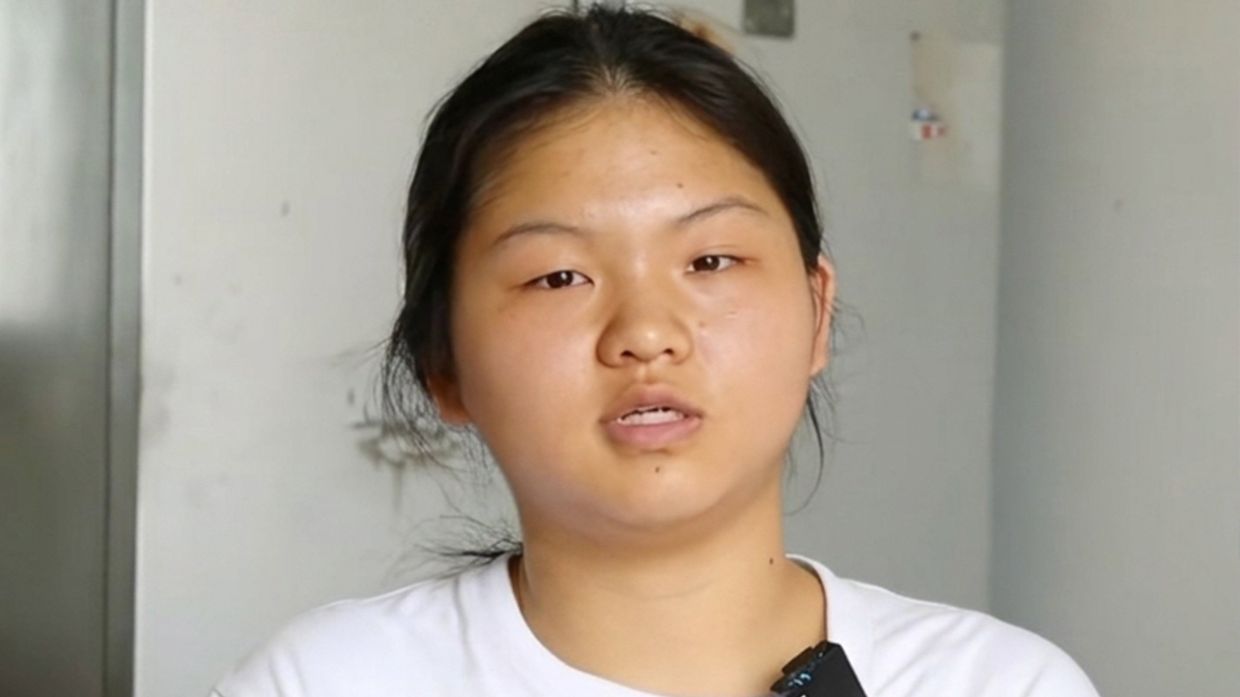
An 18-year-old student in China has sparked widespread admiration by refusing financial assistance despite losing her last family member, the latest example of how individual acts of compassion can resonate across a nation grappling with questions of social responsibility and human dignity. Zeng Zixuan's decision to decline donations and redirect aid to others in more dire circumstances emerged just as she prepared to enter university, cementing a narrative of extraordinary maturity forged through years of hardship that few her age must endure.
Zeng's academic performance demonstrated consistent excellence throughout her schooling, culminating in a gaokao score of 564 out of 750, placing her among successful candidates competing in China's notoriously demanding university entrance examination. Her university selection reflected not ambition for prestigious institutions but a deeply personal calculation: she deliberately chose a campus near her hometown to maintain proximity to her grandmother, the elderly woman who had raised her after her parents' marriage fractured during her childhood. That proximity would prove far more valuable than any prestige in the months that followed.
The circumstances surrounding Zeng's upbringing reveal the fragility of familial structures in contemporary China, particularly for rural families navigating divorce, migration for employment, and economic uncertainty. When her mother remarried and departed from their lives, and her father subsequently relocated to Guangdong province in pursuit of economic opportunity, the responsibility for raising the young girl fell entirely to her grandmother. This arrangement, common across rural China where working-age adults seek employment in distant cities, created a three-generation household dependent on the youngest member's future prospects.
During her senior secondary school years, catastrophe struck with devastating finality. Zeng's father died in an accident while working in Guangdong, erasing not only a parent but the family's primary income source in one terrible moment. The financial consequences proved immediate and severe, forcing grandmother and granddaughter to subsist on government assistance supplemented by educational subsidies provided by her school. The psychological toll on Zeng manifested visibly to those around her; a formerly cheerful disposition gave way to withdrawn behaviour that alarmed her supervising teachers, who began regular conversations designed to provide emotional support during a period when grief threatened to derail her academic ambitions entirely.
Community networks that characterise rural Chinese governance structures mobilised around Zeng's plight with quiet institutional support. A village official specifically tasked with women's welfare issues assumed responsibility for ensuring that Zeng and her grandmother received necessary assistance, demonstrating how formal bureaucratic roles can translate into meaningful human support networks. Her teachers recognized that her future had become intertwined with academic success; one instructor counselled her that educational achievement represented the only viable pathway to honouring both her deceased father and her surviving grandmother, framing academic excellence not as personal ambition but as filial obligation and multigenerational responsibility.
Then came July, and another loss. Zeng's grandmother, the sole living relative who had sacrificed for her throughout childhood and early adolescence, fell ill and passed away just as the young woman stood on the threshold of university life. This final tragedy stripped away the last tangible family connection, transforming Zeng into an orphan entirely reliant on her own capabilities and the goodwill of her community. The timing—immediately before university entrance—might have broken her completely. Instead, it seemed to catalyse something remarkable in her character.
Word of Zeng's situation spread through village channels, triggering a spontaneous outpouring of support from strangers moved by her story. Within a short period, donations accumulated to exceed 60,000 yuan, approximately US$8,800—a significant sum in rural China that could secure several years of university expenses. This generous response reflected both genuine sympathy for a tragic case and perhaps a broader hunger in Chinese society for examples of mutual care and collective action. Yet at this moment of maximum vulnerability, when acceptance would have been entirely understandable, Zeng demonstrated a maturity that transcended her years.
She approached village officials to halt the donations, issuing a statement that resonated far beyond her small community. Addressing her supporters as uncles, aunties, brothers, and sisters—kinship terms in Chinese culture that express gratitude and familial bonds—Zeng explained that the funds already received would adequately cover her tuition and accommodation expenses. She articulated a philosophy of generosity that privileged others' greater need over her own eligibility, noting that countless individuals faced circumstances more desperate than her own, and that earning money was not easy for anyone. Her request that future contributions be directed elsewhere embodied a recognition that limited charitable resources should flow to those with fewer alternatives.
For her living expenses beyond tuition and housing, Zeng developed a practical strategy consistent with her demonstrated work ethic and self-reliance. She planned to support herself through part-time employment, viewing labour not as degradation but as a legitimate contribution to her own sustenance. The village government further supported this ambition by offering her a position suited to a student's schedule and capabilities, ensuring that educational commitments could continue alongside income generation. This arrangement reflected a community-level recognition that Zeng's success ultimately benefits everyone.
The broader significance of Zeng's story extends beyond individual heroism or touching sentimentality. Her actions illuminate persistent questions about social safety nets, family structure, and individual agency in modern China. Rural students navigating university entrance face particular vulnerabilities; their access to quality secondary education frequently lags urban counterparts, while financial barriers that wealthier families dismiss easily can prove insurmountable. The gaokao system itself, despite intentions to provide meritocratic opportunity, often perpetuates educational inequality rooted in geography and family wealth.
Online observers who followed Zeng's story articulated what made it resonate so powerfully: her refusal to centre her own suffering even while fully acknowledging life's capacity to inflict painful reversals of fortune. One commenter noted that while Zeng belonged to a disadvantaged cohort, she remained fortunate to navigate her crises within a moment in Chinese history when social support systems and collective compassion existed to catch her falling. Another framed her future optimistically, suggesting that life's capacity to deliver mishaps need not determine one's ultimate trajectory.
Zeng's journey from childhood loss through adolescent hardship toward university entrance with integrity and generosity intact demonstrates that resilience is not merely individual but relational—built through teachers' patience, officials' attention, strangers' care, and the sustaining presence of elders who chose to invest in her future. Her decision to decline further aid while accepting the help already provided, and her commitment to self-support through labour, suggests a nuanced understanding that accepting assistance requires neither shame nor unlimited obligation. As she begins university life as an orphan with limited material resources but extensive community connection, she carries forward both her grandmother's hopes and her father's memory, having already demonstrated that character remains the most portable asset anyone can carry into an uncertain future.

