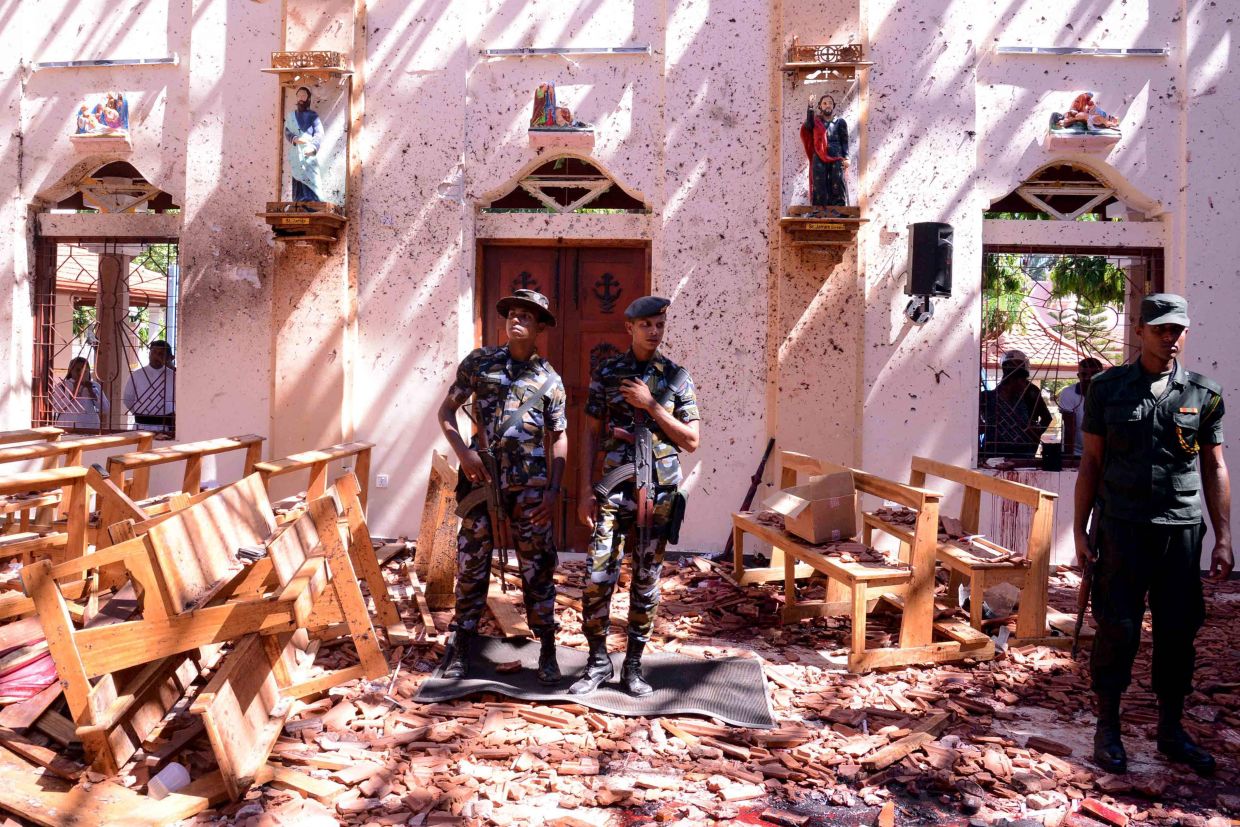
A retired Sri Lankan military officer who spent years advising the United States Pentagon and addressing the United Nations on the dangers of extremism has himself become the subject of a sensational and controversial investigation. Suresh Sallay, a former major general and intelligence chief, was arrested in February under anti-terrorism laws and now stands accused by the Sri Lankan government of masterminding the deadliest civilian attack in the nation's history—the Easter bombings of April 21, 2019, which claimed 279 lives and injured more than 500 people. The arrest marks a stunning reversal in the official narrative surrounding one of Asia's most deadly terror attacks, transforming a celebrated counterterrorism figure into an accused architect of mass violence.
The April 2019 bombings devastated three luxury hotels and three churches across Sri Lanka in a coordinated series of attacks initially attributed to Islamic State-inspired Sunni Muslim suicide bombers. The death toll included 45 foreigners—tourists and business travellers from Australia, Britain, China, Denmark, the Netherlands, Japan and the United States—making the incident a matter of international concern and scrutiny. The attacks sent shockwaves through the island nation's tourism-dependent economy and prompted a security crackdown that reshaped the country's political landscape in the years that followed.
Sallay has not been formally charged and maintains his innocence, with court proceedings continuing as of early July. His legal team and supporters contend that the accusations represent a grave miscarriage of justice, particularly given his distinguished background in security and counterterrorism. He comes from a cosmopolitan background that embodies modern Sri Lanka's multicultural character: a Muslim officer married to a Buddhist woman, with a Catholic mother who has appealed directly to the Vatican to secure his release. His educational credentials span some of Asia's most prestigious institutions, including the National Defence College in New Delhi, Madras University and the University of Bradford in Britain.
Throughout his career, Sallay held postings at Sri Lankan diplomatic missions in France and Malaysia and earned recognition as a terrorism expert. He delivered a 2003 address to the Pentagon titled "Suicide Terrorism and its Impact" and spoke at United Nations headquarters in 2023 about the intersection of social media, digital platforms and radicalisation. His remarks at the UN warned that terrorism posed "one of the greatest challenges" to international security and highlighted how platforms had amplified extremist narratives, including in Sri Lanka itself. This articulate advocacy for understanding and countering terrorism now stands in stark contrast to allegations that he orchestrated the very type of attack he spent his career warning against.
The shift in official accusations reveals deepening questions about the 2019 bombings' origins. Initial investigations attributed the attacks to an Islamic State-aligned cell that evaded detection despite intelligence warnings from Indian agencies that authorities failed to heed adequately. However, subsequent government inquiries uncovered troubling links between the bombers and at least two separate state intelligence agencies—suggesting involvement that extended beyond rogue extremists. Public Security Minister Ananda Wijepala told parliament in June that Sallay was the "mastermind" who "conspired with and strategically directed Islamic extremists until they carried out the attacks," claiming that just three weeks before the bombing, Sallay had met with Muslim men to gather information about the intended targets.
Critical observers and investigative journalists have developed an alternative thesis: that the attacks were not merely a failure of intelligence but rather a calculated operation designed to create a security crisis. This interpretation suggests the plot aimed to generate public fear of Islamist extremism, thereby positioning then-presidential candidate Gotabaya Rajapaksa as the strong-handed leader the nation needed. Rajapaksa subsequently won the 2019 election partly on a platform promising decisive action against militant threats, mirroring his military reputation from the 1983-2009 civil war against Tamil separatists. Britain's Channel 4 television reported in 2023 that a whistleblower alleged the attack was deliberately permitted to materialise in order to boost Rajapaksa's electoral prospects.
Sallay rose through the ranks and prospered under Rajapaksa administrations. He became the first military officer appointed to lead the State Intelligence Service following Rajapaksa's 2019 election victory. Notably, Sallay himself had previously weaponised accusations related to the bombings: in 2020, he ordered the arrest of Muslim human rights lawyer Hejaaz Hizbullah, charging him as the "mastermind" of the Easter attacks. Hizbullah spent twenty-two months in detention before authorities released him after failing to produce credible evidence. The reversal now applied to Sallay himself echoes this earlier misuse of anti-terrorism legislation, raising concerns about political instrumentalisation of the legal system.
The historical context deepens the intrigue surrounding these allegations. Successive Rajapaksa-led governments have publicly acknowledged that Sri Lankan state agencies funded and cultivated Islamist operatives to gather intelligence on Tamil rebel movements during the decades-long civil conflict. Officials claimed these militant assets subsequently betrayed their handlers and independently executed the Easter bombings, though critics find this explanation implausible. The pattern of alleged state involvement in cultivating extremist networks for intelligence purposes suggests that expertise in managing such relationships would have been concentrated among senior military-intelligence figures like Sallay.
Investigators presenting arguments to the court have proposed that the alleged conspiracy aimed to manufacture chaos and position Rajapaksa as the decisive leader capable of vanquishing militant threats. They suggest a broader network was deliberately cultivated to create a credible enemy, with particular focus on mobilising support for radical Buddhist nationalist groups aligned with the Rajapaksa political dynasty. This narrative reframes the bombings from an intelligence failure into an alleged state operation designed to achieve political objectives through orchestrated mass violence against civilians.
The religious demographics of Sri Lanka's population add another dimension to understanding the alleged plot. With approximately 70 percent Buddhists, 12 percent Hindus, 10 percent Sunni Muslims and 7 percent Christians, the attacks targeted the nation's Christian minority and international tourists, generating disproportionate alarm among Buddhist-majority voter constituencies. Such targeted violence would have been particularly effective at mobilising Buddhist nationalist sentiment, reinforcing the narrative of external Islamic extremism threatening the nation—precisely the framing on which Rajapaksa's 2019 campaign capitalised.
The case against Sallay remains extraordinary for its reversal of the established narrative. A figure who cultivated an international reputation as a terrorism expert and counterterrorism strategist now faces charges suggesting he orchestrated mass murder. Whether the accusations represent a genuine breakthrough in understanding the 2019 attacks or constitute a politically-motivated persecution remains fiercely contested. The court hearings proceeding in Colombo carry implications far beyond individual culpability: they probe fundamental questions about whether democratic institutions in Sri Lanka can credibly investigate potential involvement by security agencies in state violence, or whether the legal system itself remains captured by the political dynamics the alleged conspiracy was designed to advance.

