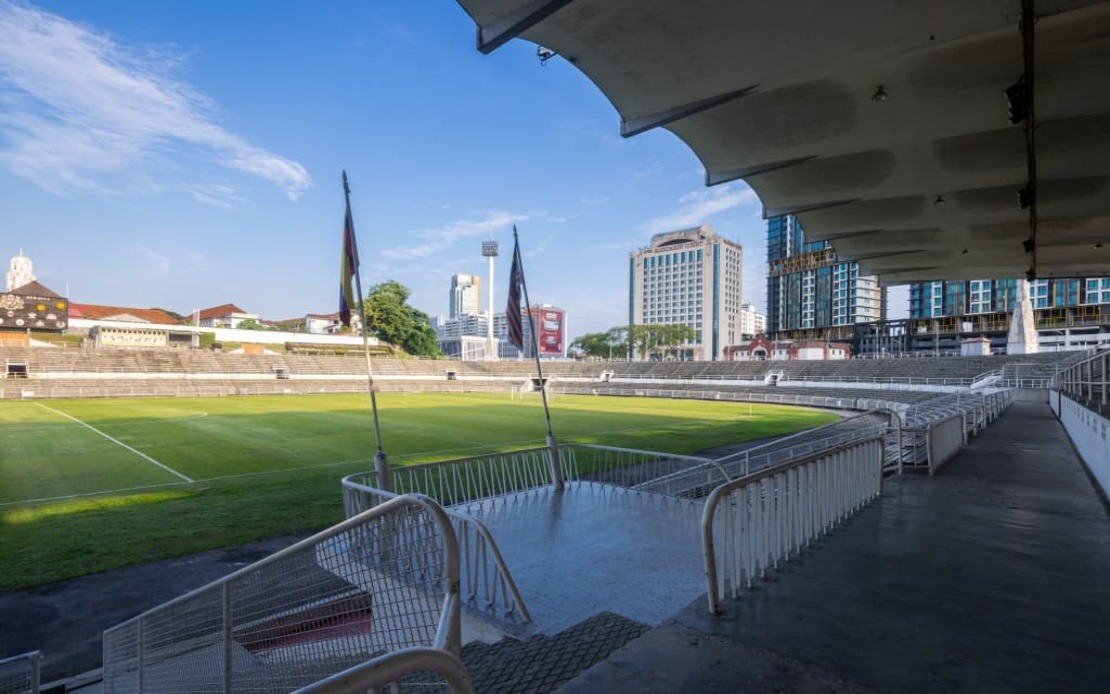
When Tunku Abdul Rahman Putra Al-Haj proclaimed independence at Stadium Merdeka on August 31, 1957, his historic sevenfold cry of "Merdeka!" signalled far more than the end of British colonial rule. The moment launched Malaysia onto its path as a sovereign nation, establishing a venue forever etched in the country's collective consciousness. Seven decades on, that same patriotic fervour remains tangible, though its expression has evolved. Today, National Day celebrations occur in multiple locations across the nation, with Putrajaya emerging as the primary stage for state-level commemoration—a transformation that mirrors Malaysia's own development narrative.
The migration of celebrations from Stadium Merdeka to Putrajaya represents more than administrative convenience. It embodies the country's journey from colonial liberation to contemporary nationhood. Since first hosting the national-level National Day celebration in 2003 under the theme "Keranamu Malaysia," Putrajaya has become a recurring venue, selected eleven times across the past two decades. The Cabinet's April 2025 decision to designate Putrajaya as the primary host for three consecutive years, from 2025 to 2027, formalises this shift and signals a deliberate strategic choice about how Malaysia wishes to commemorate its founding narrative.
Putrajaya itself carries symbolic weight distinct from Stadium Merdeka. Developed as Malaysia's Federal administrative centre in 1995 on land formerly known as Prang Besar, the city represents the nation's vision of modernisation and governance. The contrast between the two venues illuminates different chapters of Malaysia's story: Stadium Merdeka anchors the moment of rupture with colonialism, while Putrajaya represents the ongoing project of nation-building and institutional development. This duality need not create tension, according to academic observers who argue that both locations serve complementary historical functions.
Prof Dr Sarjit Singh Gill, Chairman of the National Unity and Progressive Society Cluster at the Malaysian Professors Council, emphasises that venue changes do not diminish the historical significance of National Day itself. Instead, he positions Stadium Merdeka and Putrajaya as two interrelated symbols that together construct a fuller understanding of Malaysian identity. Stadium Merdeka, he notes, triggers profound nostalgia among older citizens—particularly those aged seventy and above—evoking visceral connections to the independence struggle. Putrajaya, by contrast, embodies a modern administrative vision: a "smart city in a garden" designed for contemporary governance and public participation.
The pedagogical dimension of this venue shift warrants closer examination. How younger Malaysians, who possess no lived memory of colonial rule or the early independence period, understand and internalise the nation's founding narrative depends partly on how celebrations are staged and contextualised. Sarjit, a Professor of Anthropology and Sociology at Universiti Putra Malaysia, stresses that maintaining institutional and educational continuity remains essential. Future generations must grasp both the historical struggles that secured independence through negotiation and consensus, and Malaysia's defining feature: racial diversity unified under the principle of unity in diversity. Without deliberate efforts to transmit these understandings, celebrations risk becoming disconnected rituals.
Actual participation appears crucial to sustaining genuine patriotism. Sarjit's reflection on his own involvement in the "Berjaya" (Success)-themed parade of 1990 underscores how active engagement transforms abstract national ideals into embodied experience. Young people, he argues, must do more than observe National Day; they must participate in its staging and performance. This direct involvement cultivates patriotic sentiment that survives beyond the event itself, embedding national consciousness into personal memory and identity.
Putrajaya's selection as the primary venue also reflects practical considerations that shape public participation. The Event Management and Innovation Unit of the Management Services Division at the Ministry of Communications identifies accessibility as a decisive factor. Unlike Stadium Merdeka's limited transport options, Putrajaya benefits from comprehensive connectivity through the Mass Rapid Transit network, water taxi services, and shuttle buses. These transport alternatives reduce reliance on private vehicles and significantly improve logistics for accommodating large crowds. Enhanced accessibility democratises participation, enabling families and individuals from across the Klang Valley and beyond to attend without the logistical barriers that might otherwise prevent engagement.
The thematic architecture of recent National Day celebrations reveals conscious effort to bridge historical memory with contemporary aspirations. The 2026 National Day and Malaysia Day theme—"Malaysia MADANI: Kesejahteraan Dinikmati" (Malaysia MADANI: Shared Prosperity Enjoyed)—explicitly traces continuity from the independence struggle through to modern national development and citizen wellbeing. This framing positions independence not as a discrete historical moment but as an ongoing project requiring sustained commitment and investment. The theme suggests that patriotism in modern Malaysia means active participation in national development, not merely commemoration of past achievement.
Technological and creative innovations within celebration programmes particularly target younger audiences. The 2025 commemoration incorporates performances such as "Gema Inovasi MADANI" (Echoes of MADANI Innovation) and the musical fusion "Rentak MADANI, Paluan Tradisi" (MADANI Rhythms, Traditional Beats). A "Human Graphic" visual formation involving 1,500 schoolchildren demonstrates deliberate integration of youth into the spectacle itself, transforming young people from passive observers into active participants in the nation's self-representation. Such approaches acknowledge that contemporary audiences, accustomed to digital media and experiential engagement, respond differently to traditional ceremonial formats.
Personal testimony from younger Malaysians attending celebrations at Putrajaya documents the emotional resonance these events can generate. Muhammad Nasrul Nasir, a 30-year-old Administrative Assistant at the Federal Territories Department, describes the previous year's celebration as creating "meaningful and lasting memory," particularly when witnessing skydiving performances. His progression from spectator to parade participant reflects precisely the deepening engagement that theorists like Sarjit identify as essential to sustaining patriotism. For Muhammad Nasrul, attendance reconnected him with the historical sacrifices of past independence heroes, demonstrating that venue and presentation format can effectively bridge contemporary audiences with foundational national narratives.
The relationship between physical location and national identity remains subtle and contested. While some may perceive the shift from Stadium Merdeka to Putrajaya as dilution or distancing, the evidence suggests a more nuanced reality. Putrajaya's development as a modern administrative capital allows Malaysia to celebrate not merely the moment of independence but the institutional frameworks and democratic systems built upon it. The city itself becomes a three-dimensional text through which visitors read Malaysian accomplishment. For a diverse, multiethnic nation navigating contemporary challenges, celebrating National Day in multiple locations—honouring both the historic site of independence declaration and the symbols of modern governance—may prove more inclusive and generationally resonant than singular adherence to historical venues.
Ultimately, the question of venue pales beside the substantive question of meaning-making. Whether celebrations occur at Stadium Merdeka, Putrajaya, or elsewhere, their effectiveness in sustaining patriotism depends on whether they succeed in transmitting understanding of independence as hard-won achievement and ongoing responsibility. The Cabinet's commitment to Putrajaya through 2027 signals confidence in this location's capacity to serve that purpose. As Malaysia advances into its eighth decade as an independent nation, celebrating across multiple symbolic landscapes may paradoxically strengthen rather than weaken collective consciousness of national identity and shared purpose.

