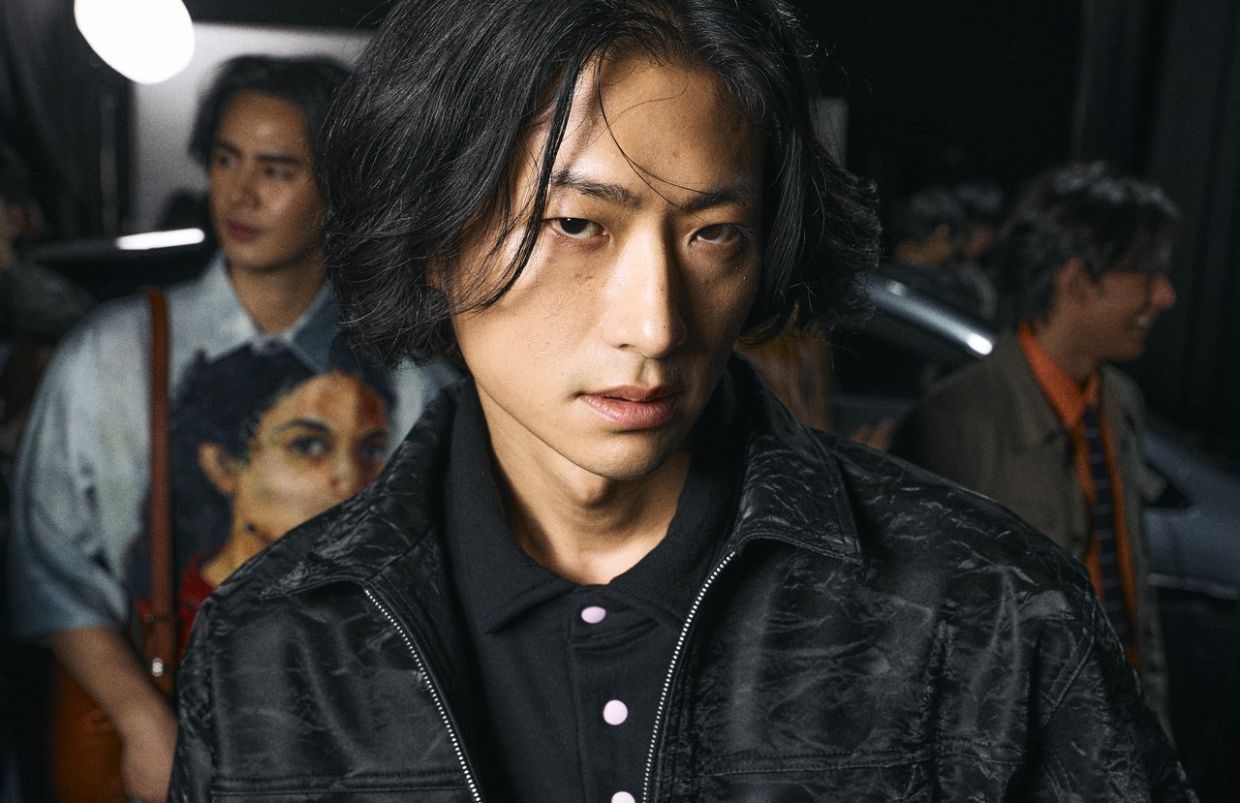
At an age when many professionals consider their career paths locked in place, Heo Yong-jin made a bold decision that defied conventional wisdom. The 40-year-old South Korean abandoned a decade-long litigation career at Kim & Chang, one of Seoul's most prestigious law firms, to pursue modelling in what many would view as an implausibly late start. Yet his unconventional journey has already yielded remarkable results, including an invitation to open an exclusive Louis Vuitton trunk show in Bangkok featuring a collection by menswear creative director Pharrell Williams and Japanese designer Nigo—a career milestone that took him by surprise despite months of calculated groundwork.
Heo's pivot into fashion came almost by accident. When he and his wife relocated to Spain in early 2023, he enrolled to study sports management and agency operations, expecting a straightforward academic transition. Instead, immersed in a fitness-focused environment alongside classmates passionate about athletic pursuits, he gradually joined them in football and padel, a racket sport sweeping across Europe. The physical activity proved transformative; as his health improved, weight naturally fell away, and his appearance began to shift noticeably. It was his wife who, observing the change, casually suggested he explore modelling as a possibility. At 188 centimeters tall, Heo recognized the potential his frame offered, particularly in a market where Asian male models faced high demand across European agencies.
The decision to pursue modelling seriously came with pragmatic constraints. With only four months remaining on his Spanish visa, Heo compressed years of typical industry groundwork into weeks. He invested in building a portfolio from scratch, hiring photographers independently and reaching out to prospective clients directly. This hands-on approach—learning the business while simultaneously entering it—proved invaluable not just for developing a professional portfolio, but for cultivating the self-assurance necessary to persist in an industry driven by rejection. The experience demonstrated that meaningful work could emerge outside traditional hierarchies, a revelation that would sustain him through subsequent setbacks.
Returning to South Korea with newfound momentum proved sobering. Domestic modelling agencies dismissed him with remarkable consistency, citing his age as the primary obstacle. A 40-year-old novice with minimal professional credits fell outside the parameters most Seoul agencies considered viable, regardless of physical attributes or work ethic. Undeterred, Heo expanded his search geographically, methodically contacting agencies across China and Southeast Asia via email, uploading portfolios to their websites, and waiting for responses. This regional diversification strategy eventually yielded an opportunity: a Bangkok-based agency expressed genuine interest. By shuttling between Thailand and South Korea, Heo began securing campaigns with local brands, appearing in sunglasses advertisements and insurance company commercials that built both his portfolio and his credibility within Asia's modelling ecosystem.
The Louis Vuitton trunk show in Bangkok represented his most prestigious booking to date, and the experience left him genuinely astonished. Walking in an invitation-only presentation by one of the world's most influential luxury houses validated not just his physical suitability for high-end fashion, but his decision to pursue an entirely new professional identity at midlife. The event crystallized something he had suspected but could not fully articulate: that a place existed for him within the fashion industry, even as an unconventional entrant.
Heo's journey resonates particularly within Southeast Asian and East Asian contexts, where rigid career pathways and the valorization of stability traditionally discourage such radical professional reinvention. His success challenges assumptions about optimal timing and demonstrates that personal transformation need not occur before age 30. The Four million views his Instagram content garnered reveal widespread public curiosity about whether conventional life scripts represent the only viable options. For audiences in Malaysia, Singapore, and throughout the region, where family expectations and professional hierarchies often limit individual agency, Heo's narrative suggests that institutional rejection need not constitute final judgment.
What distinguishes Heo's approach is his refusal to frame his transition as a triumphant success narrative, despite obvious achievements. He remains cautious about declaring victory, recognizing that a single prestigious booking does not guarantee sustainable career momentum. This measured perspective reflects genuine humility about an industry's unpredictability and the particular precarity facing models entering at 40 with limited track records. The financial uncertainty he acknowledges—a stark contrast to the stability his law career provided—represents a genuine sacrifice rather than romantic struggle. Yet he articulates clearly that material comfort alone never generated the sense of professional fulfillment he discovered through modelling.
The transformation Heo describes extends beyond career mechanics into deeper territory: the discovery of authentic confidence replacing the performative certainty he once projected in legal practice. Litigation support demanded competence and decisiveness, but modelling demanded something more vulnerable—the ability to become a vehicle for creative vision while simultaneously expressing something genuinely personal. This paradox of constraint and freedom, of surrender and authenticity, speaks to why creative work can feel fundamentally different from technical expertise, regardless of remuneration.
Interest from South Korean brands has begun materializing as his profile strengthens, including recent inquiries for fashion lookbooks. These domestic opportunities suggest that accumulated work in Asia has enhanced his credibility within home markets previously dismissive of his age and experience. The recognition that brands he approaches now actively seek his participation rather than declining his submissions represents a qualitative shift in his market position. This trajectory mirrors broader industry dynamics across Asia, where agencies increasingly recognize commercial value in mature, distinctive-looking models who bring both physical presence and professional gravitas.
Heo's stated ambitions now extend to the Milan and Paris fashion weeks scheduled for late September through early October, where major houses including Prada, Bottega Veneta, Saint Laurent, and Tom Ford present their collections. These venues represent the industry's highest-profile stages, platforms traditionally reserved for models with years of institutional credibility and established relationships with casting directors. At 40, largely unknown outside Asian markets, Heo faces formidable obstacles: securing agency representation willing to champion his candidacy and competing against younger models with deeper industry connections. Yet the fact that he frames these challenges as surmountable rather than disqualifying suggests the psychological shift his modelling career has produced.
Beyond individual achievement, Heo's journey illuminates evolving definitions of career viability in contemporary Asia. The conventional model—education, entry-level position, steady progression toward seniority—no longer represents the only rational path. Technological connectivity enables direct outreach to agencies across continents; social media generates visibility independent of traditional gatekeepers; and growing markets reward distinctive presence over conventional metrics. For Malaysian professionals, particularly those who sense misalignment between their current roles and authentic interests, Heo's example provides neither false promise nor magical solution, but rather pragmatic demonstration that geographic expansion, persistent execution, and willingness to rebuild can generate unexpected opportunities even at midlife.
What Heo repeatedly emphasizes is neither the glamour of his transformation nor the exceptional nature of his achievement, but rather its accessibility. He did not possess extraordinary talent, family connections, or institutional backing. He identified an opportunity, invested modest resources, executed methodically, and remained sufficiently flexible to pursue momentum wherever it emerged geographically. This emphasis on ordinary competence and systematic persistence, rather than inherent exceptionalism, may ultimately prove his most influential contribution to contemporary discussions about career reinvention across the region. His willingness to embrace uncertainty in exchange for work that generates genuine engagement and self-expression suggests that the question facing stalled professionals is not whether change remains possible, but whether they possess sufficient conviction to pursue it.

