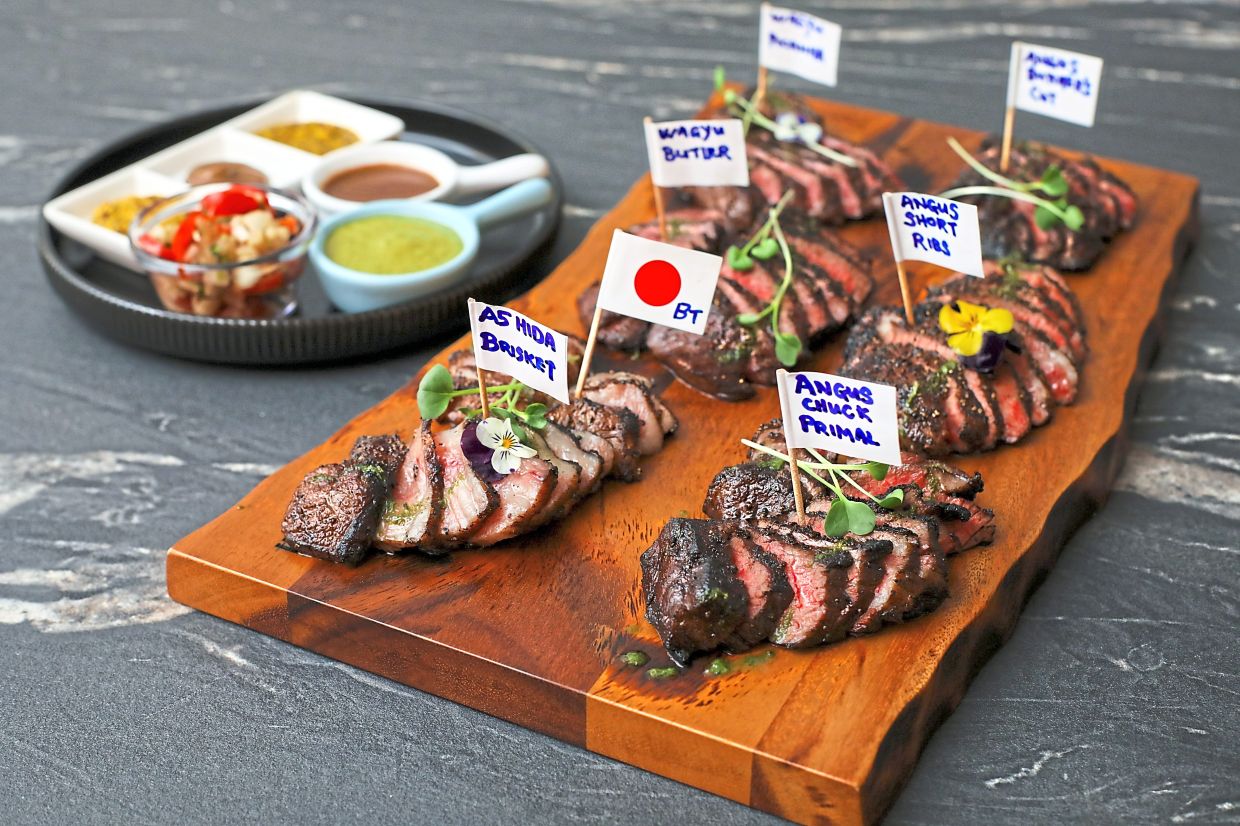
The transformation of Malaysia's beef dining culture is unfolding quietly in restaurant kitchens across the Klang Valley, where chefs are discovering that the cuts long relegated to ground meat and processed products can command the same respect as expensive striploin and tenderloin. At Petaling Jaya's Meat Feds, chef Yenni Law has become a torchbearer for this culinary shift, her skilled hands trimming sinew and silver skin from secondary cuts with the precision typically reserved for premium steaks. Earlier this year, Law and co-founder Shelly Saw earned recognition in the Malaysia Book of Records for maintaining the country's most extensive restaurant menu of secondary beef cuts, featuring twenty distinct varieties. Their achievement underscores a broader awakening in Malaysia's fine dining sector, where secondary cuts are gradually shedding their reputation as inferior ingredients destined for burgers and sausages.
The market context driving this shift reveals both opportunity and necessity. Malaysians consume more beef per capita than any other Southeast Asian nation, yet the market has historically remained fixated on what the industry calls the holy trinity: striploin, tenderloin and ribeye. This concentration reflects fundamental economics—these prized cuts represent merely 8 to 10 percent of a bovine carcass, while secondary cuts comprise 80 to 90 percent of available meat. Historically, the glut of underutilised cuts has defaulted into minced products, leaving most diners entirely unfamiliar with the distinct flavour and textural characteristics that cuts like flat iron, flank, hanging tender and picanha can deliver. This knowledge gap perpetuates a cycle where premium cuts command premium pricing while the majority of the animal remains undervalued in consumer perception.
Global market pressures have accelerated the reassessment of beef utilisation strategies in Malaysia. The worldwide beef shortage, exacerbated by the global oil crisis and its ripple effects on livestock production and transportation, has fundamentally altered pricing dynamics. Prime cuts have experienced approximately 30 percent price increases, rendering them increasingly inaccessible to many establishments and consumers. Secondary cuts, by contrast, have absorbed only roughly 10 percent price escalation, creating a compelling economic argument for menu diversification. Desmond Chong, head chef at woodfire grill restaurant Ignis KL, exemplifies this pragmatic adaptation, introducing three to four secondary beef cuts to his offerings precisely because the price differential now exceeds hundreds of ringgit per serving. For restaurants operating on tight margins, this shift represents not culinary compromise but economic survival.
The organised promotion of secondary cuts through industry bodies and distributors has proven instrumental in reshaping chef attitudes and consumer expectations. Meat & Livestock Australia, in partnership with local meat distributors including Lucky Frozen Sdn Bhd, has orchestrated seminars, educational sessions and masterclasses throughout the Klang Valley, positioning secondary cuts as ingredients worthy of centre-plate prominence rather than supporting roles. These interventions extend beyond simple product promotion; they constitute a deliberate strategy to recalibrate market perception through expert guidance and practical demonstration. Valeska V, regional manager for South-East Asia for Meat & Livestock Australia, articulates this educational philosophy: as chefs and consumers develop greater sophistication, they naturally gravitate toward exploring dimensions beyond the obvious tenderness of prime cuts, particularly when pricing pressures incentivise such exploration. Law herself has attended these professional sessions specifically to verify her butchering techniques and to equip her team with efficiency gains that make secondary cut preparation economically viable.
The international precedent for this market transformation provides compelling evidence of its viability. Japan's adoption of Norwegian salmon during the 1980s and 1990s offers an instructive parallel. Japanese culinary tradition initially dismissed salmon as beneath consideration for fine dining preparation, yet an intensive government-backed campaign fundamentally altered this perception within a generation. Today, salmon sushi ranks as Japan's most popular sushi topping, demonstrating that cultural and culinary prejudices can be overcome through sustained, strategic messaging combined with chef education and consumer exposure. Malaysia's secondary beef movement operates along remarkably similar lines: a combination of industry promotion, chef training and carefully curated restaurant presentations designed to establish secondary cuts as ingredients capable of delivering the same gastronomic satisfaction as traditional premium options.
The practical challenge confronting chefs undertaking this transition centres on technical mastery. Secondary cuts demand substantially greater processing skill than their premium counterparts, requiring butchers and cooks to distinguish between fat, sinew and silver skin—distinctions that demand both experience and tactile sensitivity. Law emphasises that expertise develops only through deliberate practice; the visual similarity between certain fat deposits and sinew can confound even experienced practitioners. This learning curve represents a genuine barrier to widespread adoption, yet it simultaneously creates a differentiation opportunity for establishments willing to invest in staff development. Chefs who master secondary cut preparation can offer menu items that competitors cannot easily replicate, establishing authentic culinary credentials grounded in technical proficiency rather than ingredient cost.
The organoleptic benefits of secondary cuts extend far beyond their economic advantages. Different sections of the animal deliver distinct flavour profiles, textural variations and structural characteristics that collectively expand the sensory range available to discerning diners. Law's restaurant exemplifies this diversity through large platters featuring butcher's cut, chuck primal, brisket, picanha and short rib—each contributing characteristic bovine intensity, bite, chew, resilience and tenderness variations that reflect the muscle groups' functional demands during the animal's life. Chong's charcoal-fired preparations further demonstrate that secondary cuts, when treated with equivalent technical attention and culinary respect as prime cuts, deliver silken mouthfeels and luxurious satisfaction without the excessive opulence or price premium associated with traditional steaks. This textural and flavour complexity appeals precisely to sophisticated diners increasingly seeking authenticity and substance over status-driven consumption patterns.
The economic value proposition for both restaurateurs and consumers creates powerful incentives for accelerated adoption. Secondary cuts can retail at 20 to 60 percent below prime cut pricing, translating into savings potentially exceeding hundreds of ringgit per serving while maintaining—or even enhancing—gustatory and textural satisfaction. For restaurants, this margin advantage directly improves profitability without requiring price reductions that might alienate quality-conscious customers. For diners, it democratises access to beef prepared with the same technical sophistication and ingredient quality previously reserved for premium offerings. This democratisation aligns with broader consumer trends toward value consciousness and sustainability awareness, suggesting that secondary cut adoption may reflect evolving priorities beyond mere price-driven necessity.
James See, business development director at meat distributor Lucky Frozen Sdn Bhd, articulates the strategic imperative driving the industry's collective pivot: whole-animal utilisation and cut diversity enhance resilience against beef price inflation and supply volatility. Rather than remaining dependent on an increasingly scarce and expensive portfolio of prime cuts, establishments and consumers that embrace the full range of available cuts insulate themselves from market shocks and supply disruptions. This perspective extends beyond immediate commercial interest to encompass systemic sustainability, as fuller utilisation of slaughtered animals reduces waste and improves economic efficiency throughout the supply chain. The movement toward secondary cuts thus represents not a temporary expedient prompted by global shortage, but a potentially durable shift toward more rational, sustainable and economically resilient beef consumption patterns.
The trajectory of secondary beef adoption in Malaysia suggests acceleration beyond the current experimental phase. As more chefs achieve technical proficiency, as consumer familiarity deepens through restaurant exposure, and as industry education campaigns continue expanding, the stigma associated with non-prime cuts will likely diminish substantially. Younger chefs entering the profession will inherit a culinary landscape where secondary cuts occupy legitimate space within fine dining contexts rather than relegation to value-menu applications. This generational shift, combined with persistent global supply constraints and pricing pressures, suggests that the traditional hierarchy privileging prime cuts may gradually flatten. Within five to ten years, a Malaysian restaurant menu featuring diverse secondary cuts presented with equivalent technical sophistication and pricing as prime cuts may become unremarkable rather than distinctive—a natural reflection of rational ingredient utilisation and culinary maturity.

