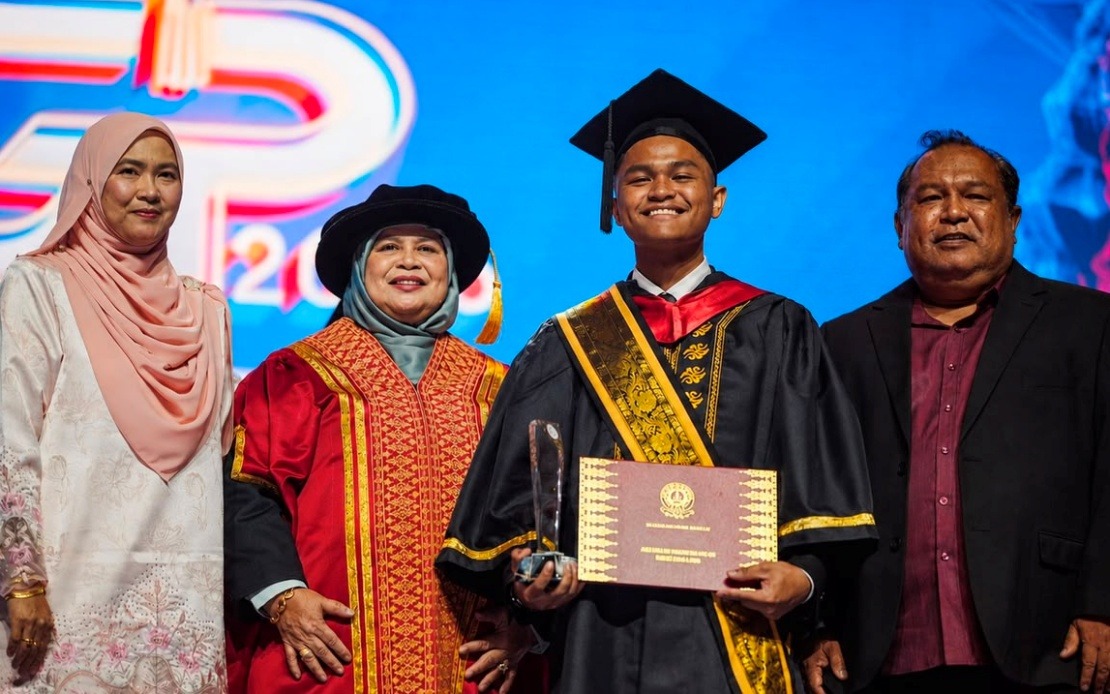
Muhammad Aaqif Dino Faezal's trajectory from a science student at MARA Science Junior College (MRSM) Tun Ghafar Baba in Melaka to an incoming geology undergraduate at Imperial College London exemplifies the transformative impact that targeted educational sponsorship can achieve. Now nineteen years old, Aaqif was recognised as the 2026 MARA College Graduate Icon on August 20, a distinction underscoring both his academic prowess and the investment that Majlis Amanah Rakyat (MARA) has made in his development. His appointment to study at one of Europe's most prestigious institutions this September marks a culmination of years of structured support from Malaysia's youth development agency.
The financial barrier to international education remains formidable for most Malaysian families, even those considered middle-class. Aaqif's candid acknowledgment that he could not realistically have afforded the costs of studying and residing abroad without institutional assistance reflects a systemic challenge facing aspiring scholars throughout the country. MARA's Young Talent Development Programme (YTP) addressed this constraint by offering sponsorship for his International Baccalaureate Diploma Programme (IBDP) studies at Kolej MARA Banting (KMB) from 2024 to May 2026. By removing the financial impediment that typically restricts access to world-class preparation, the agency created conditions for promising students to compete on an international platform.
Aaqif's selection for sponsorship was not arbitrary. The Young Talent Development Programme operates on a competitive basis, identifying students with demonstrated potential in both academics and character. His enrollment at KMB represented not merely an educational placement but an intensive two-year preparation for university-level study abroad. The International Baccalaureate curriculum, recognised globally as rigorous preparation for tertiary education, provided the intellectual foundation and standardised qualification essential for admission to elite British institutions. For Malaysia, such programmes serve a strategic purpose: they channel high-ability youth through internationally recognised educational pathways, enhancing their competitiveness while maintaining connections to national development priorities.
The depth of Aaqif's engagement during his time at KMB extended considerably beyond examination performance. While his score of forty-four out of forty-five points in the IBDP examination last May demonstrated exceptional academic capability, his institutional recognition included the KMB Best Graduate Award and the Co-curricular Icon Award at the MARA Professional College and MARA College Inspiration Awards Day. These accolades reflected contributions that transcended classroom achievement. As president of the Students' Representative Council (MPP), he navigated the complex role of institutional leadership, fostering dialogue between student constituencies and management while building consensus around student welfare and campus initiatives. This experience cultivated practical competencies in negotiation, organisational management, and inclusive decision-making that formal coursework alone cannot provide.
The selection criteria for MARA's Graduate Icon award explicitly seek to identify individuals who represent excellence across multiple dimensions. Outstanding academic achievement constitutes the foundation, but the award system also weighs leadership qualities, contributions to society, and potential to become an exemplary graduate advocate. Aaqif's profile satisfied these criteria comprehensively. His involvement in co-curricular activities and community engagement demonstrated commitment extending beyond personal advancement. The development of self-confidence and time-management capacity that he acquired through leadership roles and activity coordination directly addresses competencies that international universities expect from Malaysian students entering competitive academic environments.
Aaqif's choice to pursue geology at Imperial College London reflects strategic career positioning within Malaysia's economic priorities. He has explicitly articulated his intention to apply expertise and experience gained through his studies toward contribution to Malaysia's oil, gas, and energy sectors. This articulation of purpose distinguishes his scholarship from pure credentialism; rather than treating overseas education as personal consumption, he frames his qualification as tools for addressing sectoral challenges that directly affect Malaysian economic development. The energy and resources industries remain strategically significant for the country, and the return of internationally trained specialists in these fields strengthens technical capacity and innovation capability within these sectors.
The emotional resonance that Aaqif experienced upon receiving the Graduate Icon award suggests the profound psychological significance of formal recognition for academically ambitious students. His reflection on challenges, sacrifices, and support systems that contributed to his achievement demonstrates maturity in attributing success not to individual heroics but to relational contexts of family, educators, peers, and institutional infrastructure. This perspective matters considerably because it predisposes him toward reciprocal engagement with MARA's mission and national development objectives, rather than positioning himself as entirely self-made. For institutional leaders evaluating scholarship recipients as future ambassadors and contributors, such orientation indicates likelihood of sustained engagement with Malaysia's development trajectory.
Kolej MARA Banting's director Arfaseela Amir articulated the institutional philosophy undergirding Aaqif's development. The characterisation of his achievement as reflecting "holistic excellence" distinguishes MARA's educational approach from narrowly academic models. The emphasis that Aaqif excelled in leadership and co-curricular activities alongside exceptional examination performance indicates that KMB deliberately cultivates human capital defined by intellectual capability paired with strong moral character. In the Malaysian context, where concerns about graduate competencies frequently emphasise both technical knowledge and soft skills, MARA's explicit attention to character development addresses identified gaps in conventional educational provision. Amir's observation that Aaqif demonstrated effective intermediation between management and students speaks to abilities in stakeholder navigation that international academic and professional environments reward substantially.
The trajectory from MRSM through KMB to Imperial College London represents a carefully structured pipeline for talent development. MRSM provides foundational science education and selection of capable students, KMB offers intensive preparation in internationally recognised curricula, and MARA's sponsorship removes financial obstacles that would otherwise screen out students based on family resources rather than capability. This three-stage process embeds multiple checkpoints for assessment and support, reducing likelihood that capable but disadvantaged students fall through institutional gaps. For Malaysia's broader talent competitiveness, such systematic cultivation matters considerably; countries competing for knowledge-economy participation require institutional mechanisms to identify and develop promising youth across socioeconomic strata.
Aaqif's appointment to Imperial College London carries implications extending beyond individual success. His studies in geology position him within a disciplinary field increasingly shaped by sustainability considerations, resource management in constrained planetary contexts, and technological innovation in energy transition. The expertise and perspectives that he acquires through research and study in London will potentially inform Malaysian approaches to resource management and energy policy in coming decades. Moreover, his experience as a MARA scholar engaging with peers from diverse national contexts and educational backgrounds contributes to his capacities for cross-cultural collaboration and international professional networking—capabilities that facilitate subsequent technology transfer, knowledge exchange, and collaborative problem-solving between Malaysia and global research and innovation communities.
The broader narrative of MARA's educational investment deserves examination within Malaysia's human capital strategy. Scholarship programmes targeting high-ability students from backgrounds lacking family capital to access international education serve both equity and excellence objectives simultaneously. They identify merit distributed across socioeconomic and geographic categories that conventional fee-paying pathways might exclude. For Aaqif, whose Selangor origins and progression through publicly-funded MRSM and KMB institutions mark his middle-class but not privileged background, MARA's support translated potential into realised achievement. As he undertakes geology studies that will equip him for senior technical and strategic roles within Malaysia's resource sectors, his development through MARA's pipeline illustrates the agency's practical effectiveness in contributing to national competitiveness and sustainable talent flows.

