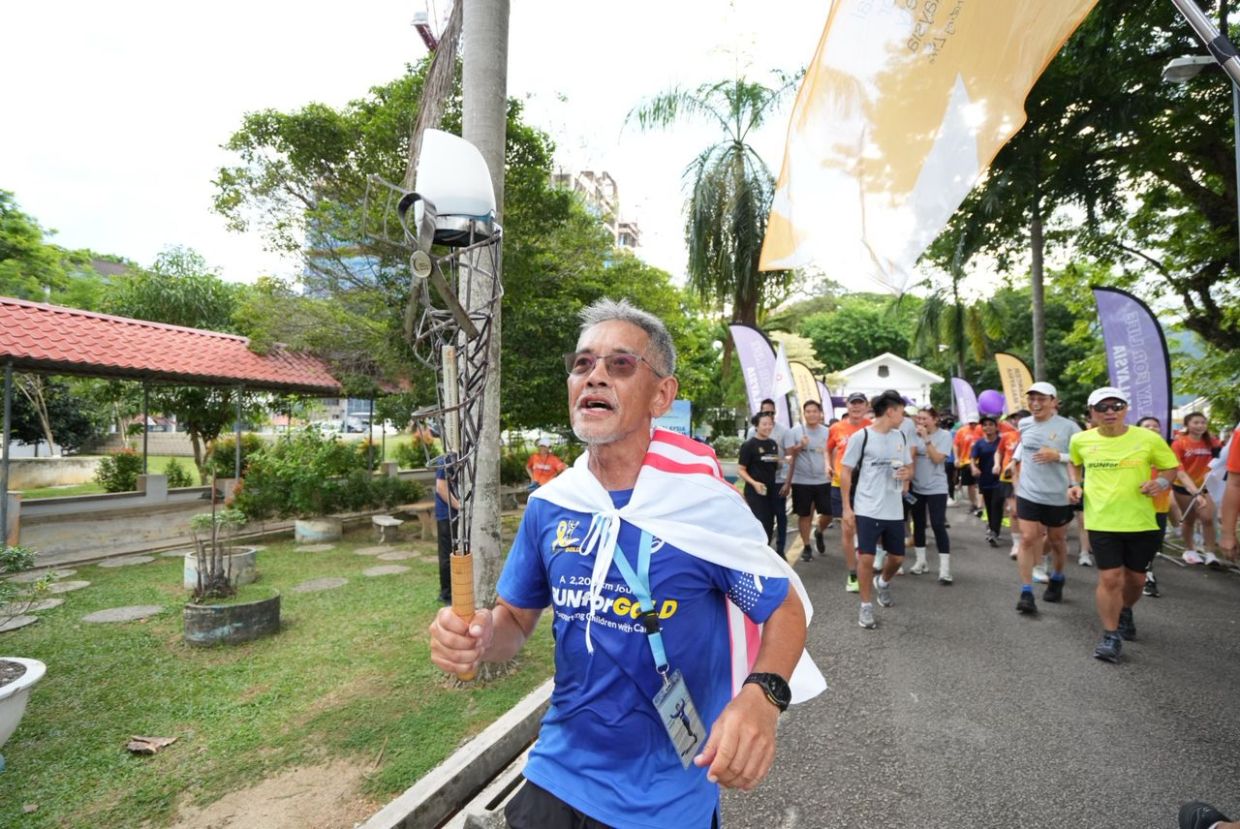
When SG Lim, a 66-year-old retired civil engineer and runner from Penang, reached retirement age, most might have expected a leisurely slowdown from the rigours of work life. Instead, he found himself navigating far more difficult terrain—the landscape of grief that emerged after his wife, Goh Joo Lee, succumbed to cancer in 2024 at age 63, after decades of marriage. Rather than retreat into solitude, Lim embarked on a journey that would ultimately transform his personal loss into a meaningful mission touching thousands of lives across Malaysia.
In the immediate aftermath of bereavement, Lim moved between three continents, splitting his time between Australia with his two children, Malaysia with his mother and siblings, and Hong Kong for personal reflection. When describing his late wife, he requires only two words: "Loving" and "caring." Her compassion extended beyond her immediate circle—even during her hospitalisation, while battling her own disease, she asked Lim to purchase flowers for a stranger in the ward, finding joy in bringing happiness to someone else enduring similar suffering. These intimate recollections of Goh's character reveal not merely a devoted spouse but a woman whose empathy seemed boundless, even in her darkest moments.
Goh's artistic talents also left an indelible impression on her grieving husband. She had been a painter and creator who regularly shared her pop-up art projects on social media, with those digital creations now serving as treasured reminders of her creative spirit. These fragments of her presence—her paintings, her kindness, her very essence—became the emotional foundation upon which Lim would eventually construct his new purpose. As he processed his loss, he recognised that the pain of missing her could be channelled into something meaningful that would honour her memory while serving others.
The turning point came when Lim discovered a book by Laurence Carter that inspired him to consider a monumental physical and spiritual challenge. He decided to pursue the ambitious idea of running or walking across Peninsular Malaysia, and importantly, he reached out to Carter himself to seek guidance for such an undertaking. This conversation between kindred spirits—one having already completed such journeys and the other standing at the threshold—would prove instrumental in transforming a personal vision into a structured, impactful campaign. With the backing of the National Cancer Society Malaysia (NCSM), Lim's endeavour crystallised into "Run For Gold," an initiative explicitly designed to raise both awareness and financial support for children battling cancer.
The preparation phase was exhaustive and methodical. Having completed the Sydney Marathon in August of the previous year, Lim progressively increased his running mileage throughout the following months to build the endurance necessary for tackling eleven states and federal territories. He recalibrated his body clock, waking at 5am to condition himself for early starts and deliberately running during the late morning heat to acclimate to Malaysia's tropical climate. Beyond the physical conditioning, he underwent strength training and, crucially, taught himself video editing so he could document his expedition through social media, thereby extending the campaign's reach beyond the geographical scope of his footsteps.
As Lim progressed through his gruelling journey, he encountered experiences that crystallised his conviction in the mission's importance. A pivotal moment occurred during his first organised visit to a children's oncology ward supported by NCSM, where the sight of frail children and visibly distressed parents left him emotionally shaken. In that ward, surrounded by suffering he could now channel his efforts toward alleviating, Lim found absolute clarity about his purpose. He was no longer simply running to honour his wife; he was running to fight a disease that had stolen her and that continued to menace countless Malaysian families.
Throughout the journey, Lim encountered individuals whose responses to his mission reinforced the resonance of his cause. In Pekan, Pahang, he met a retired teacher and his wife whose commitment proved both moving and instructive. Though financially constrained, the retired educator contributed his physical energy and social persuasion, stopping at local eateries along Lim's route to inform the proprietors and patrons about the campaign's objectives. This couple subsequently accompanied Lim through multiple stages spanning Johor, Melaka, and Penang, with the wife providing support from the roadside whilst her husband ran alongside the marathoner. Watching their tender devotion to one another—the kind of partnership he had lost—proved simultaneously painful and reassuring, a reminder that his journey had transcended personal catharsis to become a gathering point for collective compassion.
After nearly three months of continuous exertion and emotional intensity, Lim finally crossed the finish line in George Town, Penang, having covered 2,200 kilometres across the nation's landscape. His first coherent words upon completion were addressed to his absent wife: "Darling, we made it!" The journey that had begun as an attempt to process grief had become something larger than himself. Awaiting him at that finish line were not merely close family members but a constellation of supporters—childhood friends, former classmates, and strangers whose lives had been touched by his campaign.
The completion of "Run For Gold" demonstrates how personal tragedy, when confronted with courage and redirected with intention, possesses transformative potential extending far beyond the individual who experiences it. Lim's achievement speaks to broader questions about resilience in Malaysian society and the capacity of ordinary citizens to catalyse meaningful social change. His run has generated substantial awareness and resources for the National Cancer Society Malaysia's paediatric cancer programs, potentially improving outcomes for young patients who would otherwise lack adequate support. Moreover, his story offers a template for how grief need not diminish us, but rather can become the raw material from which we construct legacies of service.

