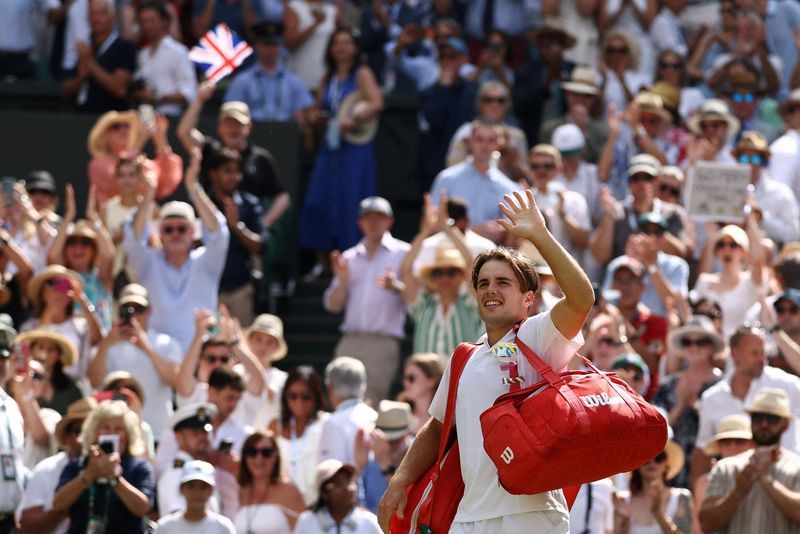
Arthur Fery was supposed to be lounging on a Greek beach this week, but instead the British tennis player found himself on the most famous grass court in the world, his extraordinary Wimbledon adventure ending in defeat to Alexander Zverev in the semi-finals on Friday. The 23-year-old, ranked 114th in the world before the tournament, achieved what many thought impossible when he accepted a wildcard entry to the Championships, only to emerge as one of the competition's most compelling stories after becoming the first wildcard in 25 years to reach the men's semi-finals at the grasscourt major.
Fery's improbable journey through the draw—dispatching five opponents in succession—transformed what was meant to be a leisurely Mediterranean break into one of British sport's most captivating moments. His friends had made other arrangements, with one companion actually departing early in the conviction that Fery would be eliminated in the opening rounds and could join him for the holiday. When the youngster kept advancing, that friend sheepishly returned two days later, ready to cheer on the home favourite. The narrative captured the public imagination in a way that transcended tennis, drawing messages of encouragement from the England football World Cup squad and royal attendance from Queen Camilla and Princess Kate.
Prior to Wimbledon, Fery had won just two matches across all Grand Slam tournaments, a statistic that underscores how far he has travelled in such a short timeframe. His ranking before the tournament—114th—reflected a player still establishing himself on the professional circuit, one without the security of guaranteed entry into most elite events. Yet something shifted during those 11 days in London. The combination of home support, the unique characteristics of grass-court tennis that may suit his game, and perhaps simply the freedom that comes from having nothing to lose, powered him through successive rounds against increasingly accomplished opponents.
The financial windfall accompanying his semi-final run provides a different kind of silver lining to his premature exit. Fery earned £900,000 (approximately $1.21 million) for reaching the final four, money that transforms his circumstances considerably and grants him options previously unavailable. More significantly for his career trajectory, his ranking is expected to catapult into the mid-30s, a leap that carries substantial implications for tournament access and scheduling flexibility. In professional tennis, such a ranking improvement opens critical doors—securing main draw positions in major events, gaining entry to higher-tier tour competitions, and attracting improved sponsorship opportunities.
Fery himself acknowledges the magnitude of the change ahead, speaking candidly about the psychological adjustments required. The expectations that will follow his breakthrough are fundamentally different from those he has previously navigated. No longer an unknown quantity operating below the radar, he will face opponents who have studied his play, scheduling demands from events eager to capitalize on his newfound profile, and the internal pressure that accompanies sudden elevation. He has demonstrated awareness that managing these transitions successfully will determine whether this Wimbledon run represents a breakthrough moment or a brief spike in an otherwise modest career.
The broader context of British tennis also colours Fery's achievement. As a French-born player who has become the nation's focal point at Wimbledon—and is now being referred to as Britain's new number one—he embodies the cosmopolitan nature of contemporary elite sport. His rise matters not merely as an individual success story but as confirmation that British tennis can produce competitive players willing to put in the requisite years of development, even if they do so somewhat unconventionally through wildcard pathways rather than traditional qualifying routes.
Looking ahead, Fery is appropriately cautious about drawing too many conclusions from a single tournament run, however impressive. He recognizes that rest and perspective are necessary before reassessing his capabilities and trajectory. The American hardcourt swing looms as his next significant challenge, culminating in his maiden US Open appearance at Flushing Meadows. These tournaments will provide a more reliable indicator of whether his Wimbledon success reflects genuine advancement or a one-off achievement attributable to grass-court specialization and home advantage.
For Southeast Asian readers and indeed observers across the region, Fery's trajectory offers instructive lessons about the unpredictability of sport and the continued dominance of traditional tennis powerhouses. His achievement underscores how even in an era of increasing professionalization and ranking-based access, pathways for unexpected breakthroughs remain available. The wild card tradition at Wimbledon and other majors preserves an element of meritocratic uncertainty that stands in marked contrast to the increasingly structured qualification systems in many sports.
Fery's immediate priority, he indicates, will involve processing the emotional intensity and physical demands of his fortnight in London before considering fresh competition. The holiday to Greece that seemed certain just weeks ago may yet materialize, though under rather different circumstances than originally envisaged. What was meant as a respite from professional tennis has instead become a prelude to a radically altered career landscape, one in which he must quickly adapt to his new station while attempting to build upon rather than diminish the promise displayed across his semi-final run.

