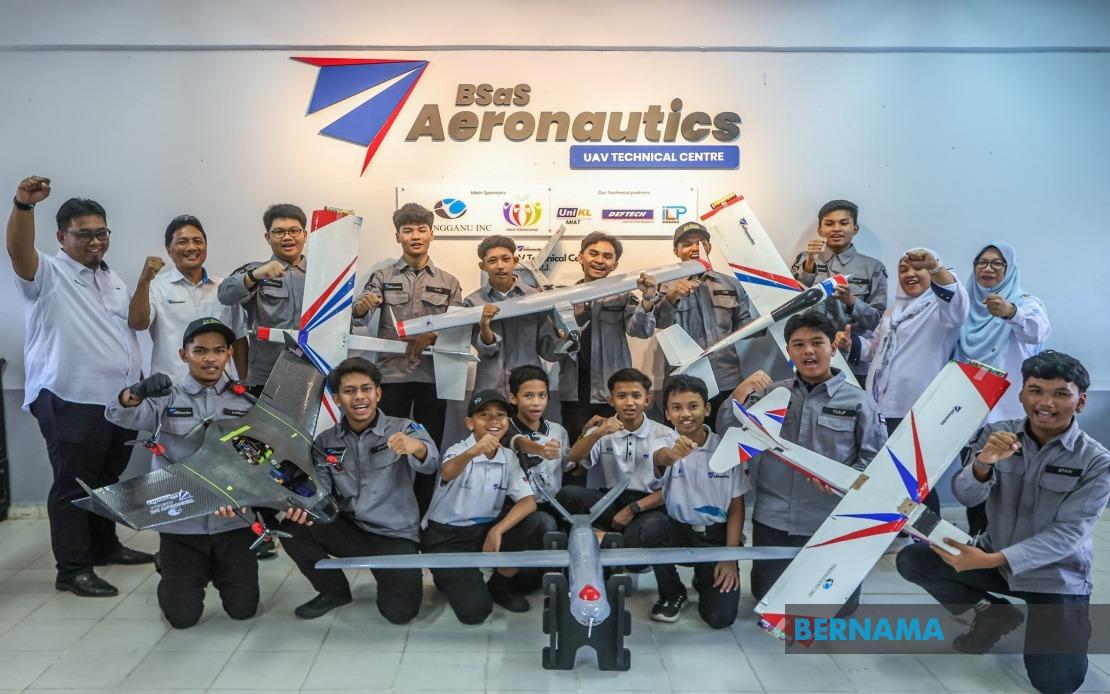
A groundbreaking initiative at SMK Bukit Sawa in Marang is demonstrating how secondary school classrooms can become laboratories for cutting-edge aerospace technology. Since 2023, the school's TI-BSAS UAV In School programme has guided 35 students through the complete design, construction, and operation of unmanned aerial vehicles, with each unit representing an investment of between RM6,000 and RM10,000. The initiative, shepherded by English teacher Badrul Hisyam Zakaria alongside two colleagues, represents a significant departure from traditional vocational education in Malaysia, offering students direct exposure to engineering methodologies typically reserved for university programmes.
The scope of the project extends well beyond simple robotics clubs. Students are learning industrial-grade fabrication techniques and integrating sophisticated avionics systems into their aircraft. The UAVs they construct comply with full aircraft specifications and incorporate Global Positioning System technology for autonomous target tracking. Badrul Hisyam emphasises that the team employs the same methods used in professional aviation companies, though adapted to school-sized budgets and learning environments. This commitment to authentic engineering standards means students graduate from the programme with practical competencies directly transferable to aerospace careers, rather than theoretical knowledge detached from real-world application.
The programme's trajectory has already produced measurable success beyond the workshop doors. Most recently, SMK Bukit Sawa claimed the championship title in the UAV Avionics Integration Challenge for secondary schools at the MyAERO Challenge 2026 held at MAEPS in Serdang, Selangor, validating the quality of student work against statewide competition. More significantly for long-term impact, two alumni have progressed to aircraft engineering studies at Universiti Kuala Lumpur, while three others have secured places in science matriculation programmes. This pipeline from secondary school through advanced technical education suggests the programme functions as a genuine recruitment pathway rather than merely an enrichment activity.
The ambition underlying the initiative reflects a strategic economic vision. Badrul Hisyam articulates a three to four-year timeline before anticipating the first cohort of fully qualified aircraft engineers emerging from this feeder system. Beyond individual career trajectories, the programme addresses a broader national concern: Malaysia's dependence on foreign technology for defence and commercial applications. By developing local capacity to design and manufacture UAV systems, the school indirectly supports state aspirations to reduce technological imports and build indigenous aerospace capabilities. For a nation that has historically relied on technology transfer and foreign expertise, this represents a meaningful shift towards technological self-sufficiency.
Terengganu Incorporated has anchored the programme financially, committing RM75,000 in corporate social responsibility funding since inception. The investment arrived in two tranches: RM45,000 in 2023 to establish infrastructure and curriculum, and a further RM30,000 in 2026 to sustain operations and development. Datuk Burhanuddin Hilmi Mohamed, the company's president and chief executive, frames this expenditure within broader equity objectives, specifically targeting students from the B40 income group who might otherwise lack exposure to high-demand technological fields. This demographic focus is particularly relevant in Terengganu, a state with significant rural populations, where aerospace and aviation careers can represent transformative economic opportunities.
The programme's emphasis on artificial intelligence capabilities signals growing sophistication in its second phase. While current generation UAVs rely on pre-programmed GPS coordinates for target detection, students are now developing systems equipped with machine vision and autonomous decision-making algorithms. This progression mirrors global trends in unmanned systems development, where autonomy and artificial intelligence increasingly define competitive advantage. By introducing these concepts at secondary level, the school positions its students at the forefront of emerging technologies rather than training them in established techniques that may face obsolescence during their careers.
From a regional perspective, this initiative illustrates how Malaysian schools can participate in fourth industrial revolution skill development without massive national infrastructure investments. Terengganu's approach leverages existing teaching talent, corporate partnerships, and student motivation rather than requiring specialised aerospace campuses or expensive equipment imports. The model potentially offers a template for other states and school districts seeking to build technical capacity in high-value sectors. The accessibility of this pathway through secondary schools also democratises exposure to aerospace careers, no longer restricting serious technical education to wealthy families with private school access or external coaching.
The collaboration between educators, corporate partners, and state authorities demonstrates governance approaches that can accelerate human capital development. The Terengganu State Education Department's backing provides institutional legitimacy and curricular integration, ensuring the programme complements rather than competes with formal education requirements. Corporate sponsorship through Terengganu Inc removes financial barriers that might otherwise limit participation. This tri-partite structure—school, government, and private sector—offers a replicable model for technical skill development across Malaysia's education system, particularly in states seeking differentiation in competitive talent markets.
Looking forward, the programme's sustainability depends on maintaining corporate commitment and demonstrating continuous returns on investment. The visible success of recent competitions and university placements strengthen the case for renewed funding. However, the ultimate measure of success extends beyond championships and scholarship placements. If graduates systematically enter aviation careers and some eventually establish Malaysia-based UAV manufacturing or design firms, the programme will have accomplished its deeper objective: building technological capabilities that serve national interests while opening professional horizons for provincial students. For a secondary school in Marang to nurture the engineers who advance Southeast Asia's aerospace sector would represent validation of a vision that places technical excellence and national purpose at the heart of secondary education.
The TI-BSAS UAV In School programme embodies a conviction that meaningful career preparation and advanced technical education need not await university. By bringing aerospace engineering into secondary classrooms, SMK Bukit Sawa has created an environment where motivated students can develop professional-grade skills, win national recognition, and chart futures in high-value industries. As Malaysia navigates technological competition and seeks to reduce dependence on foreign expertise, programmes like this acquire strategic importance beyond the immediate achievements of participating students. They represent investments in the nation's capacity to innovate and compete in sectors where technology has become inseparable from economic power.

