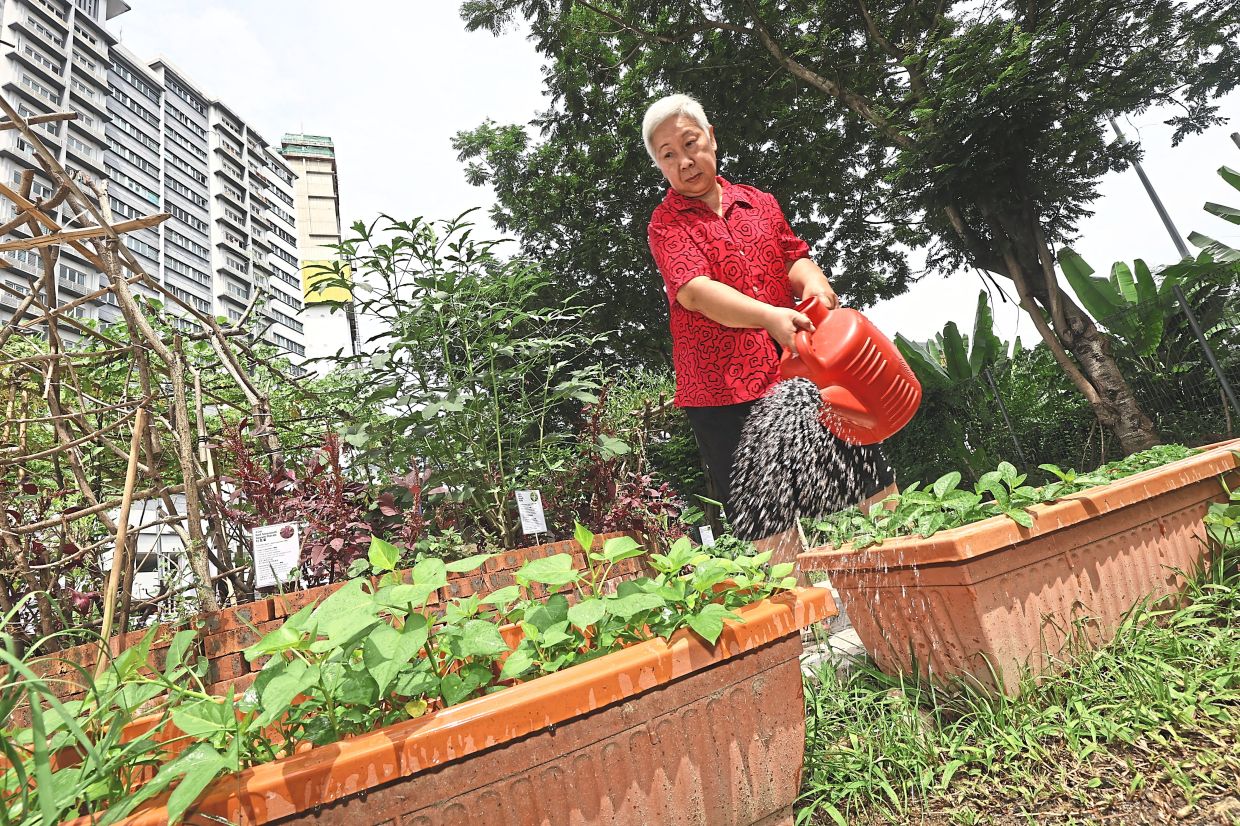
A forgotten patch of overgrown land behind 1Razak Mansion in Kuala Lumpur has undergone a remarkable metamorphosis into a flourishing garden teeming with herbs, vegetables, fruit-bearing plants and flowers. The six-month transformation initiative, spearheaded by social enterprise PWD Smart FarmAbility in partnership with the building's management corporation and residents, was officially inaugurated recently, marking a significant milestone in community-driven urban agriculture. The project's inception from neglect to productivity underscores growing recognition among Malaysian housing developers and residents of the potential for underutilised residential spaces to serve broader wellness objectives beyond mere aesthetic improvement.
The timing and relevance of this initiative took on particular significance when Minister in the Prime Minister's Department (Federal Territories) Hannah Yeoh highlighted during the launch that approximately 80 per cent of 1Razak Mansion's resident population consists of senior citizens. This demographic composition places considerable emphasis on developing programmes that simultaneously address the physical and psychological dimensions of ageing in place. While the complex offers conventional wellness provisions such as tai chi classes, Yeoh underscored the often-overlooked importance of mental health interventions tailored to older populations, particularly those in urban high-rise environments where isolation and purposelessness can contribute to cognitive decline and depression.
Resident Alice Fernandez, 64, articulates the multifaceted advantages the garden provides for the ageing community. Beyond the immediate physical benefits of outdoor activity and hands-on gardening work, she emphasises how the space alleviates the financial strain many pensioners experience through enabling residents to cultivate and harvest their own fresh produce. The garden effectively functions as both a recreational amenity and a practical resource for cost management—a dual benefit particularly pertinent in Malaysia's context of rising living expenses and inadequate pension provisions for many retirees. Fernandez's observation that the garden has become integrated into her daily routine, replacing the isolation of home-confinement with purposeful outdoor engagement, demonstrates how environmental design can subtly but profoundly influence wellbeing outcomes.
The transformation of what was previously dismissed as an unusable corner adjacent to the building's refuse facility illustrates how spatial perception and actual utility often diverge. The food forest's relocation of this neglected area into a destination for daily visitation reflects broader urban planning principles about reclaiming and repurposing marginal spaces. For elderly residents with limited mobility, the garden's proximity and accessibility mean that meaningful exercise and nature engagement no longer require venturing beyond the residential compound, removing barriers that might otherwise prevent participation in such activities. Fernandez's reflections on the area's previous desolation underscore how environmental degradation within residential complexes can reinforce the isolation and detachment experienced by older populations.
Behind the scenes, logistics coordinator Thieeben Sivabalasingam, 38, orchestrated the practical demands of transforming vision into horticultural reality. His account of the construction phase—from initial land clearing through material delivery and installation—captures the considerable coordinated effort required to achieve what appears to residents as a seamless garden space. The revelation of witnessing the project's completion alongside his three-year-old son carries intergenerational symbolism, suggesting that such community initiatives create opportunities for younger family members to participate in and understand environmental stewardship and collective responsibility. Sivabalasingam's assertion that the garden provides elderly residents with tangible reason for daily purpose and anticipation addresses a significant unspoken challenge in senior communities: the psychological toll of unstructured time and diminished social relevance.
Visitor Jenny Wong, 70, and her husband KC Wong, 76, travelled from adjacent Razak City Residences to observe the initiative, motivated partly by aspirations to establish comparable programmes within their own community. Their enthusiasm reflects broader residential demand for such initiatives, particularly among Malaysia's growing retired middle-class population with both the awareness of wellness benefits and the community cohesion to advocate for environmental improvements. The Wongs' recognition of the food forest as simultaneously addressing hobby cultivation, community contribution, and environmental consciousness demonstrates how such projects can appeal across multiple motivational registers, thereby building the diverse resident participation necessary for long-term sustainability.
Dr Billy Tang Chee Seng, 60, the founder of PWD Smart FarmAbility, deliberately positions the completed food forest as foundational infrastructure for more ambitious aspirations. Rather than treating horticultural production as the final outcome, Tang envisions systematic expansion incorporating skills training, practical qualifications, and educational programmes that would extend benefits across generational boundaries. The proposed kitchen hub constructed within the garden would transform raw harvests into culinary education opportunities, embedding food security within broader knowledge acquisition. This pedagogical dimension—introducing children to soil science and microorganism study through microscopic examination—exemplifies how community gardens can function as informal educational institutions, particularly valuable in contexts where formal science education may emphasise abstract theory over practical environmental understanding.
The 1Razak Mansion food forest initiative demonstrates particular relevance within Malaysia's broader policy context of ageing populations and urban densification. As the country's demographic profile skews increasingly toward older residents, residential complexes containing significant senior populations require thoughtful integration of health promotion, social engagement, and economic support mechanisms. This project's success at the hyperlocal scale—one building, one garden—offers a replicable model for other high-rise residential communities throughout Malaysian urban centres, from Petaling Jaya to Shah Alam to George Town. The relatively modest capital investment required relative to potential health and social benefits suggests strong financial justification beyond philanthropic considerations.
Moreover, the initiative aligns with Malaysia's National Food Security Policy objectives and increasingly urgent sustainability imperatives. Urban food production reduces supply chain dependencies, provides accessible nutrition, and creates green spaces within concrete-dominated residential environments. For property management corporations and residents' associations throughout Malaysia's major cities, the 1Razak Mansion model offers concrete evidence that transforming underutilised spaces into productive gardens addresses multiple simultaneous objectives: elder care, environmental sustainability, community cohesion, and cost management. The garden's expansion trajectory—from current harvesting operations toward educational infrastructure—suggests that initial community investments often generate momentum for continuous improvement and deepening resident engagement, ultimately creating more resilient and psychologically healthier residential communities.

