Kuala Lumpur has launched an ambitious educational initiative designed to level the playing field for students preparing for their Sijil Pelajaran Malaysia examinations. The Better SPM Brighter Future Programme extends complimentary tuition services to 1,600 SPM candidates enrolled across 40 secondary schools throughout the federal territory, addressing a persistent gap in exam preparation resources that often places lower-income families at a disadvantage.
Hannah Yeoh, Minister in the Prime Minister's Department (Federal Territories) and chairman of Yayasan Wilayah Persekutuan, unveiled the programme at Sekolah Seni Malaysia Kuala Lumpur. The initiative represents a significant commitment to ensuring that financial constraints do not hinder students' access to quality academic support during a critical period in their educational trajectory. By offering tuition at no cost to participating students and their families, the programme aims to remove a substantial barrier that traditionally forces parents to allocate limited household budgets toward private coaching services.
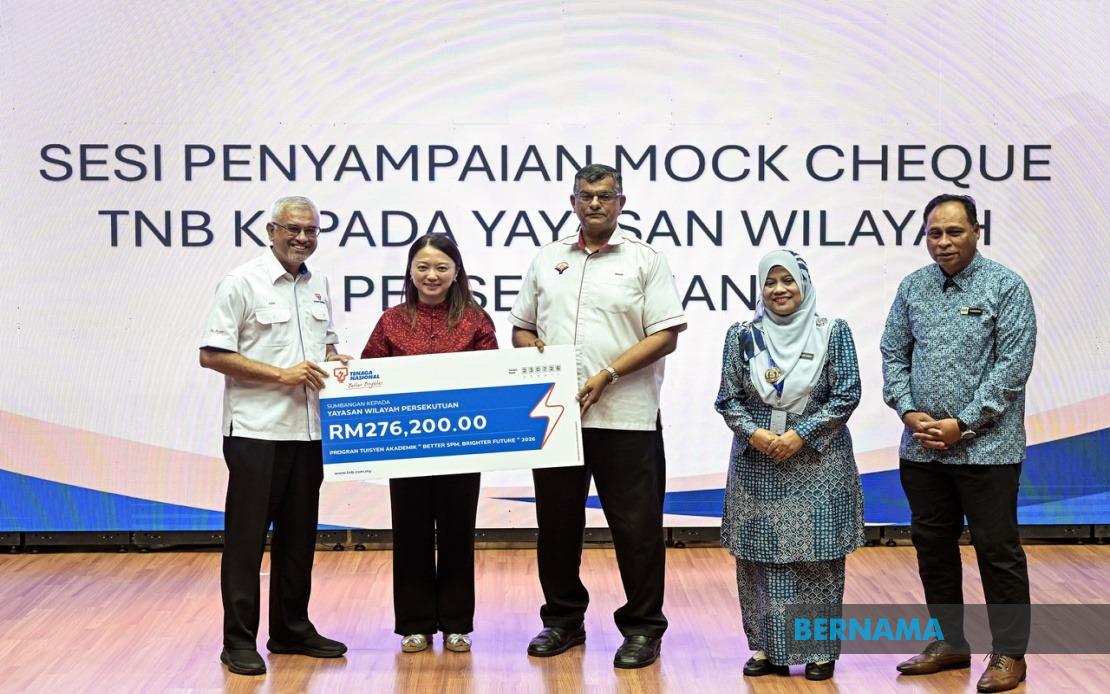
The financial backbone of this educational venture comes from Tenaga Nasional Berhad, which contributed RM276,200 to Yayasan Wilayah Persekutuan to establish and operate the programme. This corporate participation reflects a growing trend of private-sector engagement in social education initiatives, demonstrating how businesses are increasingly recognising their role in national development beyond profit generation. The collaboration brings together TNB's resources with the expertise of YWP and the administrative capacity of the Kuala Lumpur Federal Territories Education Department, creating a multi-stakeholder approach to tackle educational inequity.
The curriculum framework concentrates on four foundational subjects: Bahasa Melayu, English, History, and Mathematics. These subjects form the backbone of the SPM examination structure and are particularly crucial for students pursuing further tertiary education or professional qualifications. By narrowing the focus to these core disciplines rather than spreading resources thinly across all SPM subjects, the programme can deliver intensive, high-quality instruction that addresses common knowledge gaps and examination anxieties that plague many candidates.
The timing of this initiative carries particular significance for Malaysian education policy. SPM examinations determine not only university placement but also career trajectories for hundreds of thousands of young Malaysians annually. Access to supplementary tuition has increasingly become a dividing line between privileged and underprivileged students, with wealthier families able to afford multiple tutoring services while others struggle without additional support. By providing free tuition, the programme attempts to narrow this disparity and ensure that academic potential rather than household income becomes the primary determinant of examination success.
For Kuala Lumpur specifically, this programme reflects a deliberate policy choice to invest in youth development within the federal territory. The capital city's unique demographic composition, with significant populations of both affluent and lower-income households, makes such equalising measures particularly relevant. Students from diverse socioeconomic backgrounds attending the 40 participating schools will benefit from standardised, quality tuition delivery, potentially reducing the performance gap that typically emerges between well-resourced and under-resourced student cohorts.
The involvement of 40 secondary schools indicates a geographically distributed reach across Kuala Lumpur, though the selection criteria for participating institutions remains undisclosed. Whether schools were chosen based on student demographic profiles, past examination performance, or geographic representation suggests different strategic priorities. The breadth of school participation suggests an attempt to serve students across multiple constituencies and school types, from government institutions to specialised centres.
Yeoh's comments regarding the programme's conception emphasise the relief it provides to households already stretched by education costs. Beyond tuition fees themselves, families often bear indirect expenses including transportation, study materials, and opportunity costs when students dedicate time to external classes rather than part-time work. By eliminating tuition costs entirely, the initiative reduces these cascading financial pressures, allowing more families to prioritise examination preparation without corresponding economic sacrifice.
The programme's launch occurs within a broader context of Malaysia's education policy evolution, where policymakers increasingly acknowledge that examination success requires sustained, quality instruction beyond classroom hours. The proliferation of private tuition services has become a normalised feature of Malaysian education, with students across socioeconomic strata commonly attending coaching centres. However, this has created a two-tiered system where comprehensive tutoring becomes accessible primarily to families with disposable income. Initiatives like Better SPM Brighter Future attempt to democratise access to this increasingly essential resource.
From a regional perspective, this tuition programme reflects Southeast Asian education trends where governments and corporations increasingly collaborate to address educational gaps. Countries throughout the region have implemented similar initiatives, recognising that examination-driven education systems require supplementary support structures. The Malaysian approach, combining corporate funding with government implementation, offers a potentially scalable model that other Southeast Asian nations might reference when designing their own educational equity programmes.
The programme's sustainability and expansion potential remain significant considerations. While initial funding from TNB covers the 2024 academic year, longer-term viability depends on continued corporate commitment or alternative funding mechanisms. Success in the current cohort of 1,600 students may provide evidence for expanding the programme to additional schools or other federal territories, potentially creating a template for nationwide implementation. Tracking examination outcomes for participating students compared to non-participants will provide empirical evidence of the initiative's effectiveness and inform future policy decisions.

