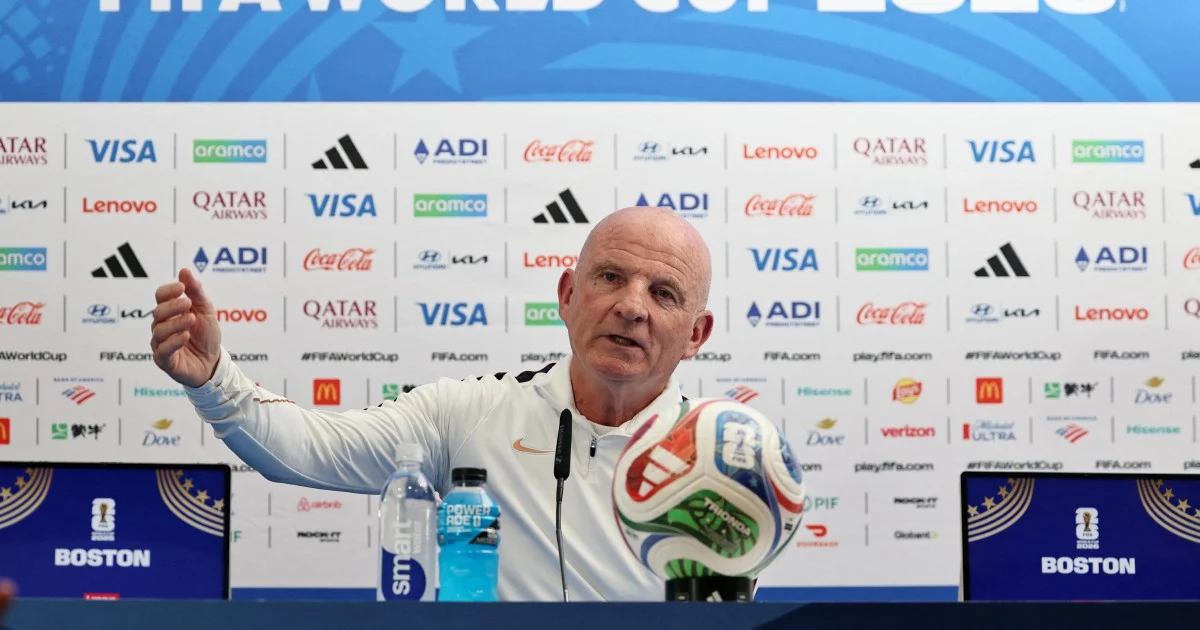
France are determined to clinch top spot in their World Cup Group I when they face Norway on Friday, a result that would spare the squad from having to undertake lengthy journeys across the continental United States during the tournament. Guy Stephan, the team's assistant coach, outlined the strategic importance of finishing first as he held a pre-match press conference in Boston on Thursday. The Frenchman was speaking in place of manager Didier Deschamps, who has temporarily left the team to return home for his mother's funeral, underscoring how the tournament's demands intersect with the personal circumstances of those involved in international football.
The logistics of tournament progression weigh heavily on Stephan's mind as France prepare for their Group I encounter. Both France and Norway have already secured passage to the knockout rounds following victories in their opening two matches, meaning the Friday clash carries less existential weight than a typical final group game. Nonetheless, the positioning within the group carries profound consequences for the team's subsequent travel schedule and overall operational efficiency throughout the remainder of the competition.
Stephan articulated the advantages of winning the group with candid acknowledgment of what stands to lose if France finish runners-up. Should they top the group, Les Bleus would remain based in the Boston area, remaining in the northeastern United States for their quarter-final match. However, a second-place finish would force the squad to undertake exhausting cross-country journeys to potential matches in Dallas, Miami, and Atlanta—cities spread across the vast southern and central regions of America. The cumulative toll of such travel, combined with the physical demands of competing at the highest level, represents a genuine competitive disadvantage that extends beyond mere inconvenience.
Temperature variations across different American venues compound the logistical challenge. The comfortable climate of New England during this stage of the tournament contrasts sharply with the oppressive heat that characterises the southern cities where second-place teams might find themselves competing. Stephan emphasised that controlling these environmental factors represents an important consideration in the team's preparation and performance capacity, particularly as players approach the demanding knockout stages where fatigue and physical condition become increasingly determinative of results.
France's qualification prospects rest on a relatively comfortable foundation. The 2018 World Cup champions need only secure a draw against Norway to guarantee group victory, a reflection of their superior goal difference accumulated across their two victories so far. This mathematical advantage allows them to approach the match with tactical flexibility, though Stephan made clear that Deschamps and the entire squad remain committed to achieving the outright victory that would represent the cleanest possible conclusion to their group campaign.
The team faces some personnel challenges heading into the encounter, complications that Stephan disclosed during his media briefing. Central defender William Saliba has been ruled unavailable for the match, while striker Marcus Thuram is managing calf discomfort that could potentially limit his involvement or availability. These absences from the squad's attacking and defensive arsenals will require tactical adjustment, though France's depth and quality suggest they retain sufficient resources to overcome Norway without either player.
Stephan reflected on the unusual position in which France find themselves heading into the final group match. Qualifying after just two games with a full six points is a relatively rare accomplishment at World Cup level, a testament to the quality of their performances and the efficiency of their execution in the opening stages. This early mathematical certainty has allowed the coaching staff and players to focus their energy on the secondary objective of group position rather than the primary imperative of advancement itself.
Deschamps remains engaged with the team despite his temporary departure, with Stephan confirming that the manager and his assistant staff maintain regular telephone communication. However, Stephan acknowledged that Friday itself, the day of Deschamps' mother's funeral, would likely see minimal contact between the manager and his team, a recognition that personal obligations and the demands of professional sport do not always align. The assistant coach is managing operational responsibilities in the interim, a responsibility he has assumed with full understanding of the match's strategic importance.
The encounter against Norway represents a test of France's ability to maintain performance levels and focus while navigating the complex interplay of competitive ambition, logistical planning, and personal circumstances that characterises modern international football tournaments. Norway, equally successful through their opening matches, brings their own momentum and capacity to trouble France, yet the mathematical reality favours Les Bleus as they pursue the group's top position and the considerable advantages that such placement delivers for their progression through the later stages of the competition.

