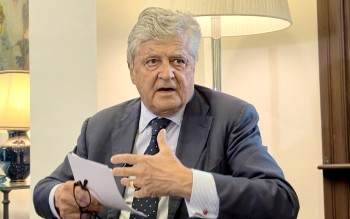
France has offered to become a strategic partner in Malaysia's potential transition toward civil nuclear energy, with French Minister Delegate for Foreign Trade and Economic Attractiveness Nicolas Forissier extending technical assistance and long-term collaboration if Kuala Lumpur decides to pursue this route for clean power generation. Making his inaugural official visit to Malaysia on July 8, Forissier stressed that while Paris possesses world-class nuclear expertise and demonstrated commitment to the technology, the direction of Malaysia's energy policy ultimately rests with the government in Kuala Lumpur, which is currently navigating competing considerations through internal consultations and public debate.
The French position reflects growing recognition that nuclear energy represents one of the most effective pathways for rapid decarbonisation of electricity systems globally. Forissier highlighted France's own experience as particularly instructive for policymakers in Southeast Asia, noting that approximately 60 per cent of France's electricity supply derives from nuclear reactors, with the remaining portion sourced from renewable technologies including solar and wind installations. This diversified clean energy portfolio has enabled France to maintain one of Europe's lowest carbon footprints in electricity generation while meeting sustained industrial and residential demand.
Malaysia's deliberation over nuclear energy reflects broader shifts in regional energy strategy as Southeast Asian nations confront dual imperatives: meeting rising electricity consumption driven by economic development and industrialisation, while simultaneously reducing carbon emissions to meet climate commitments under international agreements. The country's current energy mix relies significantly on fossil fuels, particularly natural gas and coal, making the nuclear question strategically significant for achieving decarbonisation targets without compromising energy security or economic competitiveness.
Forissier's proposal envisages an extended partnership framework that extends far beyond initial technical consultations. He emphasised that nuclear energy deployment demands sustained commitment over decades, typically requiring operational lifecycles spanning 50 to 80 years. Such longevity underscores the necessity for durable institutional relationships, continuous knowledge transfer, regulatory cooperation, and long-term financial planning—commitments that France explicitly indicated its willingness to undertake with Malaysia.
The French delegation accompanying Forissier comprised representatives from over 20 companies, demonstrating substantial private sector interest in deepening economic ties with Malaysia across multiple sectors. This broader commercial engagement signals that France views the nuclear partnership proposal as part of a comprehensive strategy to expand bilateral economic cooperation, encompassing infrastructure, technology transfer, and industrial investment opportunities that could benefit both nations' businesses.
The timing of Forissier's visit reflects accelerating diplomatic momentum between France and Malaysia across multiple dimensions. The visit follows recent high-level exchanges including consultations between both nations' foreign ministers, a March 2025 visit by Malaysia's defence minister to France's aircraft carrier deployment, and Prime Minister Datuk Seri Anwar Ibrahim's July 3-4 visit to France. This sequence of engagements demonstrates that bilateral relations have intensified significantly, moving beyond traditional diplomatic courtesy toward substantive partnership discussions across defence, energy, and economic sectors.
Malaysia's openness to examining nuclear technology is noteworthy given Southeast Asia's historically cautious approach to atomic energy, influenced by regional concerns about safety, waste management, and proliferation risks. However, the escalating urgency of climate change mitigation and the technological maturity of modern reactor designs have prompted several regional governments to reconsider nuclear's role in future energy portfolios. Malaysia's current evaluation process represents a shift toward pragmatic assessment of all available low-carbon technologies rather than reflexive opposition.
The French offer also arrives as global competition intensifies for influence over Southeast Asia's energy transition trajectory. China, Russia, and Japan have similarly positioned themselves as potential nuclear technology partners for regional states, making France's explicit commitment to Malaysia strategically significant. The European perspective on nuclear safety, regulatory standards, and environmental oversight differs from competing offers, potentially providing Malaysian decision-makers with diverse technological and governance models to evaluate.
French nuclear expertise extends beyond reactor construction and operation to encompassing fuel cycle management, decommissioning protocols, and waste storage solutions—comprehensive knowledge domains essential for any nation contemplating serious nuclear deployment. France's willingness to facilitate technology transfer in these areas could substantially de-risk Malaysia's transition into nuclear energy, addressing legitimate domestic concerns about technical capacity and operational safety.
The nuclear energy question occupies an increasingly central position within Malaysia's broader energy transition framework. Policymakers must balance competing considerations including carbon reduction imperatives, energy affordability, industrial competitiveness, technological feasibility, public acceptance, and long-term fiscal sustainability. France's partnership offer introduces a credible, experienced alternative to coal and gas dependency, though implementation would require substantial domestic political consensus and institutional capacity-building.
Malaysia's deliberative approach—characterised by national discussion and governmental evaluation—reflects appropriate caution given the technology's complexity and lasting implications. The country's energy choices will reverberate through decades, affecting industrial costs, environmental outcomes, and regional energy security dynamics. France's patient positioning, emphasising readiness without pressure, acknowledges these weighty considerations while maintaining diplomatic availability should Malaysia's leadership eventually determine that nuclear energy serves its strategic interests.

