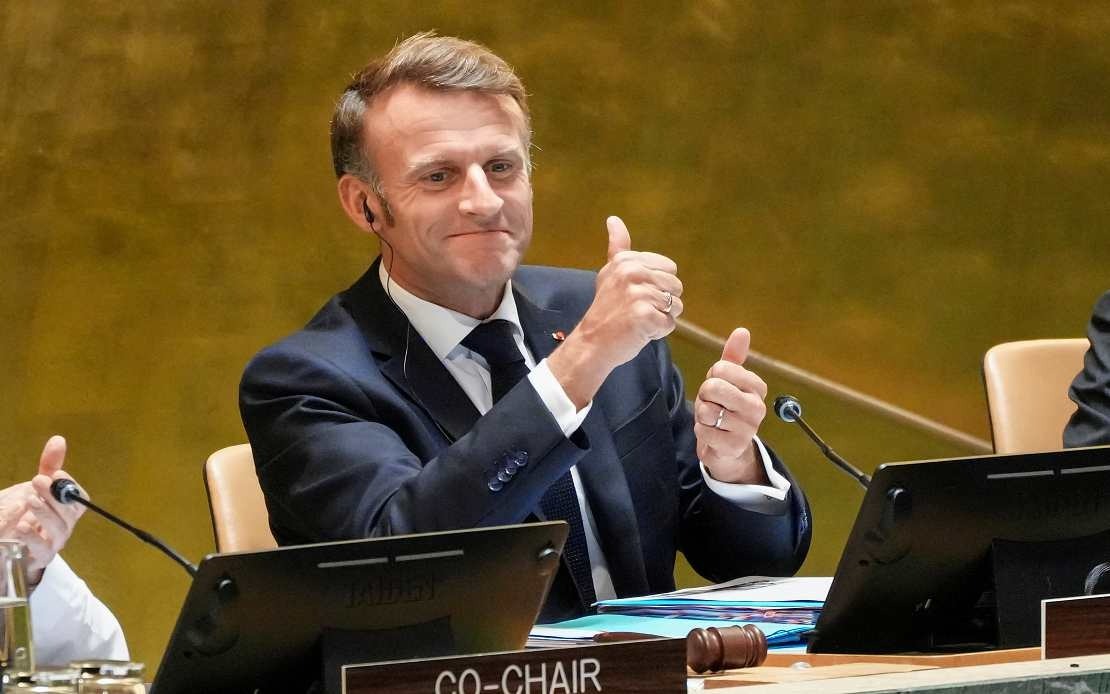
France is mounting a substantial security operation along its border with Spain, stepping up immigration checks in direct response to mounting migrant pressures at Ceuta, the Spanish territory wedged into Morocco's northern coast. President Emmanuel Macron has personally directed the Interior Ministry to implement enhanced screening measures, signalling the high-level political importance Paris attaches to the situation unfolding across the Pyrenees. The decision reflects growing French concern that migration flows channelled into the Spanish enclave could eventually redirect towards French territory, particularly given the established routes through Spain's Mediterranean coastline.
The scale of France's response demonstrates the seriousness with which European nations view irregular migration patterns in the western Mediterranean. Interior Minister Laurent Nuñez confirmed that enhanced border protocols commenced on Thursday evening, with comprehensive implementation beginning Saturday. The deployment strategy encompasses both visible deterrence and intelligence-gathering mechanisms, combining uniformed presence with technological monitoring to create multiple layers of detection capability. This multi-faceted approach suggests French authorities anticipate sustained rather than temporary migration pressures.
Laurent Nuñez has mobilised 334 police officers and gendarmes specifically for border operations, a deployment size that reflects the resource intensity of contemporary migration management. These personnel will staff checkpoints and conduct random screening across the terrestrial frontier, creating a heightened enforcement environment that aims both to identify irregular migrants and gather data on movement patterns. The decision to call upon such substantial manpower from domestic security forces highlights competing priorities within French law enforcement, as these officers would otherwise be allocated to standard policing functions across the country.
Beyond ground-based personnel, France is activating advanced technological surveillance infrastructure to monitor cross-border movement. Three dedicated aircraft will conduct systematic aerial reconnaissance along the Franco-Spanish border, whilst drone operations will provide real-time intelligence on migrant concentrations and movement corridors. This airborne surveillance creates capability gaps that migrants cannot easily circumvent, forcing would-be unauthorised crossers to attempt passage through established checkpoints where detection probability is substantially elevated. The technological investment underscores how migration management has evolved into a high-tech security domain.
Francis Sentinelle rapid reaction force will be redeployed from current Italian border operations to reinforce Spanish frontier enforcement. This specialised unit uniquely comprises coordinated personnel from police, gendarmerie, customs authorities, and military anti-terrorism specialists, enabling rapid response to detected irregular movements and providing enforcement capacity beyond standard border guards. The decision to shift these assets from Italy indicates France's assessment that the Spanish frontier now represents the more acute migration challenge, though this reallocation may create corresponding enforcement gaps along the Italian frontier where prior security attention was concentrated.
Railway patrols along the Franco-Spanish rail corridor will receive enhanced frequency, targeting the likelihood that successful border crossers might subsequently utilise train services to penetrate deeper into France. Trains represent convenient onward transit mechanisms for migrants who have cleared initial border hurdles, and intensified platform and carriage inspections aim to prevent this secondary migration phase. This reflects the sophisticated understanding that border security extends beyond the frontier line itself into transportation networks that facilitate onward movement.
Macron's personal engagement indicates this migration situation carries diplomatic weight between France and Spain. The French President publicly affirmed solidarity with Spanish authorities whilst offering material assistance to address the Ceuta crisis, demonstrating both partnership and the shared security framework operating within European Union contexts. However, the fact that France felt compelled to unilaterally strengthen its own border controls suggests underlying concerns that Spanish authorities might struggle to manage migrant flows entirely within their own territory, necessitating French defensive measures independent of Spanish capacity.
Consultations between France, Spain, and Morocco reflect recognition that addressing migrant flows requires coordinated action across source, transit, and destination countries. Morocco's involvement is particularly significant given its proximity to Ceuta and its role in regional migration dynamics. France's diplomatic engagement acknowledges that sustainable solutions require addressing root causes and transit patterns beyond France's direct control, though the simultaneous deployment of enhanced enforcement indicates reliance on immediate border management whilst longer-term diplomatic solutions develop.
For Southeast Asian observers, this European scenario illuminates divergent approaches to regional migration challenges compared to ASEAN frameworks. Whilst France, Spain, and Morocco engage in formal diplomatic consultation despite tensions, ASEAN nations have historically resisted binding multilateral migration protocols. The French model emphasises state capacity development through substantial security resource investment, contrasting with Southeast Asian approaches that often rely more heavily on informal coordination and ad hoc bilateral arrangements. The intensity of European border technology deployment also highlights capability differentials between developed and developing regions' migration management infrastructure.
The geopolitical implications extend beyond immediate border security. France's actions signal to other European states that enhanced migration controls remain politically viable and administratively feasible, potentially encouraging similar deployments elsewhere along European migration corridors. The precedent may influence how other continental governments assess their own border management strategies, particularly as migration remains a persistent feature of contemporary European political landscapes. Within the European Union, French assertiveness on border security reflects the persistent tension between free movement principles and national sovereignty concerns regarding immigration control.
For Malaysian readers with interests in international migration policy, the French response demonstrates how developed nations mobilise substantial state apparatus to manage population movement, contrasting sharply with responses available to developing nations managing comparable or larger migration pressures. The resource intensity visible in France's deployment—hundreds of trained personnel, aircraft, drones, and specialised units—reflects wealth and bureaucratic capacity that remain unavailable to most Southeast Asian states facing significant irregular migration challenges. This disparity shapes fundamentally different approaches to similar migration phenomena across different global regions.
The situation also reflects persistent instability in North African labour markets and living conditions that drive migration towards Europe. Ceuta's role as a migration pressure point underscores how geography concentrates migrant flows at territorial chokepoints, creating acute local pressures that ripple across broader regional security frameworks. France's response treats symptoms rather than underlying causes, relying on enforcement rather than addressing economic conditions that generate emigration pressure in the first place.

