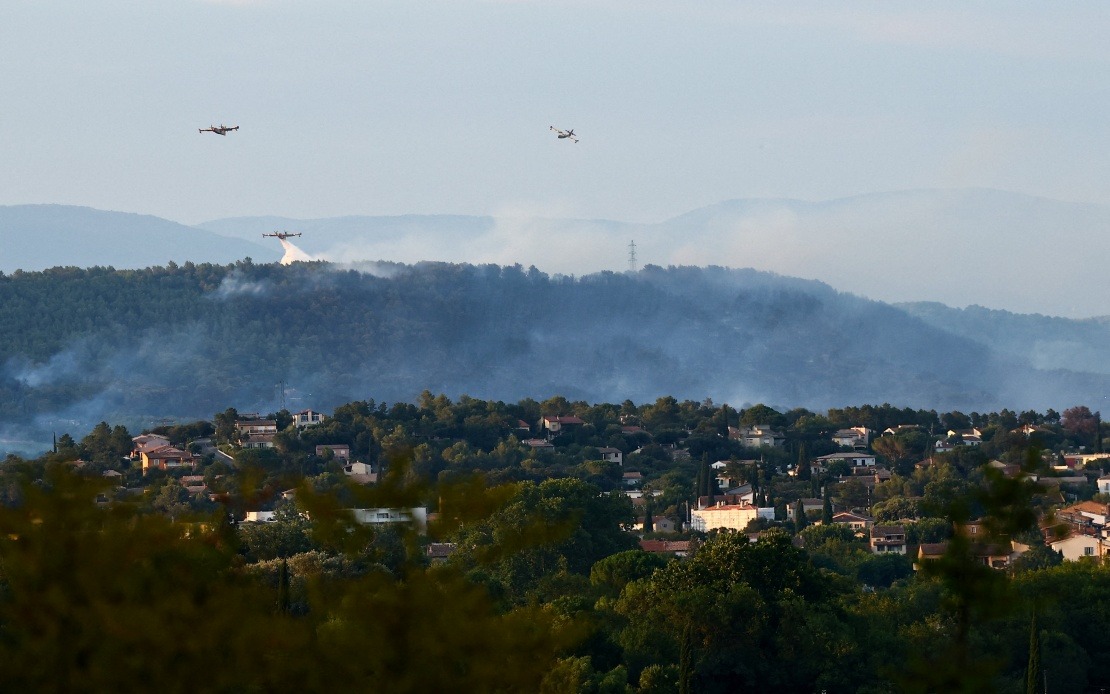
France is grappling with an unprecedented environmental catastrophe as wildfires consume vast tracts of forest and vegetation across the nation. According to Interior Minister Laurent Nunez, nearly 40,000 hectares have burned since the beginning of 2026, marking a dramatic escalation from the previous year's figures and signalling an alarming trend that shows no signs of abating. The scale of destruction has prompted concerns at the highest levels of government, with French authorities warning that new blazes continue to emerge with disturbing regularity.
The figures released by Nunez underscore just how severely this wildfire season has exceeded expectations and historical precedent. Coming in at nearly 100,000 acres of scorched terrain, the cumulative damage represents a sharp deviation from recent years, making 2026 a watershed moment in France's environmental history. The minister's acknowledgement that these numbers substantially outpace the previous year suggests that underlying conditions—whether environmental, meteorological, or related to forest management—have fundamentally shifted to create conditions far more conducive to rapid fire spread.
The root cause of this catastrophic situation lies in an exceptional heat wave that has gripped France with unusual ferocity. Temperatures have climbed to approximately 40 degrees Celsius across much of the country, with some regions recording even higher readings that exceed normal summer patterns by a considerable margin. This intense thermal environment creates ideal conditions for fire ignition and propagation, effectively transforming forests and vegetation into tinderboxes awaiting even the smallest spark to unleash devastation.
President Emmanuel Macron has characterized the situation in stark historical terms, declaring that France has confronted a record number of wildfires this summer since the conclusion of World War II. This pronouncement carries considerable weight, indicating that contemporary fire activity exceeds even the most severe episodes documented over nearly eight decades. The presidential statement underscores the exceptional nature of the current crisis and signals that response mechanisms, while significant, may be stretched beyond conventional capacity.
The meteorological service's warning system has itself reached unprecedented levels of activation. By late June, authorities had issued weather alerts across 72 of France's 96 departments—the highest number ever recorded for such a period. This blanket coverage of cautionary notices reflects the pervasive and systematic nature of the threat, indicating that dangerous conditions are not confined to specific regions but represent a nationwide phenomenon affecting multiple climate zones and geographical areas simultaneously.
For Southeast Asian observers, France's wildfire crisis offers instructive lessons about climate vulnerability and environmental fragility. Malaysia and the broader region have experienced their own cycles of devastating fires, particularly during dry seasons and El Niño episodes, when conditions in Southeast Asia mirror some of the thermal extremes now afflicting Europe. The French experience demonstrates that even developed nations with sophisticated firefighting infrastructure and early warning systems can be overwhelmed when environmental conditions reach critical thresholds.
The economic and ecological ramifications of this scale of forest loss extend far beyond immediate emergency response. Carbon stored in vegetation is released into the atmosphere, potentially accelerating climate warming trends. Biodiversity loss, soil degradation, and watershed damage create downstream consequences that may persist for years or decades. From a Malaysian perspective, understanding how advanced economies manage such crises provides crucial context for developing regional strategies, particularly given that Southeast Asia's forests are economically and ecologically invaluable to both regional and global environmental equilibrium.
The political dimension of France's wildfire emergency cannot be overlooked. Government ministers are now regularly issuing updated casualty figures and damage assessments, indicating that this has become a matter of sustained public concern and political accountability. Laurent Nunez's role as Interior Minister places him at the centre of crisis management, making regular briefings an essential component of maintaining public confidence during an extended emergency.
Looking forward, the situation in France raises questions about adaptation strategies in a warming world. If heat waves of this intensity become more frequent or prolonged, forest management practices, urban planning, and resource allocation will require fundamental reassessment. For Malaysia and Southeast Asian nations, monitoring how France responds to this crisis—from technological solutions to policy frameworks—may yield valuable insights for protecting regional forests from similar threats in coming decades.
The daily emergence of new fires reported by French authorities suggests that current containment measures, while substantial, are not fully preventing ignition and spread. This indicates that suppression capacity is being continuously tested, and resources devoted to firefighting are being stretched across an expanding geographic area. The challenge facing French emergency services is not merely containing existing blazes but preventing new ones from forming as conditions remain favourable for combustion across much of the country.
International cooperation and resource sharing may become necessary if the crisis intensifies further or if summer conditions persist with intensity. France has the capability to request assistance from neighbouring European nations or broader international frameworks established for environmental emergencies. The scale of the current emergency, already historic by multiple measures, underscores that individual nations, however well-prepared, may require coordinated international response to manage environmental disasters of this magnitude in an era of climatic instability.

