France has formally announced the dates for its 2027 presidential election, setting the first round for April 18 and the second round for May 2, according to confirmation from the government during a Cabinet meeting on Wednesday. The decision marks the beginning of formal planning for what will be a closely watched contest shaping French politics for the coming years. The government has moved quickly to establish the electoral calendar, a step that traditionally requires coordination with political stakeholders and compliance with constitutional provisions governing how and when such democratic exercises must occur.
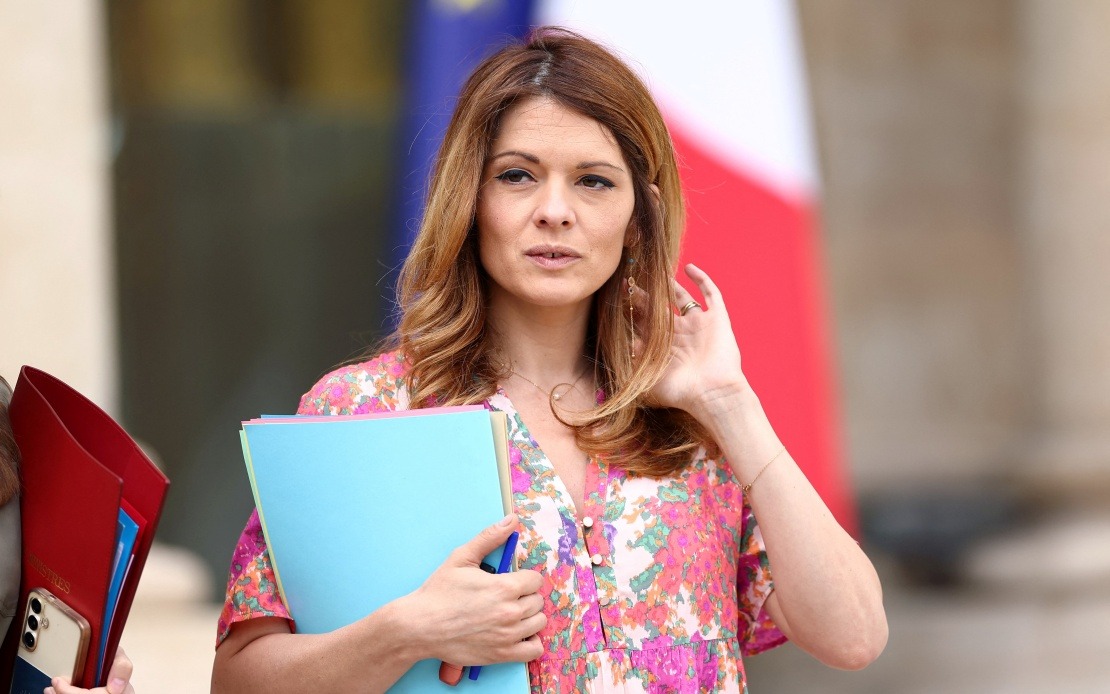
Government spokesperson Maud Bregeon sought to deflect suggestions that the scheduling reflected partisan advantage, arguing instead that the dates emerged from a technical and consultative process. She emphasized that officials had engaged with representatives from across the political spectrum before finalizing the calendar, and that constitutional requirements had driven the decision-making rather than any strategic calculation. The spokesperson framed the announcement as a straightforward administrative matter, presenting it as the culmination of established procedures rather than a politically motivated choice that might advantage some candidates over others.
However, the timing of the second round has become a lightning rod for criticism from opposition figures. Because the May 2 vote falls immediately after May 1, International Workers' Day—a date traditionally marked by major demonstrations and public gatherings across France—opponents have questioned whether the government intentionally compressed the electoral calendar in ways that could influence campaign dynamics or voter mobilization. Bruno Retailleau, a prominent opposition voice, characterized the schedule as distinctly "not neutral," suggesting the dates might reflect calculations about how different political movements could organize supporters during this sensitive period.
The specific challenge posed by holding the second round so close to May 1 illustrates broader tensions in democratic scheduling. International Workers' Day brings millions into streets across France and Europe, with attendant security considerations, disruptions to normal routines, and heightened political activity that typically centers on labor and social issues rather than presidential contests. Critics have suggested that holding a runoff vote one day after such major demonstrations could either suppress turnout among certain constituencies or create unusual advantages for parties skilled at mobilizing during periods of social agitation. The compressed timeline between the two rounds—just two weeks—also leaves limited space for campaigns to evolve based on the outcome of April's first vote.
The government has flatly rejected characterizations of the schedule as politically motivated, insisting that electoral rules function uniformly regardless of which parties or candidates might benefit. Officials have suggested that the French political system possesses sufficient institutional maturity to manage the practical and logistical challenges surrounding voting in close proximity to major public demonstrations. When pressed on the symbolism of the timing, Bregeon responded with a somewhat dismissive reference to the nation's experience, stating that "everyone knows how to manage May 1 before and after a presidential election," implying that such scheduling overlaps represent no genuine constitutional or practical problem.
The government's defense of the calendar also emphasized that campaign periods provide ample opportunity for candidates to articulate their positions and reach voters, regardless of external events occurring during the election window. Officials have suggested that experienced political operators understand how to communicate their messages even when competing for attention with major public events, and that the schedule ultimately provides adequate time for substantive democratic deliberation. This argument rests partly on the assumption that voters can and will engage with electoral choices even during periods when social movements dominate headlines and public discourse.
Bregeon further stressed that the final schedule represents a compromise reflecting "all existing constraints," suggesting that no election date could satisfy every consideration or preference simultaneously. She acknowledged implicitly that perfect scheduling remains impossible in complex democracies, where constitutional timelines, seasonal considerations, institutional calendars, and campaign logistics all intersect. By framing the dates as emerging from a messy but necessary balancing process, government officials have attempted to normalize what opposition figures present as a questionable decision with strategic implications.
The controversy highlights enduring tensions in French politics between technical administration and strategic positioning. Even decisions presented as purely procedural carry political weight, since the timing of elections can affect which groups mobilize most effectively, how media attention distributes across the campaign period, and whether certain constituencies face barriers to participation. For Malaysian and Southeast Asian observers accustomed to their own electoral controversies over scheduling and procedures, France's experience demonstrates how democracies with long institutional histories remain vulnerable to disputes over the ostensibly neutral mechanics of holding elections.
The opposition's skepticism also reflects broader questions about governmental impartiality during election periods. Parties in power typically control the administrative apparatus determining when votes occur and how campaigns proceed, creating inherent asymmetries that opposition forces must navigate. France's government has historically maintained strong institutional norms against using executive authority for partisan advantage, yet the reaction to the 2027 dates suggests those norms face testing as electoral competition intensifies. The controversy may presage contentious disputes over campaign finance, media access, and other procedural matters during the months leading to April 2027.

