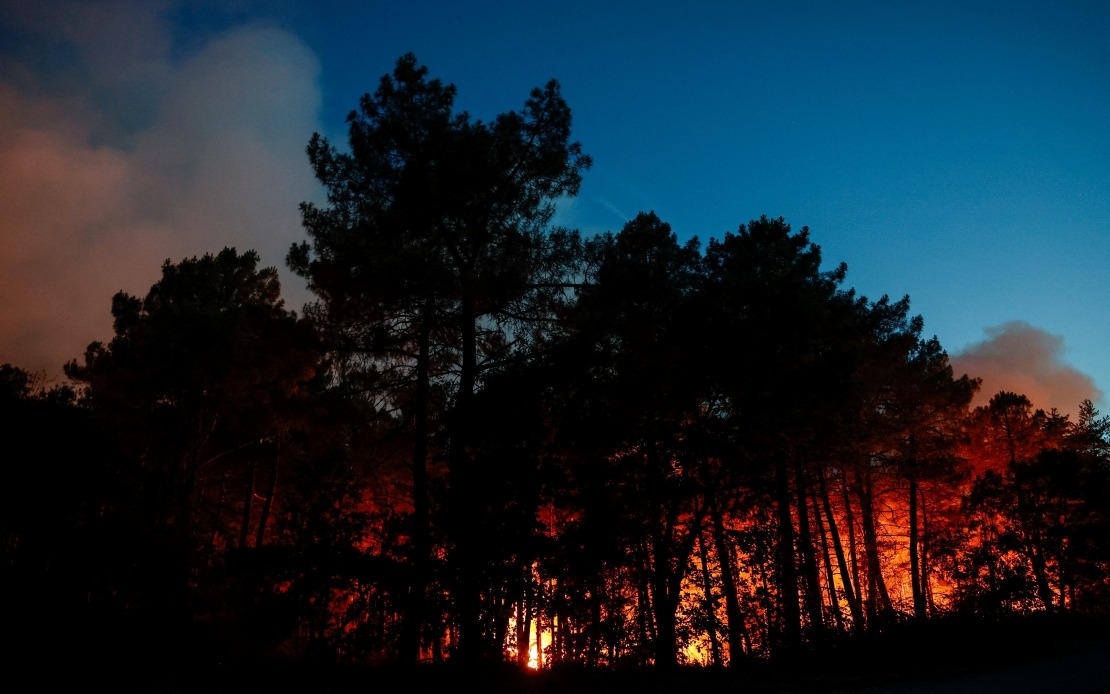
France is grappling with an unprecedented wildfire crisis as the country's Interior Minister Laurent Nunez confirmed that more than 119,000 hectares of forest and vegetation have been consumed by flames since the start of the year. Speaking during a press briefing on Saturday, Nunez presented alarming statistics that underscored the severity of the 2024 wildfire season compared to historical averages, with authorities documenting 14,320 separate fire incidents or outbreaks across the nation during the eight-month period. Among these fires, 25 major blazes demanded intensive firefighting operations on Friday alone, illustrating the relentless pressure facing emergency response teams throughout the summer months.
The scale of destruction reveals the exceptional nature of this year's wildfire challenge. To contextualise the figures for regional perspective, the area burned exceeds the size of the Selangor state in Malaysia, demonstrating the magnitude of environmental devastation occurring across one of Europe's wealthier nations. Nunez emphasised that the combination of factors creating these conditions—persistently elevated temperatures, moisture-depleted soils, and vegetation desiccated by prolonged heat—has created a tinderbox effect across vulnerable territories. Despite some regional humidity improvements, he cautioned that these modest atmospheric changes have proven insufficient to reverse the dangerous trajectory of fire risk.
Geographically, the wildfire threat concentrates in France's most vulnerable regions, with the Mediterranean coastline presenting particular concern alongside the Rhone Valley corridor and sections of western France. The Var department, situated along the Côte d'Azur, and southern Corsica have been classified under the highest alert status of "very severe," reflecting the acute danger facing these tourism-dependent and densely populated areas. This classification system indicates that authorities view fire conditions in these zones as potentially catastrophic, requiring maximum preparedness and rapid response capabilities. The Mediterranean region's significance extends beyond French borders, as similar fire conditions threaten Spain, Italy, and Greece—making this a broader European crisis that resonates throughout Southeast Asian international markets dependent on European tourism and trade.
A particularly troubling development emerged when the Var department wildfire reignited on Friday, consuming an additional 1,500 hectares and demonstrating how rapidly containment efforts can unravel even after apparent stabilisation. This resurgence necessitated the overnight deployment of approximately 1,500 supplementary firefighters tasked with defending communities and infrastructure across the region. The reactivation of this blaze, combined with ongoing aerial bombardment of fires until darkness fell, exemplifies the resource-intensive nature of modern wildfire suppression and the logistical challenges inherent in combating simultaneous, geographically dispersed emergencies.
To manage this catastrophic situation, France has mobilised its entire arsenal of civil protection resources on a nationwide scale. All available aerial firefighting assets have been activated and positioned strategically across vulnerable zones, while 65 interdepartmental firefighter reinforcement columns currently stand ready for deployment. This figure represents a slight reduction from the 72 columns activated during the peak crisis period, as authorities attempt to balance continuous vigilance with crew fatigue management. Some units have been temporarily withdrawn from active operations to permit firefighters essential rest periods, though these teams remain on standby for rapid reactivation should conditions deteriorate further.
The security dimension of France's wildfire crisis has also attracted official attention, with authorities uncovering a disturbing undercurrent of deliberate fire-setting. Interior Minister Nunez disclosed that security forces have arrested 328 individuals linked to wildfire investigations, suggesting that not all blazes result from natural causes or accident. This disclosure raises important questions about arson patterns, criminal motivation, and whether organised fire-setting represents a meaningful proportion of the season's total incidents. For Malaysian observers, this element underscores how climate emergencies can intersect with criminal activity and social disorder, complicating response strategies beyond purely technical firefighting considerations.
The French government's response reflects the institutional capacity of a developed European state, yet the scale of destruction suggests that even substantial resource mobilisation struggles against the forces unleashed by climate-driven conditions. The deployment of thousands of additional firefighters, maintenance of maximum aerial asset availability, and coordination across 65 departmental reinforcement columns represents the upper bound of what conventional firefighting infrastructure can achieve. The temporary stand-down of some units, despite ongoing crises, reflects the harsh reality that human and equipment fatigue eventually constrains operational capacity, even in wealthy nations with advanced emergency management systems.
For regional observers in Southeast Asia, France's wildfire struggle offers sobering lessons about climate vulnerability and resource demands. Malaysia and neighbouring countries, whilst experiencing different fire dynamics tied to peatland and agricultural landscapes, face analogous challenges in maintaining firefighting capacity during peak seasons. The French experience demonstrates that even nations with sophisticated emergency infrastructure and substantial financial resources find themselves stretched by escalating wildfire incidents driven by temperature elevation and moisture stress. The statistics emerging from France—119,000 hectares burned, 14,320 incidents, 328 arrests—represent not merely European concerns but harbingers of climatic patterns that transcend continental boundaries.
Author authorities have stressed public cooperation as essential to limiting additional damage, with Interior Minister Nunez urging residents in affected zones to heed evacuation orders and safety directives from local emergency services. This call for civic compliance acknowledges that even maximum official mobilisation requires community participation and voluntary adherence to protective measures. The appeal reflects recognition that wildfire management ultimately depends upon integrated responses encompassing government action, firefighting operations, resource deployment, and individual compliance with emergency protocols.

