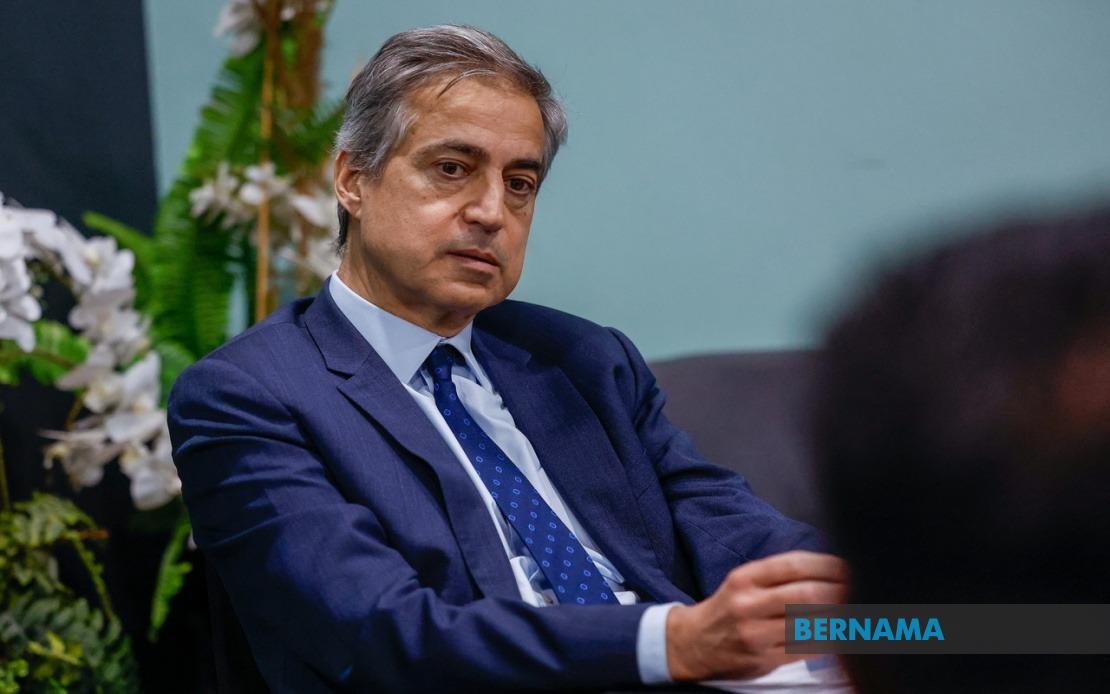
France and Malaysia have reaffirmed their commitment to deepening bilateral relations at a time when geopolitical tensions are fragmenting the international order. Speaking at the French National Day reception in Kuala Lumpur on Tuesday, French Ambassador to Malaysia Marc Abensour emphasised that both nations recognise their shared responsibility to foster dialogue and understanding across divides. The celebration, held at the ambassador's residence and attended by around 800 guests including senior government officials, diplomats and foreign envoys, underscored the strengthening partnership between the two nations as they navigate an increasingly complex global landscape.
The foundation of Franco-Malaysian cooperation rests on a diversified economic relationship that continues to expand. Last year, bilateral trade between the countries grew by 11 per cent, reflecting sustained commercial momentum despite global economic headwinds. More significantly, France has established itself as a major investor in Malaysia's economy, with the country ranking as the world's 10th-largest destination for French direct investment. This financial commitment extends into the Malaysian labour market through the operations of approximately 600 French companies across various sectors, collectively supporting more than 30,000 local employment positions. This employment footprint demonstrates that Franco-Malaysian economic ties have tangible benefits for Malaysian workers and broader economic development.
Beyond commerce, both countries prioritise the human dimension of their relationship through educational and cultural initiatives. The French-language education sector has experienced particular growth in Malaysia, with more than 3,700 candidates pursuing French-language certification examinations annually. This figure places Malaysia third in Asia for French-language learning uptake, trailing only India and China, indicating strong cultural affinity and educational interest. Language proficiency facilitates deeper engagement between citizens and creates networks of professionals, academics and cultural practitioners who serve as informal ambassadors for bilateral understanding. These educational pathways are essential for building long-term people-to-people connections that transcend government-to-government diplomacy.
Federal Territories Minister Hannah Yeoh, who officiated the reception as guest of honour, represents Malaysia's institutional commitment to strengthening these cross-cultural bonds. Her presence signals that the Malaysian government views Franco-Malaysian relations as a strategic priority worthy of ministerial-level engagement. The diversity of attendees—spanning government officials, diplomatic corps representatives, and civil society figures—reflected the broad-based nature of the partnership, which encompasses multiple sectors and constituencies rather than operating narrowly through official channels.
The celebration itself embodied the cultural synthesis that characterises modern bilateral relations. While French cuisine dominated the catering, organisers incorporated a durian-tasting experience, introducing Malaysian culinary traditions to the French expatriate community and diplomatic guests. This deliberate fusion symbolises mutual respect and the genuine integration of both cultures rather than a one-directional cultural exchange where one nation's traditions dominate the occasion.
French National Day, commemorated annually on July 14, carries symbolic weight beyond patriotic celebration. The commemoration of the Storming of the Bastille in 1789 reinforces the French ideals of liberty, equality and fraternity—principles that resonate with Malaysia's own constitutional commitments to democratic governance and social justice. By publicly celebrating these values on Malaysian soil, both nations implicitly affirm their commitment to shared democratic principles and human rights frameworks, even as specific implementations may differ.
Ambassador Abensour's framing of Franco-Malaysian cooperation within the context of global fragmentation carries particular relevance for Southeast Asia. The region faces mounting pressures from great power competition, trade tensions, and divergent geopolitical alignments. Smaller nations like Malaysia benefit from cultivating diverse partnerships with established democracies rather than aligning exclusively with any single bloc. The Franco-Malaysian relationship represents precisely this type of strategic diversification—neither country competes for regional hegemony, yet both possess substantial economic and diplomatic influence. This asymmetry creates space for genuine partnership without the zero-sum dynamics that characterise relationships between regional rivals.
The employment opportunities created by French investment carry particular significance in Malaysia's context. As the country pursues high-value manufacturing and services sector development, the presence of established French multinational corporations provides employment pathways for educated Malaysian workers while facilitating technology transfer and skills development. The 30,000 jobs supported by French companies represent diverse positions across management, technical, administrative and operational levels, contributing to Malaysia's aspirations for workforce modernisation and middle-class expansion.
Educational cooperation extends beyond language learning into higher education and research collaboration. French universities maintain partnerships with Malaysian institutions, facilitating student exchanges and collaborative research initiatives. These academic connections create intellectual bridges that foster innovation and knowledge sharing, benefiting both nations' development trajectories. Malaysian graduates trained in French educational institutions often return to key positions in government, business and academia, carrying forward institutional relationships and cross-cultural competence that strengthen future bilateral engagement.
The timing of this reaffirmation of Franco-Malaysian ties reflects broader regional dynamics. As Southeast Asian nations increasingly assert strategic autonomy while managing relationships with major powers, multilateral partnerships grounded in shared values and mutual benefit provide essential counterweights to hegemonic pressures. France's investment in relationships across the region, demonstrated through active diplomatic engagement and sustained economic presence, positions it as a genuine partner rather than a transactional actor pursuing narrow interests.
Looking forward, both nations face opportunities to expand cooperation into emerging domains. Climate action, sustainable development, digital economy governance and regional security challenges present areas where Franco-Malaysian collaboration could yield mutual benefits while contributing to regional stability. The infrastructure of people-to-people exchange, economic integration and cultural appreciation established over decades provides a foundation for deepening engagement on these future priorities.

