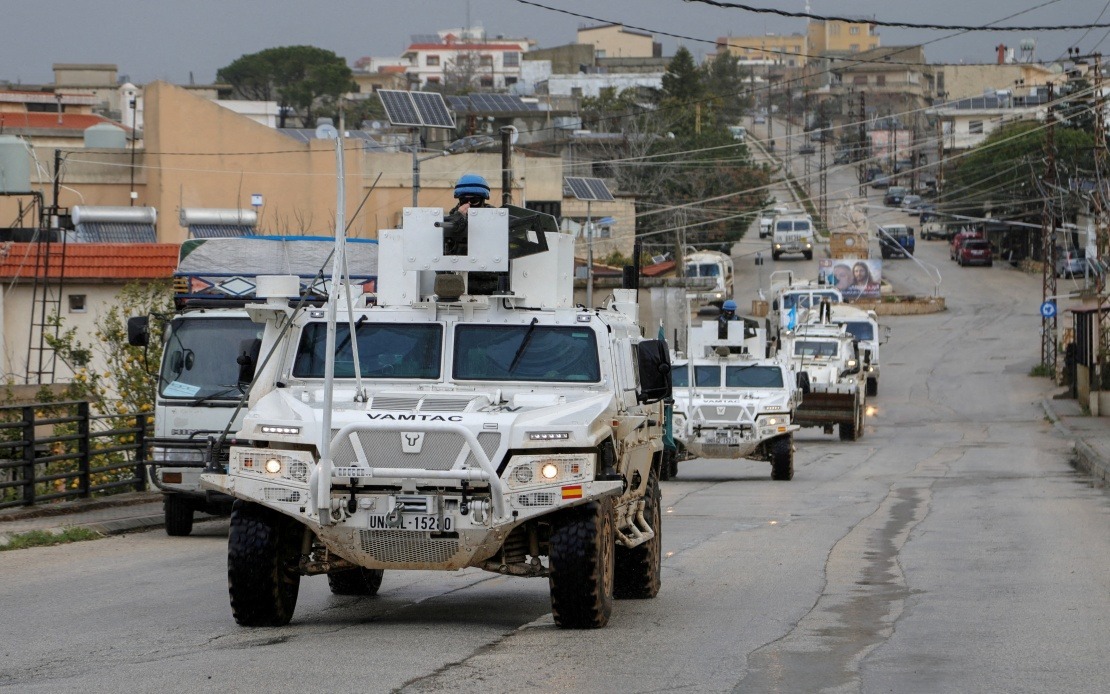
France and Italy have committed to forming a multinational coalition designed to bolster Lebanon's stability and institutional capacity once the United Nations Interim Force in Lebanon concludes its mandate at year-end. French President Emmanuel Macron unveiled the initiative at a joint press conference with Italian Prime Minister Giorgia Meloni in Antibes on Thursday, framing the move as a critical step to maintain international engagement as Lebanon navigates a pivotal transition period.
The partnership reflects mounting European concern over the security implications of UNIFIL's scheduled departure. Under UN Security Council Resolution 2790, the peacekeeping operation is set to formally end its mission on December 31, with a complete drawdown of personnel required within twelve months thereafter. Rather than allowing a precipitous withdrawal that could create an immediate power vacuum, Paris and Rome are proposing a structured international presence to bridge the transition and reinforce Lebanese state institutions during a particularly fragile juncture.
Macron articulated the coalition's core objective as strengthening Lebanon's sovereignty and armed forces whilst preventing the country's territory from becoming a flashpoint for further regional confrontation. The French president emphasised coordination with both the European Union and the United Nations, signalling that this is not a unilateral initiative but rather part of a broader diplomatic framework aimed at regional de-escalation. For Malaysia and other Southeast Asian nations with substantial interests in Middle Eastern stability, this European-led commitment carries implications for how international coalitions manage security transitions in strategically important regions.
Meloni's endorsement of the proposal underscored the gravity with which both capitals view the potential consequences of UNIFIL's departure. The Italian Prime Minister characterised the absence of an international security presence as "extremely dangerous," reflecting concern that Lebanese Armed Forces, despite ongoing capacity-building efforts, may require sustained external support to maintain stability and prevent militia groups or hostile actors from exploiting the void left by UN peacekeepers. This assessment reveals anxiety that the broader Middle Eastern security architecture could unravel without proactive European involvement.
The timing of this announcement carries significance within Europe's evolving strategic posture. Both France and Italy have historically maintained prominent roles in Mediterranean and Middle Eastern affairs, and this initiative reasserts their commitment to regional engagement even as geopolitical attention shifts elsewhere. For Southeast Asian observers, the coalition framework demonstrates how established powers attempt to maintain influence during transitions, employing inclusive multilateral language whilst maintaining operational leadership.
Lebanon's domestic political landscape adds complexity to the proposed arrangement. The country has struggled with governmental dysfunction, sectarian tensions, and economic collapse in recent years, making international security guarantees particularly consequential. A multinational coalition could theoretically provide the deterrent effect necessary to prevent cross-border incursions or militia mobilisation, though such arrangements require careful calibration to avoid appearing as occupation or neo-colonial interference—concerns that resonate across the Global South, including Malaysia.
The European Union's involvement in the coordination framework suggests this coalition will operate within established international legal and diplomatic conventions. Rather than resembling ad hoc military interventions, the arrangement appears designed as a structured, transparent mechanism with clear mandates and defined duration. This approach may offer lessons for how international coalitions can support state stability without undermining sovereignty or generating backlash from nationalist constituencies within recipient countries.
Regional actors will scrutinise the coalition's composition and operational parameters closely. Neighbouring states, particularly Syria and Israel, maintain direct interests in Lebanon's security situation, and any international presence must navigate these complex dynamics. The coalition's credibility will depend partly on its perceived neutrality and commitment to Lebanese sovereignty rather than serving as a proxy for particular geopolitical agendas within the Middle Eastern contest between regional and external powers.
For Malaysia's foreign policy perspective, this Franco-Italian initiative illustrates how traditional powers adapt their engagement models in the face of institutional transitions. Rather than accepting UNIFIL's departure as conclusive, Europe is proposing continuity through alternative mechanisms. This approach contrasts with withdrawal strategies that abandon responsibility, though it simultaneously raises questions about the burden-sharing arrangements and whether smaller nations will contribute personnel or resources to sustain such coalitions.
The broader security implications extend beyond Lebanon itself. A successful transition that maintains stability through multinational coordination could set precedents for managing other UN force withdrawals across Africa, Asia, and the Middle East. Conversely, if the coalition fails to prevent escalation or is perceived as ineffectual, it may discourage future international stabilisation efforts and embolden actors seeking to exploit security vacuums. For Malaysia and ASEAN, observing how European powers execute this transition provides valuable intelligence for regional security architecture discussions.
Implementation challenges will prove substantial. Recruiting coalition participants, establishing rules of engagement, securing host government agreement on operational freedom, and maintaining political will amongst contributors over an extended period all present obstacles. The coalition must also avoid militarising Lebanon's recovery process whilst genuinely enhancing state capacity, a delicate balance that requires patience and sophisticated diplomatic management.
The Franco-Italian proposal ultimately reflects the reality that international security commitments do not simply terminate—they transform. By articulating a post-UNIFIL framework before the UN force departs, France and Italy are attempting to manage the transition proactively rather than reactively. Whether this coalition achieves its stabilisation objectives will significantly influence how international actors approach similar situations across the Global South in coming years.

