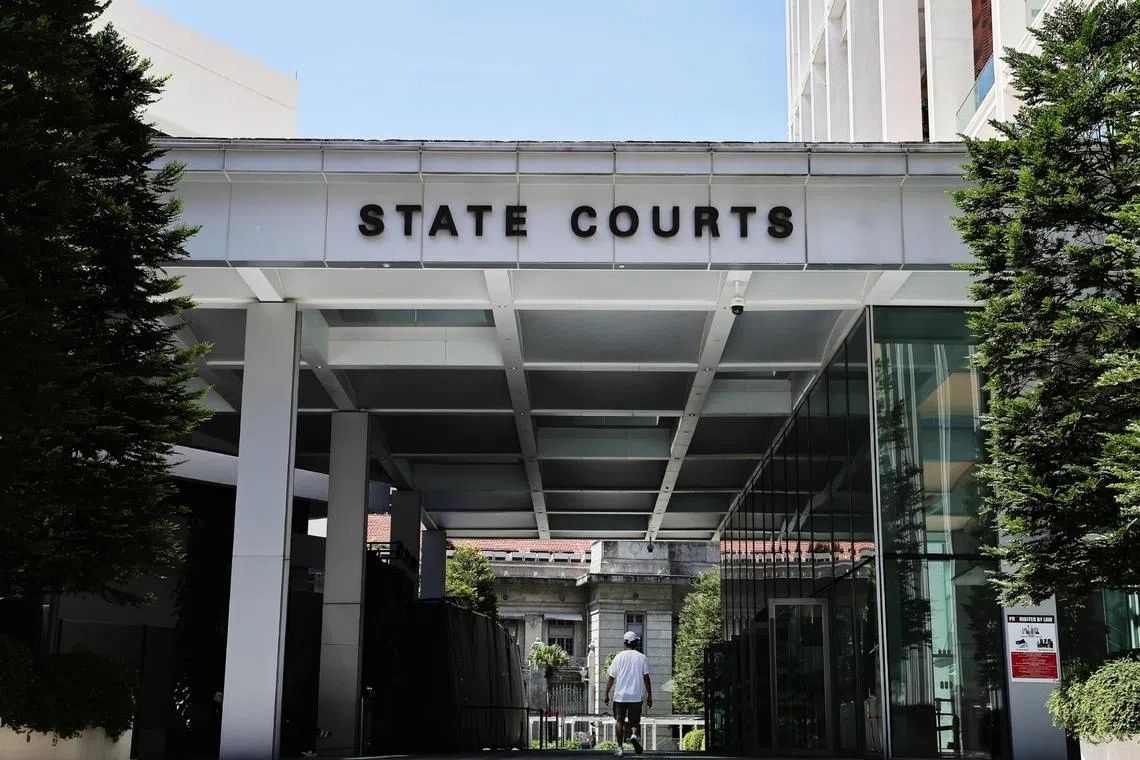
Singapore's Commercial Affairs Department has brought charges against four residents in connection with an intricate cross-border fraud operation that exploited the country's position as a major trade hub to launder proceeds from a VAT carousel scheme. The scheme, which came to light following a tip-off in November 2020, involved concealing smuggled gold within signal converters that were imported under false declarations and at artificially inflated prices, allowing organised crime networks to extract enormous sums in fraudulent tax refunds from Chinese authorities.
The accused include Seow Choon Pheng, aged 63, who directed Macropac System, and his associate Seow Choon Lien, aged 62, who oversaw Megaspeed Services. Both men face identical charges: two counts related to facilitating another person's control of benefits derived from criminal conduct, and two counts of operating a business with fraudulent intent. Their roles centred on importing the doctored signal converters through Singapore-registered entities, providing a veneer of legitimacy to transactions that concealed the movement of precious metals and illicit funds.
Chu Tung Wu, aged 60, occupied a more operational position within the conspiracy. He faces one charge of arranging for another person to benefit from criminal proceeds, alongside charges for fraudulent business operation and abetting someone's failure to exercise due diligence. Court documents reveal that Chu engineered a scheme in which Tan Kui Moi, aged 61, became a nominal director of Seg Metallic Electronics Trading between May 2019 and May 2021, operating as what authorities describe as a "sleeping" director while Chu conducted the actual business. This arrangement effectively shielded the genuine operators from regulatory scrutiny whilst maintaining the appearance of proper corporate governance.
The mechanics of the fraud reveal considerable sophistication and international coordination. Members of a Chinese criminal syndicate would conceal gold within signal converters before exporting them to Singapore with deliberately inflated price declarations. By misrepresenting these devices as high-tech products commanding premium valuations, the scheme generated substantial export VAT refunds within China's tax system. These refunds represented pure profit extracted through false documentation, with the Chinese government absorbing losses equivalent to the fictional markup applied to each shipment.
Upon arrival in Singapore, the imported signal converters underwent rapid dismantling to extract the precious metal cargo. The gold was then sold through Singapore's well-established precious metals market, converting contraband into legitimate commercial commodities with minimal traceability. The physical components of the signal converters—the printed circuit boards and other electrical components—were subsequently returned to China for reassembly into fresh units destined for the next iteration of the scheme. This cyclical arrangement created what authorities term a "carousel" structure, generating continuous flows of false transactions that disguised the underlying criminal enterprise as routine international commerce.
The money-laundering dimension centred on a Hong Kong-based mastermind who received the fraudulently obtained VAT refunds through payment channels masquerading as legitimate business transactions. By routing proceeds through invoices for signal converter components and mainboards, the syndicate established a documentary trail superficially consistent with normal trade operations. Investigators found that Singapore's role as a global trading centre and financial hub made it an ideal jurisdiction for layering illicit funds, as the volume of legitimate cross-border transactions provided substantial camouflage for illegitimate capital flows.
For Malaysian and Southeast Asian observers, this case illuminates the vulnerability of regional trade infrastructure to exploitation by organised criminal networks. Singapore's prominence as a trading hub—while economically beneficial—creates opportunities for sophisticated actors to exploit legitimate commercial channels. The scheme's reliance on false invoicing and price manipulation represents tactics that authorities across Southeast Asia increasingly encounter, suggesting that similar operations may be occurring through other jurisdictions in the region using comparable methodologies adapted to local conditions.
The role of the "sleeping director" arrangement deserves particular scrutiny from a corporate governance perspective. By appointing Tan Kui Moi as a nominal office holder whilst maintaining operational control, Chu Tung Wu exploited a common corporate structure that exists across Southeast Asia. This highlights regulatory gaps in beneficial ownership verification, an issue that affects not only Singapore but also Malaysia, Thailand, and Indonesia, where shell companies and nominee directorships remain endemic problems in combating financial crime and money laundering.
Singapore's Commercial Affairs Department credited close collaboration with Chinese authorities in dismantling the operation, emphasising the cross-border nature of modern financial crime investigation. The investigation required coordinated intelligence sharing between multiple jurisdictions to trace the syndicate's international operations, a cooperation framework that may offer lessons for other Southeast Asian law enforcement agencies seeking to combat similar schemes. CAD director Peggy Pao's statement underscores the city-state's commitment to preventing Singapore's financial infrastructure from becoming a conduit for proceeds derived from foreign fraud.
The legislative penalties applicable to these charges carry substantial weight. Offenders convicted of money laundering in Singapore face up to 10 years imprisonment, fines reaching S$500,000, or both. Operating a business for fraudulent purposes carries a maximum seven-year sentence with fines up to S$15,000. The comparative severity of these penalties reflects Singapore's determination to deter sophisticated financial crimes, creating powerful incentives for potential actors to conduct their operations through jurisdictions perceived as having weaker enforcement regimes.
The discovery mechanism—a tip-off received in November 2020—underscores the importance of intelligence networks and confidential reporting in disrupting complex financial crimes. This suggests that informants, whether from rival criminal organisations, disgruntled associates, or corporate whistleblowers, remain crucial for identifying schemes that might otherwise evade detection through conventional regulatory monitoring. The lag between the original tip-off and formal charges being filed in July indicates the investigative complexity involved in assembling evidence against multiple actors across international borders.
Beyond the immediate criminal consequences for the accused, this case carries broader implications for Southeast Asia's role in global trade finance. Sophisticated networks will continue seeking jurisdictions offering combinations of financial sophistication, trading connectivity, and perceived regulatory blind spots. As law enforcement capabilities improve in traditional financial hubs like Singapore, criminal enterprises may redirect operations toward less-developed markets, potentially threatening regulatory gains achieved in recent years across the region. Southeast Asian authorities must therefore view this case not as evidence of successful enforcement alone, but as a demonstration of evolving criminal tactics requiring continuous upgrades to detection and prosecution capabilities.

