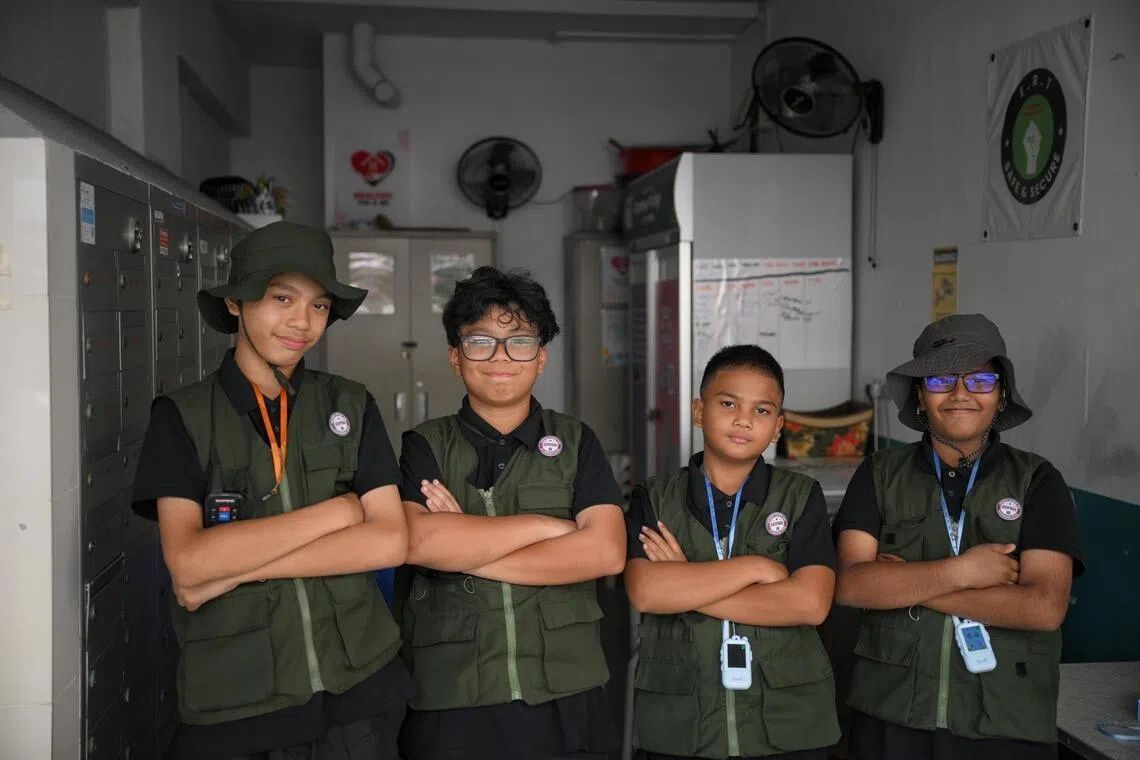
Four primary school students in the Lengkok Bahru neighbourhood of Singapore have taken it upon themselves to become the self-appointed guardians of their residential estate, conducting daily patrols to identify and address community concerns. The initiative began with a simple but determined act by 12-year-old Rafieq Sahin Rafizal, who was troubled by repeated instances of a community fridge being emptied by residents. Rather than simply standing watch over the appliance, Rafieq's mother, Marlina Yased, a 48-year-old homemaker, redirected her son's energy towards a broader neighbourhood mission. What emerged is the Emergency Response Team LB, named after Singapore's professional emergency response units and comprising Rafieq alongside three schoolmates: Aaron Sarandev, 11; Al-Mirza Danish, 12; and Didie Andiqa Muhaimin, 14.
Since launching their patrols in August 2025, the boys have become a visible community presence, donning matching vests bearing their names and the group's logo as they conduct rounds across up to six blocks of their estate. Their scope of work extends beyond simple observation; the young volunteers actively document and photograph problems including illegal dumping of bulky items, graffiti and vandalism, and dangerously charged personal mobility devices in common areas. By maintaining contact with Marlina and fellow volunteer Fahmidah Farihullah, 21, through walkie-talkies, the boys ensure that identified issues are promptly escalated to the appropriate estate management and authorities. This structured approach transforms their youthful energy into actionable community intelligence.
The team's responsibilities have evolved to encompass various forms of neighbourhood assistance. Beyond documenting environmental concerns, the boys have actively intervened in situations requiring human compassion and practical help. They have assisted an elderly resident with mobility difficulties in carrying groceries home and mediated disputes between neighbourhood children. These experiences demonstrate how youth-led initiatives can address both the physical and social dimensions of community safety. The boys' willingness to devote roughly an hour of each school day to these patrols reflects a commitment that stands out in an increasingly atomised urban environment where neighbourly concern cannot be assumed.
The project gained unexpected gravity in early 2026 when the boys' vigilance uncovered a tragic situation. After detecting a foul odour emanating from a flat, they promptly alerted Marlina, who contacted estate cleaners. The incident subsequently drew police attention, and authorities discovered the decomposed body of an elderly man within the residence. This sobering discovery underscores how consistent neighbourhood monitoring by engaged residents—even young ones—can serve public health and safety functions typically left to professional services. The incident validates Marlina's approach of channelling her son's protective instincts toward systematic community observation rather than situational guarding.
The originating catalyst for the Emergency Response Team was the community fridge initiative that Marlina launched in 2023 with sponsor support. Located at the void deck of her Block 59 rental unit, the installation caters to neighbours facing economic hardship. While the main compartment remains locked, a separate unlocked fridge stocks milk and beverages intended specifically for schoolchildren to access before their morning commute. However, the fridge was being routinely depleted by residents taking supplies beyond the intended purpose. Rather than implementing restrictive measures, Marlina conceived a more constructive solution: deploying her son and friends as community ambassadors and observers. This approach reflects a sophisticated understanding that enforcement mechanisms are less effective than fostering collective responsibility and neighbourhood engagement.
Marathon's vision for the patrol team carries explicit social messaging for the Lengkok Bahru community. She articulated wanting residents to understand that they can approach the group for assistance with shopping, elderly care, and practical support. Simultaneously, the boys serve as informal eyes and ears for fire hazards, littering, and other maintenance concerns that require prompt intervention. This dual purpose—simultaneously providing mutual aid and community protection—reflects an integrated approach to neighbourhood wellbeing that extends beyond security narrowly defined. The project implicitly acknowledges that communities thrive when residents actively invest in each other's welfare.
The team originally consisted of seven members but has consolidated to four core participants, suggesting that sustained participation among young people requires either intrinsic motivation or evolving circumstances. Rafieq himself articulated the philosophical foundation for his commitment, noting that while the boys could spend their afternoons on recreation, they deliberately allocate time to community service. Didie joined the initiative partly because he lacked structured activity and recognised an opportunity for meaningful engagement. Aaron attributed his participation to the responsibility and perseverance he has developed through regular patrols, particularly when overcoming reluctance on difficult days. These motivations reveal how youth-led community initiatives can address both neighbourhood needs and adolescent developmental requirements simultaneously.
Community reception to the patrol team has been mixed but increasingly positive. Initial scepticism from some residents has gradually shifted toward appreciation as neighbours recognised that the boys represent a productive alternative to potential mischief-making. Lengkok Bahru resident Nasha Asrin, a 27-year-old mother of five, specifically welcomed the team's presence as preferable to young people idling around the estate. More substantially, Marlina has observed tangible improvements in the boys themselves, reporting feedback from their mothers indicating improved school attendance and enhanced concentration. These personal development outcomes suggest that community-oriented youth activities generate returns extending beyond neighbourhood benefit to individual growth.
The project's success has earned broader recognition within Singapore's civic landscape. In August, the four boys will participate in the National Day Parade as part of a segment honouring Singaporeans who contribute to the nation's improvement. This will mark their inaugural participation in the annual celebration, elevating their neighbourhood initiative into a national narrative about civic engagement and community contribution. The inclusion acknowledges that meaningful social participation is not restricted to adults and that young people can substantively advance neighbourhood wellbeing. The platform further legitimises community-based approaches to public safety and mutual aid that operate outside formal institutional structures.
The Emergency Response Team LB represents a compelling model of bottom-up community organising that emerges from localised concern and evolves into structured neighbourhood stewardship. Rather than awaiting institutional intervention for neighbourhood problems, Marlina and the four boys have demonstrated that coordinated resident action, even involving primary school participants, can identify hazards, facilitate mutual assistance, and create visible community presence. This approach proves particularly relevant for Singapore's densely populated public housing estates where thousands of residents occupy close proximity. As the nation emphasises community resilience and social cohesion, the Lengkok Bahru experiment suggests that empowering young people to lead neighbourhood engagement produces both environmental and developmental benefits. The boys' involvement demonstrates that citizenship and community contribution can begin in primary school, fundamentally reframing how societies understand both public safety and youth development.

