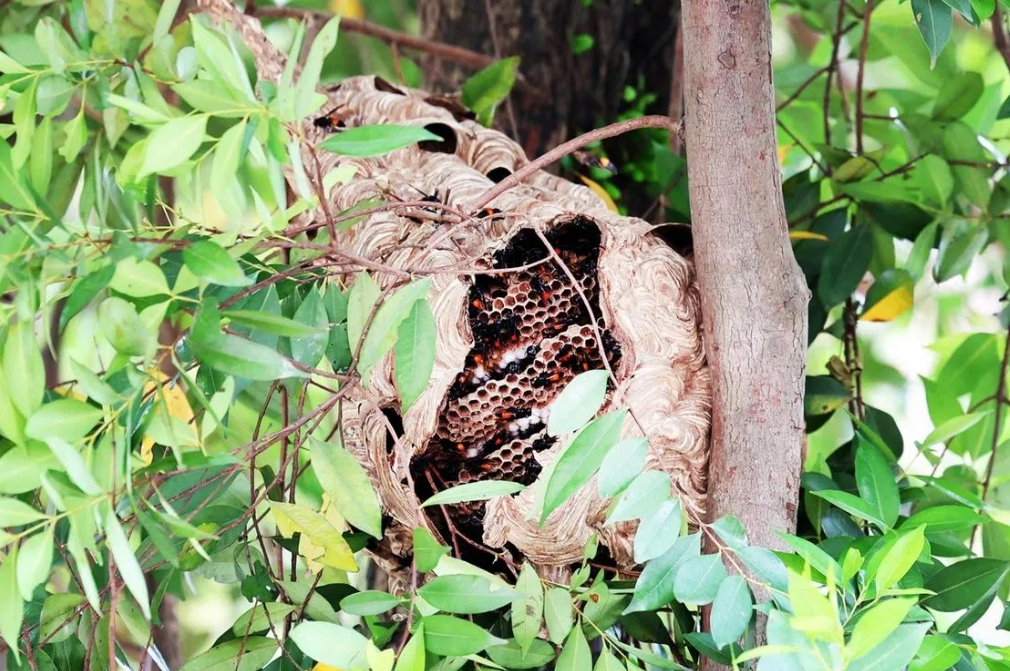
Four residents of Singapore required hospital treatment after being attacked by hornets near Redhill Market on the afternoon of July 10, with authorities responding swiftly to the incident that unfolded along Redhill Lane. The Singapore Civil Defence Force and Tanjong Pagar Town Council received the distress call at approximately 1pm, pinpointing the location of a hornets' nest that had established itself in a tree situated on the footpath connecting Block 78 Redhill Lane and a nearby Shell petrol station. The town council's rapid response involved securing the perimeter to prevent further civilian contact with the aggressive insects whilst mobilising its contracted pest control specialists to extract and dispose of the nest safely.
Eyewitness accounts paint a harrowing picture of the assault. Chen, a market patron who was enjoying coffee when chaos erupted, recalled hearing shouts of warning moments before an elderly man became the target of the insect swarm, pursued and repeatedly stung as he attempted to escape. The ferocity of the attack became evident through another witness, Mei Zhen, who discovered a woman in her seventies in an adjacent toilet facility, visibly distressed and tending to visible injuries. The woman's ears bore the distinctive signs of multiple stings—swollen, reddened, and bleeding—whilst she complained of severe headaches and dizziness. Zhen's observation that more than ten hornets had circled the victim's head, with some crawling through her hair whilst others scattered across the floor and door, underscores the intensity and coordinated nature of the defensive attack.
The medical consequences of hornet stings extend significantly beyond simple pain and swelling. According to information from the National University Hospital, hornets possess biological capabilities that distinguish them from bees and conventional wasps, notably their capacity to deliver multiple stings whilst injecting substantially larger quantities of venom with each sting. The chemical composition of this venom proves particularly dangerous: histamine present in the venom triggers allergic responses in victims, whilst melittin serves as the primary pain-inducing compound. Beyond these immediate irritants, the venom contains proteins including phospholipase and hyaluronidase that carry toxic properties capable of damaging human cellular structures. In more severe presentations, victims may experience dramatic drops in blood pressure, reduced circulation to critical organs, or swelling within the airway that can lead to asphyxiation—complications that underline why swift hospital admission becomes medically imperative.
The town council's guidance for residents emphasises the critical importance of restraint when encountering such threats. Citizens who locate a hornets' nest or find themselves near aggressive hornets should prioritise remaining calm and creating immediate distance from the danger zone. Seeking refuge inside nearby buildings offers essential protection, whilst any impulse to interfere with, provoke, or attempt personal removal of a nest must be firmly resisted. Those who sustain stings should evacuate the immediate vicinity expeditiously and contact the emergency line 995 to request ambulance assistance should symptoms escalate to severe reactions or require professional medical intervention. This guidance reflects the understanding that even seemingly minor stings can develop into medical emergencies, particularly among vulnerable populations including the elderly.
This incident represents part of an emerging pattern of hornet-related medical emergencies across Singapore's public spaces. The year 2024 witnessed multiple such occurrences, including an earlier incident at Sungei Buloh that hospitalised five individuals following hornet contact. More tragically, that same year a cyclist lost his life along the Sembawang Park Connector after suffering a hornet attack whilst using the recreational pathway. These accumulated incidents suggest that hornet populations may be establishing themselves with increasing frequency in areas where residents and visitors converge, possibly reflecting environmental changes, alterations to green space management, or seasonal patterns that have shifted the ecological balance favouring these aggressive insects.
The swift response by the Tanjong Pagar Town Council in this case—cordoning the area and arranging professional nest removal within the first hour of notification—appears to have prevented what could have become a more widespread public health emergency. Had the nest remained in situ, foot traffic through the footpath and market vicinity would have continued to pose risk to unsuspecting pedestrians. The deployment of trained pest control contractors rather than attempted amateur removal reflects professional understanding that such interventions, when mishandled, frequently escalate attacks by disturbing the colony and provoking defensive responses. The successful safe removal and area clearance demonstrates the capacity of local governance structures to manage such crises when the appropriate resources and expertise are deployed rapidly.
For Malaysian readers, this incident carries particular relevance given Southeast Asia's shared tropical climate and vegetation patterns that similarly support hornet populations. Urban centres throughout Malaysia including Kuala Lumpur, Penang, and Johor Bahru face comparable risks as green spaces intersperse residential and commercial zones. The incident at Redhill Market illustrates how hornets, despite lacking territorial aggression under normal circumstances, transform into genuine public health hazards when their nests face proximity to human activity. The medical complexity of hornet venom—involving multiple compounds that trigger distinct physiological responses—means that even healthy adults can suffer serious complications, with elderly or immunocompromised individuals facing elevated danger. Understanding the distinction between observing a nest and safely reporting it through official channels rather than attempting personal intervention represents crucial knowledge for public safety.
The broader implications for Southeast Asian urban management are significant. As cities expand into remaining natural areas and existing green spaces become increasingly intensively used for recreation, the likelihood of human-wildlife encounters intensifies. Hornet populations, particularly aggressive species, have demonstrated adaptability to urban environments where they exploit mature trees and built structures for nesting. The Redhill Market incident, occurring in a well-developed and heavily trafficked area rather than a remote location, underscores that hornet swarms represent an emerging urban hazard rather than a purely rural phenomenon. Municipal authorities across the region would benefit from developing comprehensive protocols—comparable to those evidenced by the Tanjong Pagar Town Council—that combine public education, rapid response systems, and professional removal capabilities.

