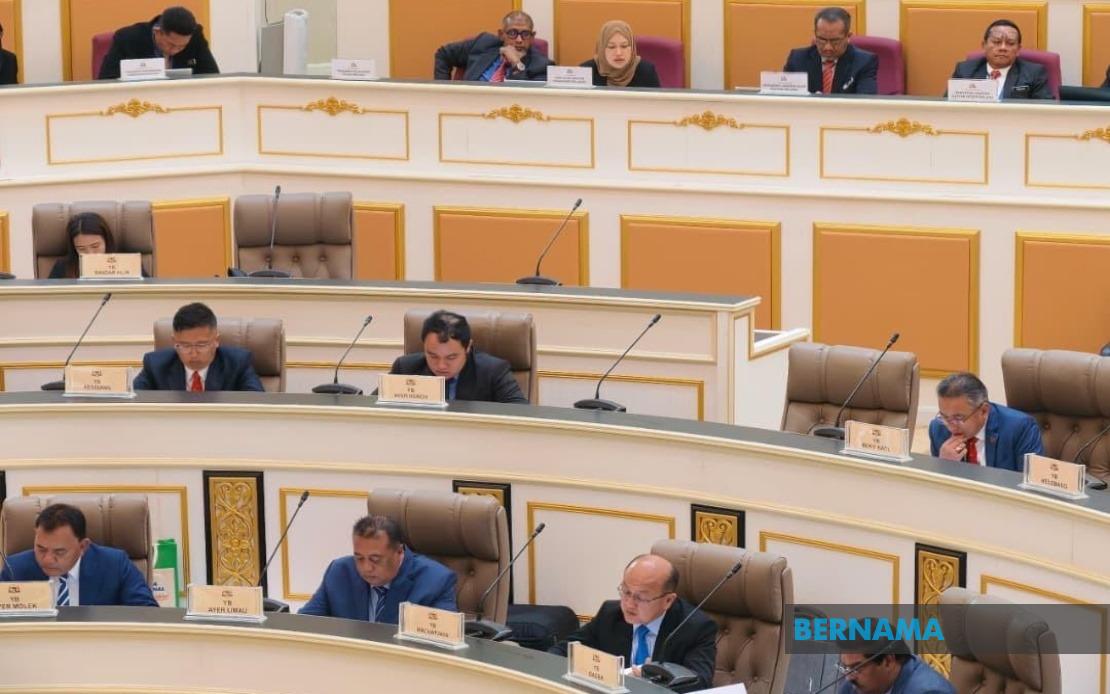
A significant political realignment unfolded in Melaka's State Legislative Assembly on July 15 as four DAP representatives formally moved their seats to the opposition benches, marking a decisive break between the Democratic Action Party and the Barisan Nasional administration that has governed the state. The relocations of Allex Seah Shoo Chin, Low Chee Leong, Leng Chau Yen, and Kerk Chee Yee came on the final day of the assembly sitting, following the party's announcement the previous day that it was terminating its coalition with the BN-led government.
The catalyst for this political rupture was the State Legislative Assembly's passage of constitutional amendments that would establish a mechanism for appointing nominated assemblymen to the chamber. DAP's decision to withdraw support hinged on its principled opposition to these amendments, with party leadership arguing that the constitutional changes fundamentally violated democratic principles and the integrity of electoral representation. Melaka DAP chairman Khoo Poay Tiong framed the party's exit as a matter of political conscience, emphasizing that the amendments contradicted the party's core values regarding how legislative bodies should be constituted and filled.
The four departing DAP assemblymen now sit with members from Perikatan Nasional and Independent legislators, formally positioning them in opposition to the government. Their physical relocation in the assembly chamber represents more than a procedural matter; it signals a reconfiguration of the state's political coalitions and shifts the numerical balance within the legislative body. This arrangement leaves the BN-led administration facing a potentially more precarious parliamentary position, depending on how many seats the government commands among remaining members.
Notably, Adly Zahari, the sole Parti Amanah Negara representative and chairman of Melaka Pakatan Harapan, maintained his position within the government bloc rather than joining his former DAP colleagues in opposition. This divergence highlights the internal tensions within the broader Pakatan Harapan coalition and underscores how different component parties within the alliance have arrived at different conclusions regarding continued cooperation with Barisan Nasional in Melaka.
Prime Minister Datuk Seri Anwar Ibrahim had publicly urged Melaka DAP to reconsider its withdrawal, appealing to the party to delay its decision so that state government efforts could concentrate on development initiatives and policies benefiting the general populace. The Prime Minister's intervention reflected the federal government's interest in maintaining political stability in Melaka and preserving its coalition arrangements. However, DAP's leadership ultimately determined that its political principles took precedence over coalition maintenance.
Assembly Speaker Datuk Ibrahim Durum issued a formal statement calling upon all assemblymen to conduct themselves with discipline, decorum, and courtesy during proceedings, while strictly adhering to established house rules. Such reminders from the speaker typically signal expectations that political disagreements, though significant, should not descend into disruptive behaviour or violations of assembly protocols. The speaker's intervention reflects the institutional concern that the assembly should continue functioning effectively despite underlying political tensions.
The Melaka political situation carries implications extending beyond the state itself. The breakdown between DAP and BN in the state capital reflects broader questions about the sustainability of Pakatan Harapan's various coalition arrangements with Barisan Nasional across different jurisdictions. Each state operates within its own political dynamics, yet state-level conflicts can reverberate at federal level and affect the calculations of coalition partners nationwide.
This episode also illustrates the contentious nature of constitutional amendments in Malaysian politics. Proposals to alter state constitutional provisions invariably trigger debates about the balance between executive power and legislative independence, between appointed and elected representation. DAP's opposition stems from a principled concern about appointed positions, which the party contends undermine the democratic mandate established through elections.
For Melaka's governance moving forward, the shifting composition of the assembly raises questions about the government's ability to pass legislation and maintain its programmes. The effectiveness of state administration depends partly on maintaining sufficient parliamentary support, and the departure of four assemblymen potentially constrains the government's operational capacity, particularly if additional political realignments occur or if government-backed legislation faces sustained opposition.
The events in Melaka also underscore the volatility inherent in Malaysian coalition politics, where governments at state and federal levels must negotiate complex arrangements among multiple parties with sometimes competing interests and principles. The willingness of DAP to sacrifice its role in government rather than compromise on constitutional matters demonstrates that ideological questions can still drive political decision-making, even when withdrawal from power carries significant costs for the party and its supporters.

