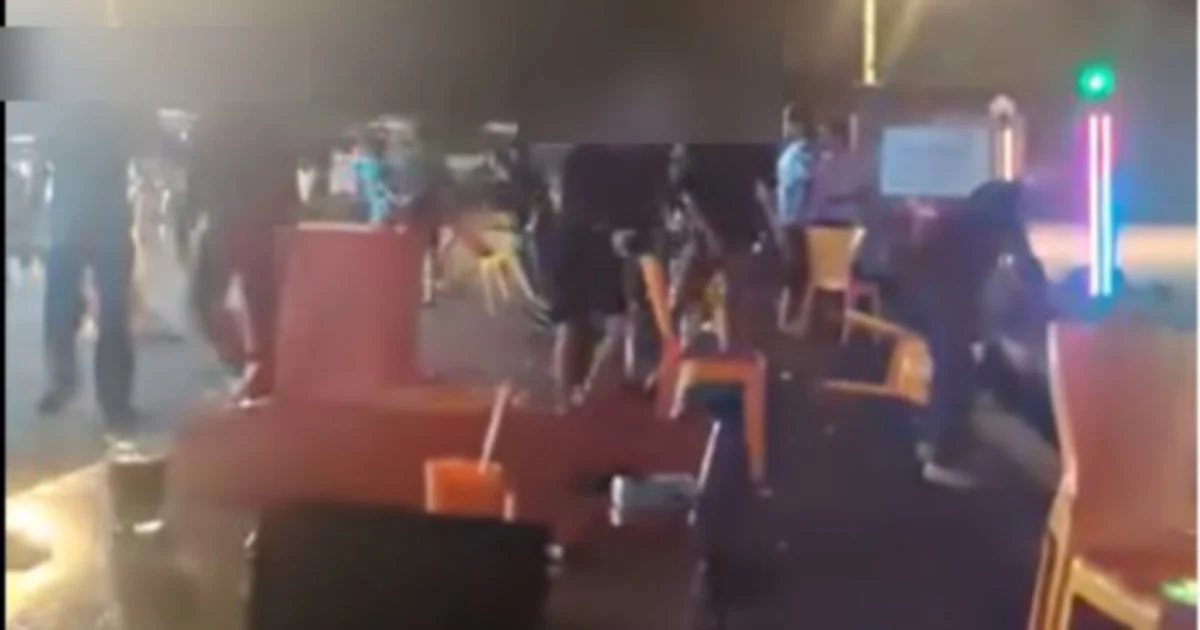
A restaurant dispute in the Taman Manis area of Kulai escalated into serious violence, prompting police intervention and the arrest of four men involved in the altercation. The incident unfolded at a dining establishment where patrons abandoned civility in favour of physical confrontation, with furniture being repurposed as weapons during the melee.
The severity of the incident reflects broader concerns about public order in commercial establishments across Malaysia's Johor state. Such disturbances not only pose immediate safety risks to other patrons and staff but also underscore the volatile nature of disputes that can arise in public dining venues where tensions run high and judgment becomes impaired. The willingness of those involved to escalate from verbal disagreement to physical violence, and subsequently to weaponising furniture, demonstrates how quickly situations can deteriorate in closed environments.
Police response to the incident was prompt, with officers arriving to secure the scene and detain those responsible. The deployment of law enforcement resources to handle such incidents places additional burden on local police forces, particularly in smaller towns like Kulai where more serious crimes may require similar attention. The rapid arrival of authorities may have prevented further escalation or potential serious injury to uninvolved bystanders present in the restaurant at the time.
The use of chairs as weapons is a particularly concerning aspect of this incident, as it demonstrates a deliberate escalation from hand-to-hand combat to using objects that could cause significant physical harm. Such tactics increase the risk of severe injuries including head trauma, broken bones, and internal injuries. Restaurants and other public gathering spaces have increasingly become focal points for such incidents, raising questions about establishment responsibility in managing patron behaviour and de-escalating tensions before they turn violent.
For Kulai residents and business operators in the area, this incident serves as a reminder of the potential for violence lurking beneath the surface of everyday social interactions. Taman Manis, like many residential and commercial areas in Johor, has experienced its share of public order challenges. This restaurant brawl joins a pattern of venue-related disturbances that have prompted community concerns about safety and the adequacy of preventive measures in public spaces.
The investigation into the incident will likely focus on identifying the triggers for the conflict and determining whether any specific grievances or prior history between the parties contributed to the escalation. Understanding these factors is essential for law enforcement to assess whether this represents an isolated incident or part of a recurring pattern involving particular individuals or locations. Police may also examine whether alcohol consumption played a role, as intoxication frequently correlates with increased violence in public venues.
The four arrested individuals will face potential charges relating to affray or criminal intimidation depending on the circumstances and outcomes of the incident. Those found guilty of participating in public brawls can expect penalties including fines and potential custodial sentences. For the restaurant establishment itself, the incident raises liability questions and may prompt management to review security protocols and patron management procedures.
From a broader perspective, this incident highlights the need for continued community awareness regarding conflict resolution and the consequences of resorting to violence. Educational initiatives focusing on anger management and dispute resolution could help reduce the frequency of such incidents in public spaces. Additionally, establishments serving food and beverages might benefit from staff training in de-escalation techniques that allow them to intervene early when tensions emerge among patrons.
The case also underscores the role of CCTV surveillance in modern law enforcement, as security cameras installed in the restaurant likely provided crucial evidence for identifying and apprehending those responsible. As such technology becomes more prevalent in public and commercial spaces across Malaysia, it increasingly serves as both a deterrent and an investigative tool that enhances police capacity to solve crimes and bring perpetrators to justice.
Looking forward, this incident in Kulai serves as a case study in how rapidly peaceful social settings can transform into dangerous environments when disputes between individuals escalate unchecked. The swift police response and arrests demonstrate the commitment of local authorities to maintaining public order, though prevention remains preferable to enforcement action. Community members and business operators are encouraged to remain vigilant and report suspicious behaviour or emerging conflicts to authorities before situations deteriorate to the point of violence.