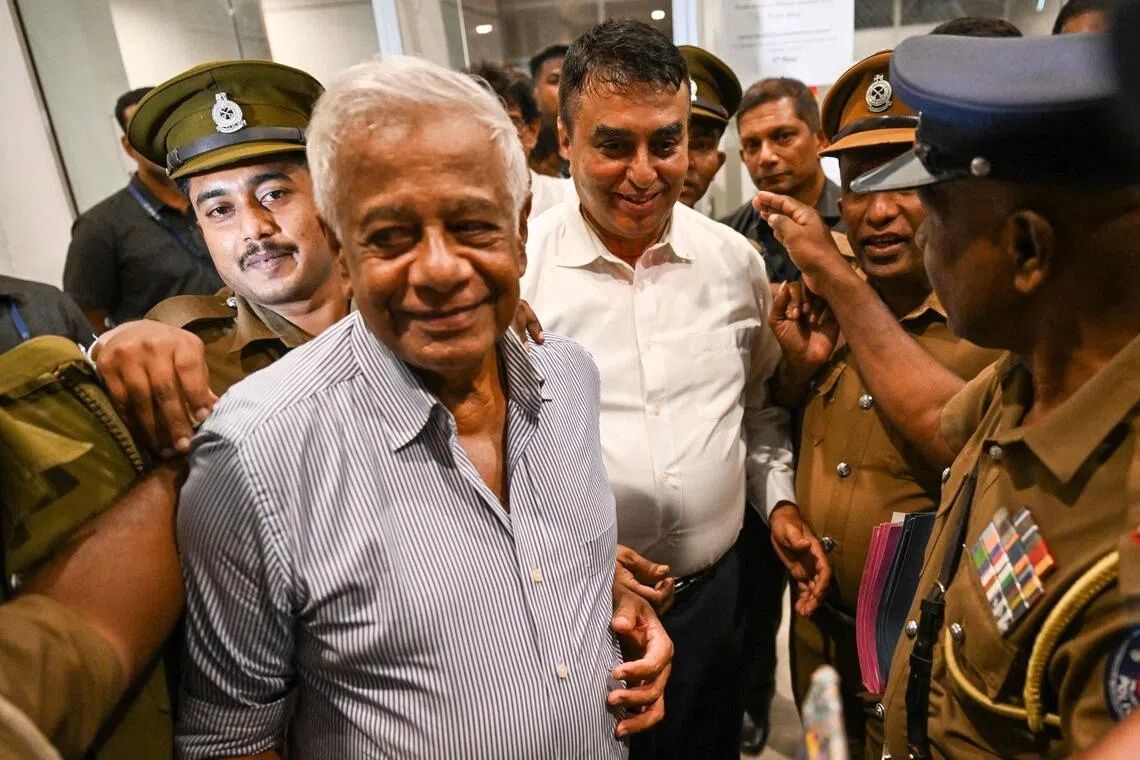
Two of Sri Lanka's most senior security officials have signalled their intention to challenge death sentences handed down for their alleged failure to prevent the devastating Easter bombings of 2019, marking a significant turning point in a case that has dominated the country's legal landscape for nearly five years. Hemasiri Fernando, the former defence ministry secretary, and Pujith Jayasundara, the former police inspector-general, were convicted on Friday by a Colombo High Court bench in a contentious 2-1 decision that split the judicial panel over the weight of evidence against them. Their legal team has committed to filing an appeal with Sri Lanka's Supreme Court within a fortnight, setting the stage for what promises to be an exhaustive examination of the conviction and its justifications.
The 2019 Easter Sunday attacks represent one of the deadliest terrorist incidents in South Asian history, with coordinated bombings striking three Catholic churches and three luxury hotels across Colombo and provincial cities on April 21. The violence claimed 279 lives, including 45 international visitors whose deaths drew global media attention and diplomatic responses from numerous countries. Beyond the immediate death toll, over 500 people sustained injuries ranging from minor wounds to severe, life-altering trauma, reshaping the lives of families and communities across the island nation for years to come. The perpetrators were identified as members of homegrown Islamist extremist cells, though investigations revealed complex networks and international dimensions that continue to inform security policy debates.
The dissenting judgment by one of the three judges becomes crucial to the appeal strategy. According to defence attorney Chaminda Athukorale, the minority opinion argues persuasively that the two accused officials lacked both motive and substantive connection to the actual bombing networks, raising fundamental questions about the legal basis for attributing criminal responsibility to security administrators for failures in intelligence gathering and threat assessment. This technical distinction carries enormous weight in appellate jurisprudence, suggesting that the Supreme Court may grapple with how culpability should be assigned when systemic security failures occur without direct participation in criminal acts.
A particularly damning detail that has haunted this case involves prior intelligence warnings that authorities allegedly ignored. During the trial proceedings, the court heard testimony that Indian intelligence agencies had specifically alerted Sri Lankan counterparts on April 4, 2019—just seventeen days before the attacks—to intelligence suggesting an impending suicide bombing campaign by Islamist extremists. The failure to act on such concrete intelligence, or even to mobilise appropriate investigative responses, has formed the cornerstone of the prosecution's argument that negligence rose to criminal levels warranting capital punishment.
The legal journey leading to Friday's convictions reflects the complexity of assigning blame after catastrophic security lapses. In February 2022, a different High Court ruling had acquitted both men, finding insufficient evidence to support charges of murder or abetting the crime. This exoneration appeared to close the chapter on their prosecution, yet the state initiated an appeal that convinced the Supreme Court to order a retrial—a decision that ultimately produced the death sentences now subject to challenge. The reversal demonstrates how malleable legal outcomes can be when cases of such national significance pass through multiple judicial stages and attract intense public and political pressure.
Capital punishment remains a deeply fraught issue within Sri Lankan jurisprudence and society. The nation has maintained an unofficial moratorium on executing death sentences since 1976, a remarkable record spanning nearly fifty years that reflects both constitutional sensibilities and practical governance considerations. According to government figures presented to parliament in February of this year, 817 individuals remain on death row, yet virtually all such sentences undergo commutation to life imprisonment through routine administrative procedures. The death penalty effectively functions as a symbolic rather than practical element of the justice system, raising fundamental questions about why courts would impose sentences they know will never be carried out.
Fernando, aged 76, and Jayasundara, 66, are currently held in maximum-security detention facilities in Colombo, where they await the outcome of their Supreme Court proceedings. Both men have already faced significant financial consequences beyond their criminal convictions; a separate civil action ordered them jointly to pay 125 million rupees—approximately US$372,464—in damages to survivors of the attacks, acknowledging their administrative responsibility even where criminal culpability remained contested.
The case resonates deeply across Southeast Asia as a cautionary tale about institutional accountability and the limits of criminal law in addressing systemic failures. For Malaysia and other regional nations, the proceedings raise uncomfortable questions about how security establishments should be held responsible when intelligence warnings go unheeded or threat assessments prove inadequate. The tension between respecting the operational autonomy of security agencies and demanding accountability for negligence that costs lives remains unresolved in most jurisdictions, including Malaysia, where similar debates periodically emerge following security incidents.
The Supreme Court appeal will likely examine whether assigning criminal culpability to administrative officials serves justice or whether such cases demand legislative rather than judicial remedies. Defence arguments emphasising the dissenting judge's reasoning may persuade the appellate bench that institutional reform and administrative accountability offer more appropriate responses than capital punishment for officials who, however negligent, did not themselves orchestrate violence. The forthcoming decision will shape how Sri Lanka's legal system approaches such accountability questions for decades to come, with implications extending across the region's security governance frameworks.

