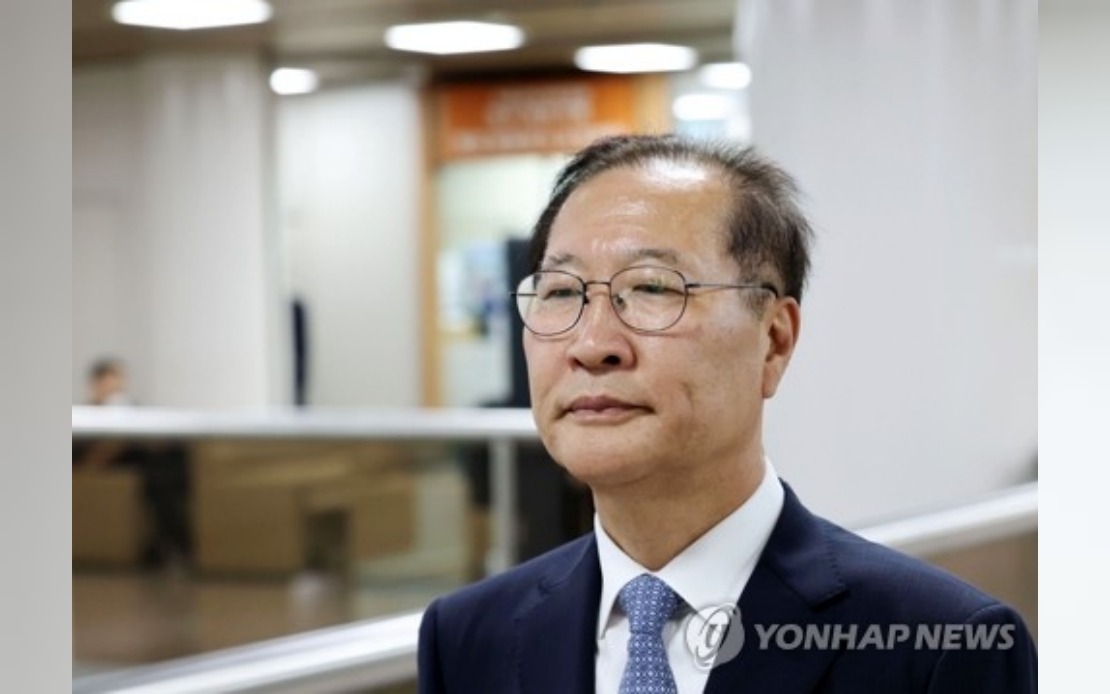
South Korea's former Justice Minister Park Sung-jae has been sentenced to 25 years in prison for his role in ex-President Yoon Suk Yeol's botched martial law declaration, marking another major conviction in a constitutional crisis that has shaken the country's political establishment. The Seoul Central District Court's verdict on Monday exceeded the prosecution's 20-year recommendation, underscoring the gravity with which judges viewed Park's participation in what the court determined to be an insurrection. Authorities immediately remanded Park in custody, citing substantial risk that he might interfere with evidence or witnesses.
Park's conviction centres on his actions taken immediately after Yoon's controversial martial law proclamation on December 3, 2024. Rather than attempting to block the illegal order—a duty the court emphasised belongs to senior justice officials—Park convened an emergency meeting of ministry leadership to coordinate operational support for the authoritarian power grab. This deliberate activation of institutional machinery made him complicit in what prosecutors characterised as a carefully orchestrated plot to subvert constitutional order rather than an impulsive mistake by the president.
The judicial findings paint a detailed picture of Park's involvement. Prosecutors demonstrated that Park used the emergency gathering to organise the deployment of prosecutors to martial law enforcement bodies, assess prison capacity for holding expected political detainees, and mobilise officials responsible for implementing travel restrictions. Each action reflected purposeful participation in planning and executing the insurrection, not merely passive compliance. The court accepted these arguments entirely, finding Park guilty on all charges related to his role in the conspiracy.
What makes this case particularly significant for observers of Korean institutional politics is the court's explicit reasoning about ministerial responsibility. In its judgment, the bench stated that Park had abandoned his constitutional obligation to protect and uphold the nation's legal framework the moment he calculated the insurrection might succeed. Rather than defending institutional integrity, he chose to become an active participant. This formulation establishes an important legal precedent: senior officials cannot claim immunity by arguing they merely followed presidential orders when those orders are manifestly unconstitutional.
Park joins a growing roster of cabinet-level figures facing serious convictions from the martial law episode. Former Prime Minister Han Duck-soo and former Defence Minister Kim Yong-hyun have also been found guilty of playing key roles in the insurrection. Most dramatically, Yoon himself received a life sentence in February for leading the constitutional violation, though he has mounted a vigorous appeal challenging both the conviction and the sentence. The breadth of institutional participation in the scheme underscores how thoroughly the president had embedded collaborators throughout the executive apparatus.
Additionally, the court struck down charges against Park for violating anti-corruption statutes, though these stemmed from a different episode entirely. In May 2024, according to prosecutors, Park had allegedly accepted inappropriate directions from Yoon's wife, Kim Keon Hee, to conduct investigations into her personal corruption allegations. The court determined this matter fell outside the special counsel's investigative mandate and thus dismissed those particular charges, narrowing but not undermining the overall guilty verdict.
For Malaysian and Southeast Asian readers, this case illustrates the vulnerability of even well-established democratic institutions when powerful leaders attempt to circumvent constitutional limits. South Korea's experience demonstrates that institutional safeguards against authoritarianism depend ultimately on individual officials' willingness to resist pressure and defend constitutional principles. When senior bureaucrats—whose professional duty is to uphold the law—instead become instruments of illegal executive power, the consequences can be catastrophic for democratic governance.
Park's legal team has signalled immediate appeal, dismissing the court's verdict as unsupported by factual evidence or proper legal interpretation. Defence lawyers are likely to argue that Park's actions, while controversial, do not meet the high threshold for insurrection charges and that the sentence is disproportionate. However, the special counsel's office indicated little likelihood of appealing the conviction itself, viewing the judgment as correctly articulating the weighty responsibilities that justice ministers bear toward constitutional order.
The case also highlights how institutional mechanisms for investigating executive misconduct—South Korea's special counsel system—can function even when a sitting president faces serious criminal charges. The independence of the judiciary to hear evidence and render judgment against cabinet-level defendants, despite significant political pressure, has proven crucial to holding state actors accountable. This institutional resilience offers a counterpoint to pessimistic assessments about democratic backsliding in East Asia.
Looking ahead, Park's conviction will likely influence how other officials facing martial law-related charges conduct their defence strategies. The court's unambiguous finding that ministerial office provides no shelter for participating in constitutional violations may prompt broader institutional reflection across South Korea's bureaucracy about the primacy of legal and constitutional obligations over presidential directives. For a region where questions about the appropriate balance between executive authority and institutional checks remain contested, South Korea's judicial response offers important lessons about defending constitutional democracy when it faces direct assault from elected leaders.