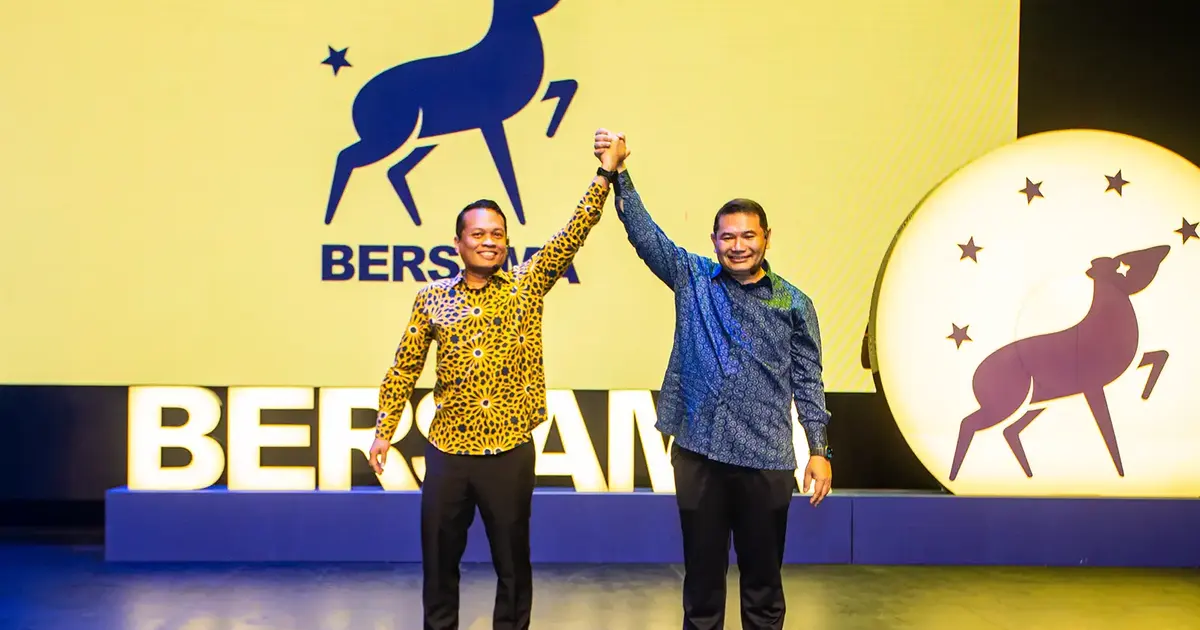
Bersama appears to be gaining traction among experienced public sector figures as the party mobilises for upcoming state elections in Johor and Negeri Sembilan, with party leaders reporting robust interest from former senior civil servants eager to throw their hats into the ring. The positive response underscores the party's growing appeal beyond traditional political circles and suggests it may be positioning itself as a viable alternative for voters seeking candidates with substantial administrative experience and institutional credibility.
Rafizi, the key figure articulating the party's electoral ambitions, has highlighted the encouraging feedback received from those interested in standing as candidates in both state contests. This influx of interest from the bureaucratic establishment represents a notable development in Malaysia's political landscape, where the recruitment of former government officials to party rosters typically signals confidence in electoral prospects and an attempt to broaden the party's appeal across different voter demographics.
The attraction of ex-civil servants to Bersama reflects a broader pattern in Malaysian politics where experienced administrators and technical experts are increasingly recruited by opposition-aligned or newer political movements seeking to enhance their credibility and policy-making capacity. These individuals often bring deep knowledge of government machinery, budgetary processes, and implementation frameworks that parties seeking to govern seek to leverage during campaigns and, potentially, in future administrations.
Johor, Malaysia's southernmost peninsular state and a traditional stronghold of the ruling coalition, represents particularly challenging terrain for any opposition or newer party seeking electoral breakthroughs. The state's political dynamics have remained relatively stable under established political structures, making the presence of credible candidates from the civil service potentially valuable in persuading voters who might otherwise view newer parties with scepticism. Negeri Sembilan, meanwhile, offers somewhat more competitive electoral ground, having seen shifts in political control in recent electoral cycles.
The recruitment of former senior officials also addresses a perennial challenge for emerging or smaller political parties in Malaysia: the perception that they lack governing experience or administrative depth. By fielding candidates who have spent decades navigating the corridors of power and managing public resources, Bersama can present itself as a serious contender capable of effective governance rather than merely a protest vehicle or single-issue movement. This positioning becomes increasingly important as the party attempts to expand beyond its core supporters.
Rafizi's public acknowledgement of this recruiting success serves multiple strategic purposes simultaneously. Internally, it signals to party members and supporters that the organisation is building momentum and attracting quality candidates willing to associate with the party's brand and platform. Externally, such announcements subtly communicate to voters that Bersama is becoming mainstream enough to attract the kind of establishment figures previously unlikely to risk their reputations on newer political vehicles. This perception management is crucial in the competitive Malaysian electoral environment where name recognition and perceived viability substantially influence voting behaviour.
The timing of these recruitment efforts is significant given the electoral calendar in both states. Securing candidates early allows parties additional time for campaign preparation, candidate profiling, and grassroots mobilisation efforts. It also signals to potential supporters that the party is serious and organised, traits essential for building voter confidence in a system where political credibility often depends on demonstrable organisational capacity and logistical competence.
For Malaysia's broader political ecosystem, the emergence of Bersama as a destination for retired civil servants suggests the political landscape may be slowly fragmenting or reconfiguring. Rather than a simple two-coalition framework, Malaysian voters increasingly encounter multiple political options, each attempting to differentiate itself through candidate quality, messaging, and perceived competence. This diversification, while potentially creating complexity for voters, could ultimately enhance democratic choice by forcing all parties to invest more seriously in candidate selection and policy development.
The response from retired bureaucrats also reflects changing calculations within the civil service about political engagement. Younger officials and those closer to retirement may feel greater freedom to pursue political ambitions after leaving government service, particularly if they perceive the broader political environment as offering more opportunities for their expertise outside traditional party structures. This gradual opening of the civil service toward post-retirement political activity represents a subtle but meaningful shift in how Malaysia manages the interface between its permanent administrative apparatus and its electoral politics.
Bersama's success in attracting these candidates will ultimately depend on translating their recruitment into electoral performance and subsequently into governance impact. Strong candidate credentials alone cannot guarantee election victories without effective campaign messaging, organisational support, and voter mobilisation infrastructure. The party will need to ensure that its new recruits from the civil service are positioned in winnable constituencies where their credentials can meaningfully influence electoral outcomes, rather than scattered across uncompetitive seats where even experienced candidates struggle.
Looking forward, the extent to which Bersama can consolidate this initial interest into actual candidacies and then into electoral victories will significantly shape its trajectory as a political force. Success would validate the party's strategic approach of recruiting establishment figures and position it as a credible alternative to existing coalitions. Conversely, poor electoral performance despite strong candidates would suggest that voter preferences and coalition dynamics remain more important than individual candidate quality in determining outcomes.
%22%2F%3E%3C%2Fpattern%3E%3C%2Fdefs%3E%3Crect%20width%3D%22100%25%22%20height%3D%22100%25%22%20fill%3D%22url(%23ph4kz1yg)%22%2F%3E%3Crect%20width%3D%22100%25%22%20height%3D%22100%25%22%20fill%3D%22url(%23ph4kz1yp)%22%2F%3E%3Ctext%20x%3D%2250%25%22%20y%3D%2250%25%22%20text-anchor%3D%22middle%22%20dominant-baseline%3D%22central%22%20fill%3D%22rgba(255%2C255%2C255%2C0.95)%22%20font-family%3D%22Georgia%2C%20'Times%20New%20Roman'%2C%20serif%22%20font-weight%3D%22700%22%20font-size%3D%22320%22%20letter-spacing%3D%22-0.02em%22%3EIran%3C%2Ftext%3E%3C%2Fsvg%3E)
%22%2F%3E%3C%2Fpattern%3E%3C%2Fdefs%3E%3Crect%20width%3D%22100%25%22%20height%3D%22100%25%22%20fill%3D%22url(%23ph4ir7ag)%22%2F%3E%3Crect%20width%3D%22100%25%22%20height%3D%22100%25%22%20fill%3D%22url(%23ph4ir7ap)%22%2F%3E%3Ctext%20x%3D%2250%25%22%20y%3D%2250%25%22%20text-anchor%3D%22middle%22%20dominant-baseline%3D%22central%22%20fill%3D%22rgba(255%2C255%2C255%2C0.95)%22%20font-family%3D%22Georgia%2C%20'Times%20New%20Roman'%2C%20serif%22%20font-weight%3D%22700%22%20font-size%3D%22272%22%20letter-spacing%3D%22-0.02em%22%3ETrump%3C%2Ftext%3E%3C%2Fsvg%3E)
%22%2F%3E%3C%2Fpattern%3E%3C%2Fdefs%3E%3Crect%20width%3D%22100%25%22%20height%3D%22100%25%22%20fill%3D%22url(%23ph4qq4yg)%22%2F%3E%3Crect%20width%3D%22100%25%22%20height%3D%22100%25%22%20fill%3D%22url(%23ph4qq4yp)%22%2F%3E%3Ctext%20x%3D%2250%25%22%20y%3D%2250%25%22%20text-anchor%3D%22middle%22%20dominant-baseline%3D%22central%22%20fill%3D%22rgba(255%2C255%2C255%2C0.95)%22%20font-family%3D%22Georgia%2C%20'Times%20New%20Roman'%2C%20serif%22%20font-weight%3D%22700%22%20font-size%3D%22320%22%20letter-spacing%3D%22-0.02em%22%3EIran%3C%2Ftext%3E%3C%2Fsvg%3E)