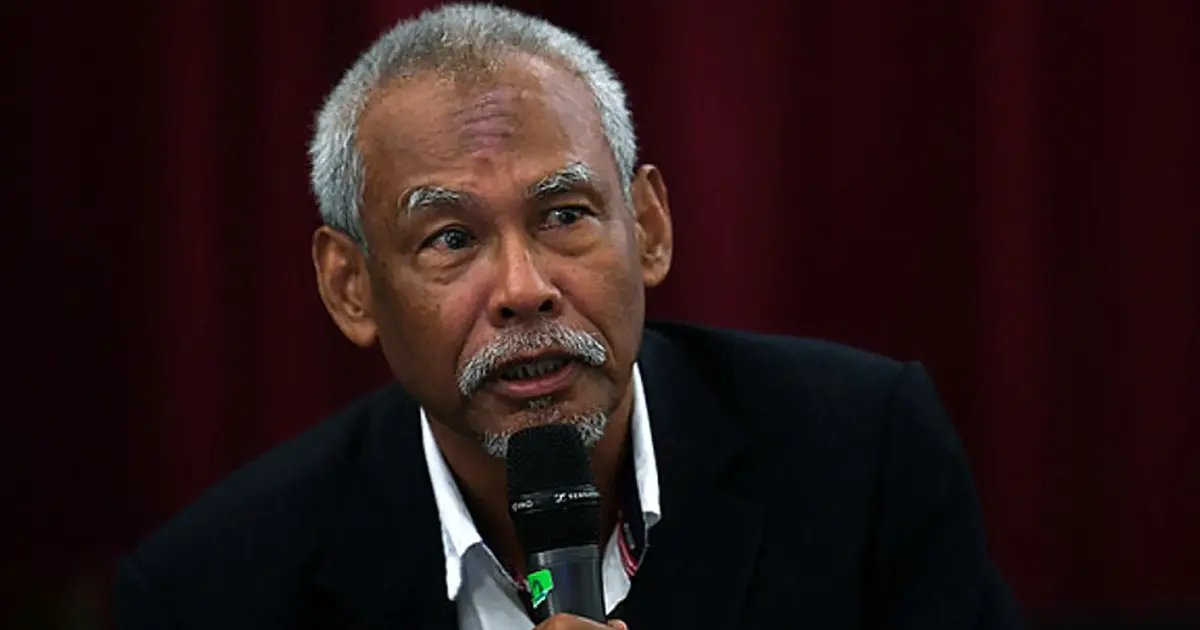
The nation's highest court has closed the door on former Inspector-General of Police Musa Hassan's attempt to overturn a defamation case, determining that his appeal does not raise sufficiently significant legal questions to warrant judicial reconsideration. The decision marks a significant moment in Malaysia's evolving jurisprudence on defamation law and the rights of public figures, setting boundaries around what constitutional issues courts will entertain in such disputes.
Musa Hassan had filed an application seeking to challenge the defamation lawsuit through a review mechanism, framing his case around nine distinct legal questions. These questions centred on fundamental principles—particularly the constitutional right of public officials to initiate defamation proceedings and the interplay between such rights and broader freedoms of expression protected under the Federal Constitution. The apex court's rejection of his application indicates that judges found these arguments either already settled by established law or insufficiently novel to justify revisiting judicial precedent.
The underlying defamation case involves Hannah, whose identity reflects the ongoing nature of this legal matter. The specifics of the allegations and the original claims remain central to understanding why this appeal has attracted judicial attention and commentary in Malaysia's legal circles. What began as a dispute between two parties has evolved into a test case touching on fundamental constitutional principles that extend far beyond the individuals directly involved.
Public officers in Malaysia occupy a unique legal position. Unlike private citizens, they hold positions of trust and are accountable to the public they serve, yet they retain the right to protect their personal reputation through civil law mechanisms. The tension between these two dimensions—public accountability and personal dignity—has long occupied Malaysian legal scholarship and judicial thinking. Musa Hassan's nine questions appeared designed to challenge how courts balance these competing interests, particularly when speech concerns matters of public interest or involves criticism of official conduct.
The question of freedom of expression takes on heightened importance when public officials are involved. Many democracies have developed robust doctrines protecting commentary on government and those who hold public office, recognising that democratic governance requires space for critical discussion. Malaysia's approach has traditionally been more cautious, granting public officers considerable scope to pursue defamation claims. The apex court's decision to refrain from reviewing these constitutional questions suggests the judiciary sees no pressing need to recalibrate this balance at present.
Legal observers in Malaysia will interpret this outcome as the court signalling confidence in existing defamation law frameworks and the principles that govern them. When appellate courts decline to review cases, they implicitly endorse the reasoning and outcomes of lower courts, reinforcing those precedents throughout the legal system. This decision therefore strengthens the hand of anyone bringing defamation claims, including public servants, while potentially narrowing the scope of defences available to those accused of defamatory statements.
The timing of this ruling carries relevance for Malaysia's broader political and legal environment. Public discourse in the country frequently involves criticism of government officials and security force conduct. The handling of defamation cases involving such figures shapes the contours of permissible public discussion. A legal landscape that favours public officers in defamation disputes may encourage more litigation but could also chill frank commentary on matters of legitimate public concern. The apex court's unwillingness to revisit these questions suggests judicial acceptance of that trade-off.
For individuals facing defamation claims in Malaysia, this decision offers little comfort if they have attempted to rely on constitutional protections around freedom of expression. The court's refusal to entertain Musa Hassan's constitutional questions implies that existing defamation standards remain the applicable law, regardless of whether the statement concerned public interest matters or criticism of official conduct. Defendants cannot expect courts to overturn defamation verdicts by invoking freedom of expression as a fundamental override of civil liability.
Regionally, Malaysia's approach to defamation law involving public figures contrasts with jurisdictions where robust free speech protections function as serious obstacles to successful defamation claims. In some democracies, public officials must demonstrate actual malice or reckless disregard for truth to prevail in defamation suits. Malaysia's framework imposes no such exacting standard, placing the burden more heavily on speakers to verify statements before publication. This structural difference influences how media organisations, civil society groups, and ordinary citizens engage in political discussion.
The implications for Malaysia's legal profession are also noteworthy. Lawyers advising clients on statements that might offend public officers now have clearer guidance: constitutional arguments about freedom of speech will likely not persuade appellate courts to overturn defamation judgements. This may encourage settlement-oriented approaches and greater circumspection in public statements, trends that can either reduce frivolous litigation or suppress legitimate discourse depending on one's perspective.
Musa Hassan's failed appeal ultimately reinforces the principle that public officers possess robust legal remedies against reputational harm. Whether this strengthens Malaysian democracy by protecting official dignity or weakens it by restricting commentary on power remains contested among legal scholars and civil society observers. The apex court's decision to decline review suggests the institution is comfortable with that balance, at least for now, and sees no constitutional imperative to reconsider it.
Moving forward, this decision will likely influence how defamation cases are litigated in Malaysia. Parties will focus less on constitutional challenges to defamation law itself and more on factual and evidential arguments within the existing legal framework. The apex court has signalled, through its silence on these constitutional questions, that it trusts current law to handle the competing interests involved. Whether that trust proves justified depends on how lower courts apply those principles in future cases involving public figures and matters of public concern.

