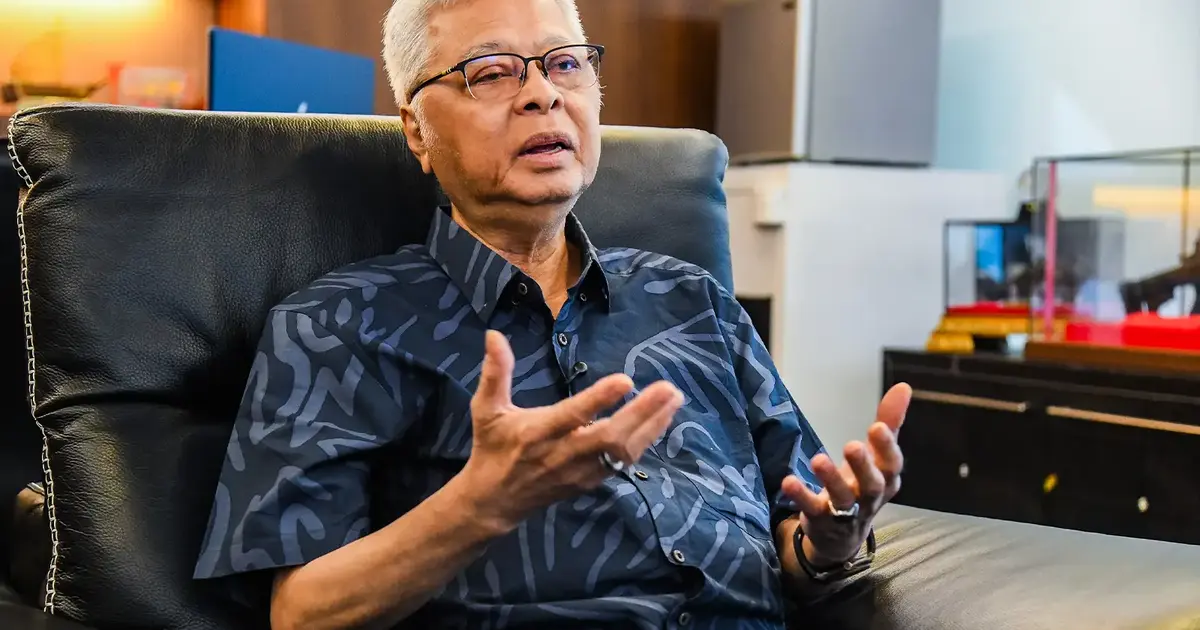
Former Prime Minister Ismail Sabri Yaakob is poised to make a court appearance that could fundamentally reshape the landscape of Malaysian political accountability. The ex-Umno leader will stand before Sessions Court judge Suzana Hussin at 9am tomorrow to face graft charges, a moment that underscores the country's renewed focus on investigating high-ranking officials for alleged misconduct during their tenure in government.
The impending charges represent the latest in a series of legal actions targeting prominent political figures in Malaysia, reflecting an intensifying scrutiny of governance practices. Ismail Sabri, who served as Prime Minister from August 2021 to November 2022, held significant sway within Umno's leadership structure as the party's former vice-president. His upcoming court appearance carries substantial symbolism for Malaysian governance, as the country continues navigating a critical period of institutional accountability.
The timing of this development carries broader implications for Malaysian politics. Ismail Sabri's premiership bridged a turbulent period in the nation's political history, following the collapse of the Perikatan Nasional administration. His tenure witnessed multiple challenges, including economic pressures and the need to stabilize parliamentary support. The charges he now faces will inevitably focus public discourse on governance standards during that period.
For Southeast Asian observers, this development illustrates the regional tension between political pragmatism and institutional accountability. Malaysia has increasingly demonstrated its willingness to pursue corruption investigations regardless of a suspect's former political standing, a trend that distinguishes it from some neighbouring jurisdictions. However, such cases also highlight the complex interplay between political rivalry and genuine legal proceedings, a distinction that often proves difficult for the public to parse.
The Sessions Court proceeding scheduled for tomorrow will mark a critical juncture in what appears to be a more comprehensive examination of political accountability across Malaysia's leadership ranks. Judge Suzana Hussin will preside over what promises to be a closely watched hearing, given Ismail Sabri's recent prominence in national politics and his continued influence within Umno's fractious leadership structure.
Umno's internal dynamics add another layer of complexity to this legal challenge. The party remains deeply divided over leadership direction and strategic alliances, and Ismail Sabri's legal troubles may further destabilize efforts to establish party cohesion. His former position as vice-president suggests he occupied a position of considerable influence within party machinery, making his charges potentially consequential for Umno's institutional reputation.
For ordinary Malaysians, this case embodies a broader question about whether the nation's anti-corruption frameworks function equitably across all levels of society. Previous cases involving senior officials have generated intense public scrutiny, with citizens closely monitoring whether the legal system applies consistent standards. This particular matter will likely intensify those discussions, particularly given Ismail Sabri's elevated status within Malaysian politics.
The anti-corruption investigative bodies responsible for bringing this case forward have demonstrated increasing operational independence over recent years. Their decision to charge a former Prime Minister sends a powerful signal about institutional willingness to pursue accountability regardless of political consequences. Whether such independence persists in coming years remains uncertain, however, as Malaysia's political landscape continues shifting.
Regional implications merit consideration as well. Southeast Asia's governance challenges include persistent corruption concerns across multiple jurisdictions. Malaysia's visible pursuit of high-profile cases provides a contrasting example to nations where such investigations remain politically fraught or fail to materialize. This comparative approach matters for international perceptions of institutional strength across the region.
Ismail Sabri's legal team will likely prepare a comprehensive defence strategy ahead of tomorrow's appearance. The nature of charges and evidence presentation will become clearer during the court proceedings, potentially setting precedents for future cases involving senior officials. The public will gain insights into investigative methodologies and prosecutorial approaches through court filings and judicial observations.
Looking forward, this case represents merely one chapter in Malaysia's ongoing institutional evolution. Depending on outcomes, it could either reinforce confidence in the country's anti-corruption mechanisms or expose vulnerabilities in how such cases are prosecuted. The former Prime Minister's appearance before Judge Suzana Hussin tomorrow will provide crucial information about the trajectory of political accountability in contemporary Malaysia.

