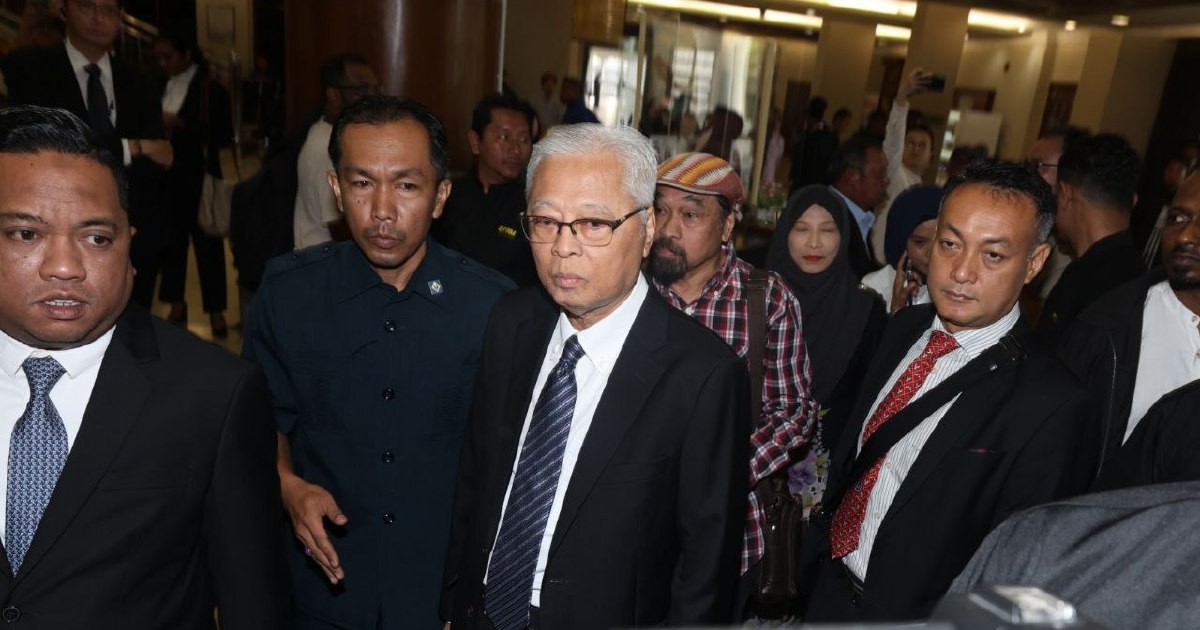
Datuk Seri Ismail Sabri Yaakob, who served as Malaysia's prime minister until August 2022, made an appearance at the Sessions Court in Kuala Lumpur on Tuesday to respond to allegations involving asset disclosure violations. The former Bera Member of Parliament was expected to be formally charged with neglecting his statutory obligation to declare his assets, marking another significant legal development for a senior political figure in recent months.
The asset declaration requirement has long been a cornerstone of Malaysia's framework for political accountability and transparency. The law mandates that public office holders submit comprehensive documentation of their financial holdings and real estate to the relevant authorities, a mechanism designed to prevent conflicts of interest and maintain public confidence in governance. Failure to comply with these requirements can result in serious criminal charges, reflecting the seriousness with which authorities treat such breaches.
Ismail Sabri's tenure as premier, which lasted approximately twenty months, was marked by considerable political turbulence. His administration took office in August 2021 following the collapse of the Perikatan Nasional government, ultimately giving way to the Pakatan Harapan-led administration under Anwar Ibrahim. Throughout his time in office and since his departure from the top post, the former premier has maintained a relatively public profile within UMNO, his parent political party.
The charge against him represents part of a broader pattern of legal scrutiny facing Malaysia's political establishment. In recent years, Malaysian courts have seen an uptick in high-profile cases involving senior politicians and prominent business figures accused of failing to meet transparency obligations. These prosecutions reflect either heightened enforcement efforts by authorities or genuine gaps in compliance that had previously gone unaddressed—or possibly both.
For Malaysian observers of political accountability, the case underscores persistent questions about the enforcement consistency of asset declaration laws. While regulatory frameworks exist in many democracies, effective implementation often remains uneven. The fact that a former prime minister is being prosecuted suggests either that oversight mechanisms have strengthened substantially or that such violations had previously escaped serious consequences. Understanding which explanation applies carries important implications for the credibility of Malaysia's anti-corruption apparatus.
The Sessions Court proceedings carry particular weight given Ismail Sabri's status as a recent holder of the nation's highest executive office. The optics of a former premier facing criminal charges in an open court setting are substantial, both domestically and regionally. Such cases inevitably draw international attention regarding Malaysia's commitment to rule of law and equal application of legal standards regardless of political standing.
Malaysia's legal framework governing asset declaration derives from longstanding anti-corruption statutes that have evolved over decades. The specific charge against Ismail Sabri likely falls under provisions that criminalize the willful failure to submit required financial disclosures within prescribed timeframes. Prosecutors will bear the responsibility of establishing that the former premier either knowingly neglected to file necessary documentation or acted with gross negligence in doing so.
The implications of this case extend beyond individual culpability to questions about how Malaysia's political system manages accountability at its highest levels. For ordinary Malaysian citizens subject to various compliance requirements in their professional capacities, the prosecution of political leaders for similar violations carries symbolic importance regarding equal justice under law. However, skeptics often note that high-profile prosecutions sometimes mask selective enforcement patterns favoring certain political factions over others.
Within the broader Southeast Asian context, Malaysia's approach to prosecuting former government officials compares instructively with neighboring nations. Thailand has seen military-backed governments pursue former democratically-elected leaders through courts. Singapore maintains strict enforcement of financial disclosure requirements across its civil service. Indonesia's Corruption Eradication Commission has pursued former presidents and senior officials. Malaysia's evolving framework for political accountability thus occupies an interesting position within regional trends.
The court proceedings initiated against Ismail Sabri will unfold over coming weeks and months, with potential appeals likely regardless of the trial outcome. The case will test not only the robustness of Malaysia's asset declaration enforcement mechanisms but also the willingness of courts to impose meaningful penalties on political figures from the nation's establishment. For observers tracking the health of Malaysian democracy and institutional integrity, this case represents a barometer of institutional independence and commitment to transparent governance standards that apply equally across society's power hierarchies.

