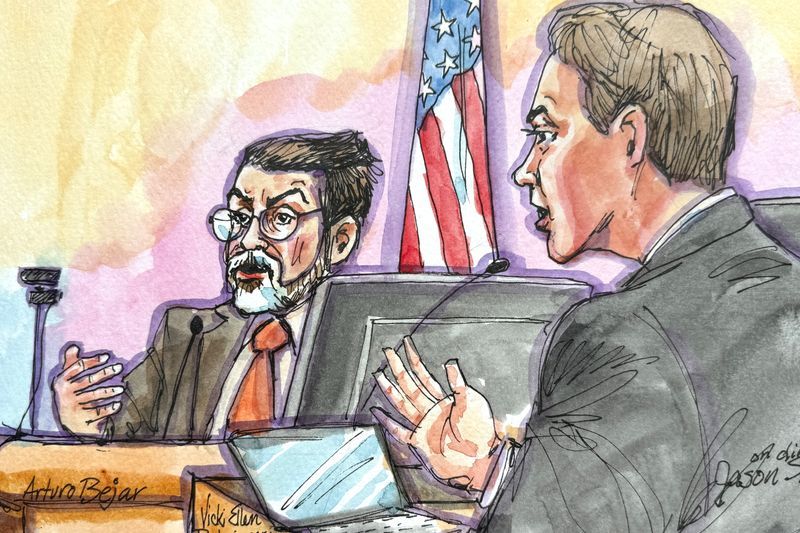
A former Facebook engineering director who spent years documenting internal research into how Meta's platforms harm young users returned to the witness stand on Wednesday to continue testimony in what legal experts call the most significant test yet of social media's effects on youth. Arturo Bejar, who held positions at Meta between 2009 and 2015, and later as an independent contractor from 2019 to 2021, is providing the opening witness testimony in a trial that could force substantial changes to how Facebook and Instagram operate in the United States.
The case, being heard in federal court in Oakland, California, involves a coalition of states—California, Colorado, Kentucky, and New Jersey—that allege Meta deliberately engineered its platforms to create dependency among younger users, concealed known safety dangers from the public, and unlawfully gathered personal information from children under 13. An additional 29 states have joined the litigation on the separate grounds that Meta violated federal law protecting children's data privacy. The entire proceeding is expected to extend through a six-week trial schedule, with opening arguments completed before Bejar took the stand on Tuesday.
During his initial testimony, Bejar painted a detailed picture of Meta's internal monitoring systems, describing how the company's surveillance apparatus was fundamentally flawed in its design and operation. Rather than measuring the actual damage experienced by young people using the platforms, he explained that Meta focused primarily on identifying content that breached company policy—a distinction that carries significant implications for understanding the harm discussion. Bejar drew particular attention to surveys he had helped conduct between 2019 and 2021 while researching teenager well-being on Instagram, research that consistently revealed troubling patterns that he said should have alarmed company leadership.
In a crucial moment during his testimony, Bejar recounted an email he had written directly to Meta's chief product officer Chris Cox, in which he documented a stark disparity between the company's public reporting on policy violations and the actual experience of harm reported by young users themselves. According to Bejar's account, the data showed teenagers were encountering dangerous or distressing content at extraordinarily elevated rates, a reality he emphasized that parents would certainly want to understand when their children were using these services. His decision to escalate concerns directly to senior leadership underscores the extent to which critical safety information existed within Meta's offices during the period in question.
Meta has categorically denied all allegations brought by the states, insisting that it maintains robust protections for teenage users and that its policies demonstrate genuine commitment to youth safety. The company's legal team has sought to challenge Bejar's credibility and relevance, arguing that his opinions extend beyond what he directly experienced during his tenure and work on specific projects. The defence also mounted an aggressive effort to prevent Bejar from testifying at all, claiming that he destroyed relevant evidence by deleting communications with former colleagues on the encrypted messaging application Signal. However, U.S. District Judge Yvonne Gonzalez Rogers rejected this attempt, dismissing it as an unlikely tactical manoeuvre designed primarily to eliminate a crucial witness from the proceedings.
Bejar's prominence in this litigation stems from his consistent and public criticism of Meta's approach to child safety, a position he has maintained since leaving the company. In 2023, he appeared before a U.S. Senate committee where he testified that Facebook and Instagram's parent company possessed substantial knowledge of harassment, bullying, and other harms inflicted on teenagers through its platforms, yet failed to implement meaningful remedial measures. His willingness to speak publicly about internal company dynamics and decision-making processes has made him an invaluable asset to prosecutors building their case against Meta, and his technical background gives his testimony particular weight with judges and potentially with juries.
The stakes for Meta in this trial extend well beyond the immediate legal outcome in Oakland. The company currently faces thousands of similar lawsuits alleging harm to children, and Bejar has previously served as a key witness in three cases that have proceeded to trial. One particularly significant outcome occurred in a New Mexico case where a court imposed $942 million in damages and penalties against Meta, along with mandatory changes to how the company operates its platforms within that state. These precedents suggest that a loss in the Oakland trial could trigger a cascade of unfavourable judgments in subsequent litigation, potentially forcing Meta to restructure fundamental aspects of how Instagram and Facebook function, particularly regarding features that appeal to younger demographics.
For Malaysian readers and Southeast Asian observers, this trial holds particular relevance given the region's massive youth population and the dominant role Meta platforms play in regional digital life. If US courts establish that Meta deliberately designed addictive features and concealed harms, regulatory pressure could mount on Southeast Asian governments to impose similar restrictions or oversight mechanisms. Countries throughout Asia have already begun scrutinizing social media regulation, and American court findings carry considerable weight in shaping international policy discussions. The trial outcome may influence how regional regulators approach platform accountability and youth protection standards in coming years.
The testimony marks a critical juncture in the broader reckoning with how technology companies design and deploy social media services for younger audiences. Bejar's role as both insider and whistleblower underscores ongoing tensions between corporate growth imperatives and acknowledged safety risks. His detailed accounts of internal research, combined with documentary evidence like his email to company leadership, provide prosecutors with a narrative framework that emphasises not merely negligence but deliberate choice—the allegation that Meta knew of harms and proceeded anyway. Such a finding, if proven to a jury's satisfaction, carries potential consequences far beyond financial penalties.
As the trial progresses through the coming weeks, Bejar's testimony will likely be dissected extensively by Meta's defence team, who will attempt to cast doubt on his interpretation of data, his motives, and the completeness of his understanding of company decision-making processes. Nevertheless, his return to the stand Wednesday signals that his account remains central to the states' strategy. The former engineer's willingness to detail internal research and challenge corporate narratives about safety represents precisely the kind of insider testimony that regulatory bodies and courts rely upon when evaluating whether technology companies have fulfilled their obligations to vulnerable users.

