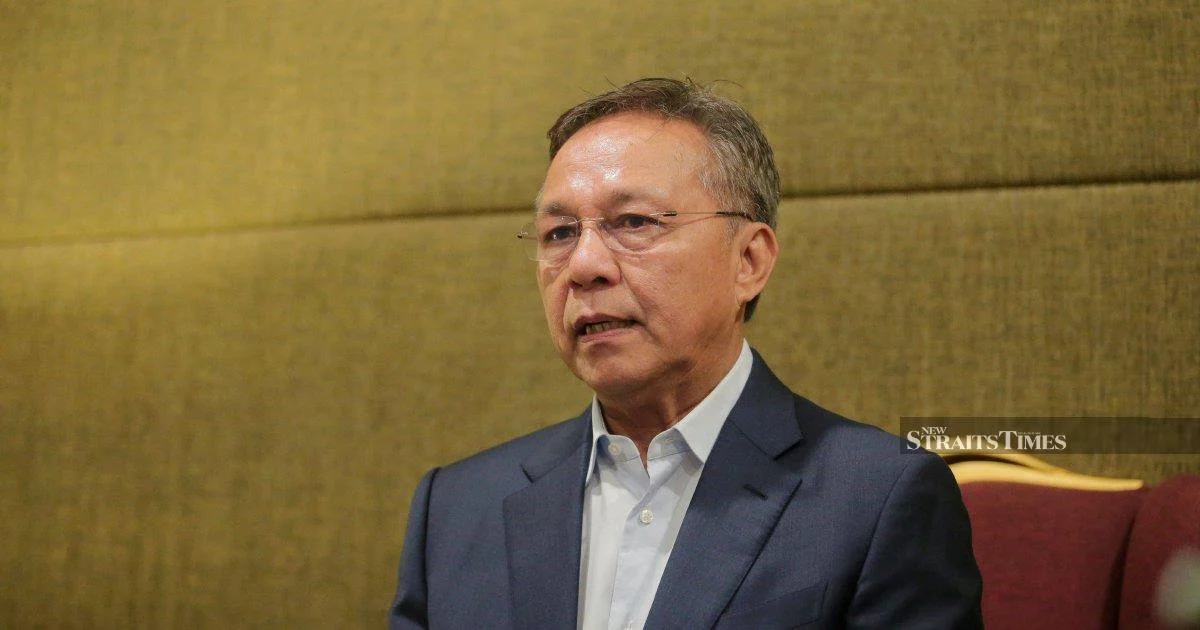
Datuk Seri Hasni Mohammad, who previously held the position of menteri besar in Johor, has been notably absent from the Barisan Nasional candidate roster for the upcoming state election, according to officials in Johor Baru. The omission of the senior figure from the coalition's state-level lineup has sparked considerable conjecture among political analysts and observers, with many pointing toward the possibility that he may redirect his electoral ambitions toward a parliamentary seat in the forthcoming general election cycle.
The decision to exclude Hasni from the state ballot represents a significant shift in coalition strategy and raises questions about the trajectory of his political career. His absence from the state candidate list breaks with the conventional path typically followed by senior UMNO figures and seasoned politicians in Johor, where state elections have traditionally served as springboards for securing positions of considerable influence. This departure from established patterns has triggered intense speculation in political circles about whether Hasni has chosen to pursue higher office at the federal level rather than consolidate his standing through state legislative representation.
Barisan Nasional's candidate selection process in Johor has been closely watched by political observers across Malaysia, particularly given the coalition's renewed focus on strengthening its foothold in the state following recent electoral fluctuations. The removal of a figure of Hasni's stature and experience from the state candidate list signals potential internal deliberations about resource allocation and strategic positioning. Such decisions are rarely made in isolation and typically reflect broader calculations about where senior party figures can generate maximum electoral advantage for the coalition.
Hasni Mohammad's political profile carries considerable weight in Johor's political establishment. As a former menteri besar, he commanded substantial administrative experience and developed deep networks across state institutions and party structures. His exclusion from state-level contests therefore carries symbolic weight beyond mere candidate selection, suggesting a recalibration of his role within the coalition's broader electoral strategy. Political observers have noted that the timing of such decisions often corresponds with deliberations about parliamentary representation and the distribution of high-profile candidacies across federal constituencies.
The parliamentary elections in Malaysia have historically attracted senior figures seeking to consolidate or elevate their political standing. Unlike state assembly seats, parliamentary positions offer platforms for national prominence and potential roles in federal government structures. For experienced politicians like Hasni, a transition toward federal politics could represent either a calculated advancement or, alternatively, a repositioning if state-level prospects have become less favourable. The dynamics of such political movements are closely calibrated and reflect assessments of electoral viability across different constituencies and institutional levels.
Johor's political landscape has undergone notable transformations in recent electoral cycles, with shifting voter preferences and changing coalition dynamics creating both opportunities and challenges for established figures. The state remains pivotal to national coalition performance, and decisions regarding its candidate selection receive heightened attention from party leadership at both state and federal levels. How Hasni Mohammad chooses to navigate his political future will likely influence perceptions of his trajectory and provide insights into broader coalition strategies for the coming election cycle.
The exclusion also reflects broader questions about leadership continuity and generational transitions within UMNO and Barisan Nasional structures. Political succession planning in Malaysian politics involves intricate calculations about timing, viability, and the strategic positioning of senior figures across different electoral contests. The decision to remove Hasni from the state slate may indicate that party strategists have identified other priorities for the state election while potentially reserving his candidacy for constituencies where his profile and experience might deliver greater strategic advantage.
Political analysts in Malaysia have increasingly recognised that candidate selection decisions carry implications extending beyond immediate electoral calculations. Such moves often signal internal party assessments about political momentum, resource concentration, and the perceived electoral environment across different constituencies. For Johor specifically, the decisions made regarding high-profile figures like Hasni Mohammad will influence the coalition's overall competitive positioning in a state that remains crucial to federal government formation.
The coming weeks will likely clarify Hasni Mohammad's electoral intentions and the coalition's broader strategy for the state and parliamentary contests. Whether he pursues a parliamentary candidacy, accepts a different party role, or steps back from electoral politics will provide important indicators about coalition confidence levels and the types of electoral battles considered most winnable by party strategists. Until official candidate announcements are made, political observers will continue analysing the implications of his exclusion from the state slate and what it reveals about the coalition's strategic calculations for this crucial electoral cycle.
For Malaysian voters and political observers more broadly, such candidate selection decisions offer windows into the internal dynamics and strategic thinking of major political coalitions. The question of where senior figures like Datuk Seri Hasni Mohammad will ultimately stand carries relevance not merely for Johor's state politics but for the broader competitive landscape of Malaysian elections. How the coalition deploys its experienced figures across different levels of electoral competition will help determine its overall performance and the trajectory of Malaysian politics in the period ahead.