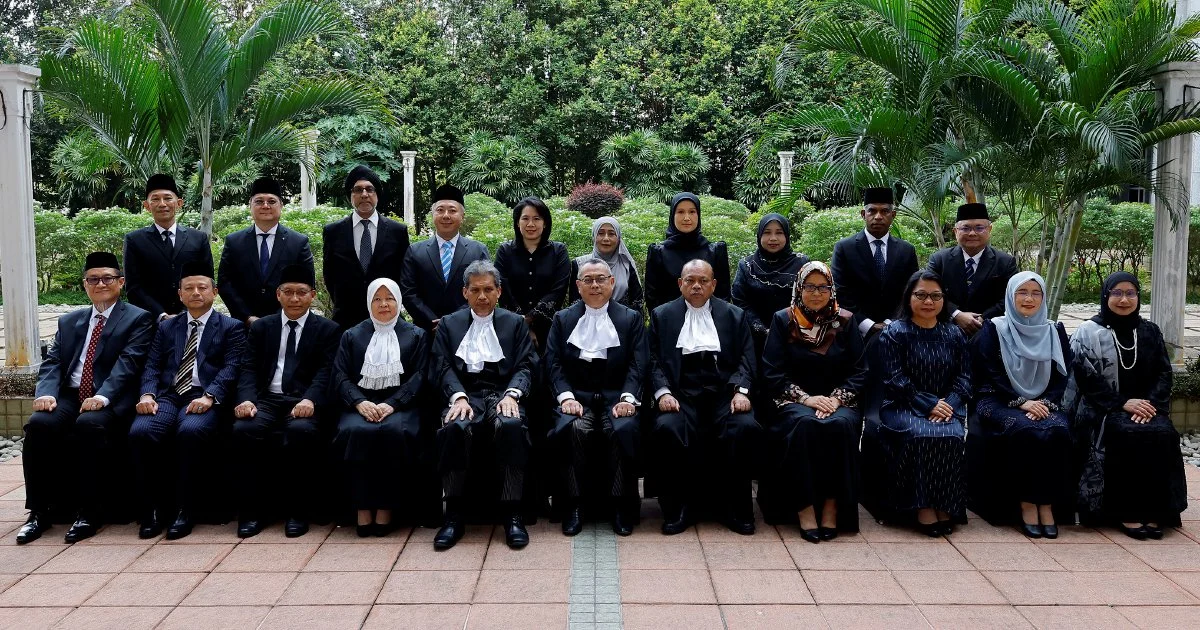
Malaysia has taken a significant step in strengthening its judicial system by appointing 17 judicial commissioners in a fresh round of bench selections announced in Putrajaya. The appointees represent a cross-section of legal professionals and seasoned judicial officers, with one notable nomination drawing public attention: the daughter of a former Court of Appeal president, marking a continuation of judicial service excellence across generations within the legal community.
Judicial commissioners serve a critical function within Malaysia's higher court system, effectively preparing accomplished legal practitioners and serving officers for full judicial positions on the High Court bench. These appointments underscore the judiciary's commitment to identifying and nurturing talent from both the practising bar and internal administrative ranks. The diversity of backgrounds among the 17 appointees reflects the broader strategy of drawing expertise from multiple segments of the legal profession.
The appointment of the former Court of Appeal president's daughter carries particular symbolic weight in Malaysian judicial circles. Her selection through what is presumably a competitive merit-based process demonstrates that family legacy in the judiciary must be accompanied by demonstrated capability and professional standing. Her elevation represents both a personal achievement and a continuation of the family's contribution to Malaysia's legal and judicial framework over multiple decades.
The judicial commission system in Malaysia serves as an intermediary step between practising law and permanent judicial appointment. Commissioners typically handle cases from the High Court registry and gain substantial bench experience before potential elevation to formal judge status. This pathway allows the judiciary to assess temperament, competence, and judicial philosophy in practical settings before making permanent appointments, thereby ensuring quality and consistency in the adjudication system.
The composition of this appointment round provides insight into current gaps and priorities within Malaysia's judicial workforce. The mix of external lawyers and internal legal service officers suggests the Judicial Appointments Commission is pursuing a balanced recruitment strategy that preserves institutional knowledge while introducing fresh perspectives from private practice. Such equilibrium helps maintain judicial independence while ensuring courts remain responsive to evolving legal challenges.
For Malaysian practitioners and aspiring judges, the appointment round signals that pathways to judicial service remain open across multiple professional trajectories. Young lawyers considering whether to remain in private practice or transition to public service can take note that the judiciary continues to recognise and recruit from both sectors. The inclusion of legal service officers alongside practitioners emphasizes that sustained administrative and legal service within government institutions also provides valuable preparation for judicial responsibility.
The timing and scale of these appointments reflect broader structural demands on Malaysia's court system. With case backlogs and complex litigation increasing, particularly in commercial, constitutional, and administrative law, the judiciary requires a steady pipeline of qualified commissioners and judges to manage its docket effectively. By appointing 17 commissioners in a single tranche, the Judicial Appointments Commission demonstrates intention to address capacity constraints relatively urgently.
From a regional perspective, Malaysia's approach to judicial recruitment through merit-based selection processes and structured commissioner positions contrasts with some neighbouring jurisdictions and sets a standard within Southeast Asia. The system's emphasis on transparent criteria and professional qualification helps maintain confidence in judicial independence, a foundation essential for economic investment, rule of law, and public trust in the legal system.
The elevation of these 17 individuals also reflects confidence in Malaysia's legal profession more broadly. The fact that sufficient qualified candidates emerged to fill these positions suggests the legal education system continues producing competent graduates and that practising standards remain robust enough to yield appointees of appropriate calibre. This confidence in homegrown legal talent supports Malaysia's positioning as a regional legal and commercial hub.
For stakeholders in Malaysia's business, civil society, and legal communities, these appointments carry practical implications. The addition of experienced commissioners to the judicial roster should eventually reduce case resolution timelines, improve access to justice, and ensure substantive cases receive adequate judicial attention. Commercial parties in particular benefit from expanded judicial capacity, as swift and competent adjudication of complex transactions and disputes supports economic confidence.
Looking forward, the significance of this appointment round extends beyond the immediate numbers. It establishes precedent and practice for how Malaysia identifies and develops its next generation of judges during a period when the judiciary faces mounting complexity in constitutional matters, technology law, digital crimes, and international commercial disputes. The commissioners appointed today represent not just current capacity but institutional bench strength for years to come.
The appointment of 17 judicial commissioners, prominent among them the daughter of a former Court of Appeal president, demonstrates Malaysia's systematic approach to judicial succession planning and merit-based advancement. These selections reinforce the principle that judicial service transcends family connection and professional background, requiring instead demonstrated competence, integrity, and commitment to adjudication. As Malaysia navigates an increasingly complex legal and commercial landscape, the strength and competence of its judicial cohort—drawn from both inherited commitment to law and individual professional achievement—will remain essential to national development and regional leadership.

