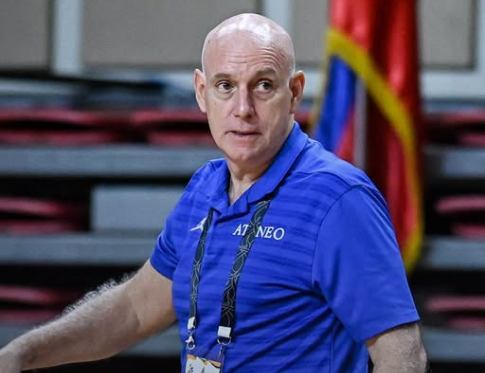
Authorities in the Philippines have recommended criminal charges against former Ateneo de Manila University men's basketball head coach Thomas Anthony 'Tab' Baldwin and ten other team personnel for violating the country's Anti-Hazing Act. The recommendation follows an investigation into the deaths of two players, Rene Baterbonia and Divine Adili, who drowned during a team training activity at Dipaculao in Aurora province on June 8. The incident has sparked fresh scrutiny of how Philippine sports organizations manage athlete welfare and the boundaries between legitimate team-building and dangerous hazing practices.
The full slate of individuals facing charges includes strength and conditioning coaches Grant Dearns and Ceasar Vicent Javellana Elumba, three assistant coaches—Dean Caesar B. Castaño, Sandro Nicholas Romero Soriano, and Reynaldo Jacinto—as well as two student managers, Paolo Manuel Maceda Adevoso and Andrew Lorenzo Bondoc Salud. Also named are physical therapist John Eric Quiambao Rueca and two utility personnel, Aris Ramos Pronce and Joel Palmiano Rapa. Officials noted that all eleven individuals were present during the beach activity and took part in or witnessed events that authorities determined constituted hazing under Republic Act No. 11053.
Government investigators have provided a detailed reconstruction of the day's events that paints a picture of escalating physical stress placed on the athletes. The players were roused before dawn and ordered to run a distance of four kilometres in the early morning hours. This endurance exercise was followed by intensely competitive physical games with penalties imposed on those deemed to have performed poorly. Such punishment-based games exemplify a pattern of conditioning that extended beyond conventional training methods into territory that prosecutors argue crossed into prohibited hazing territory.
The timing of the seawater activity proved particularly significant to the investigation's conclusions. Officials report that the swimmers were sent into the ocean between 2 and 2.30 in the afternoon, a window that coincided almost precisely with the peak high tide at 2.27pm. This confluence of circumstances placed the young athletes in hazardous open-water conditions characterized by powerful rip currents, forceful waves, and an unpredictable seabed. Investigators emphasized that these environmental factors, combined with the accumulated physical fatigue from the day's earlier exertions, created a dangerous scenario that any reasonable observer should have recognized.
The prosecution's legal theory hinges on reinterpreting what constitutes hazing under the 2018 Anti-Hazing Act. Rather than limiting the definition to traditional initiation rituals, authorities argue that the statute encompasses any activity that subjects individuals to physical or psychological harm as part of membership requirements or selection criteria. In this interpretation, the Aurora training camp qualifies because it functioned as a de facto filtering mechanism to determine which twenty athletes present would make it onto the seventeen-person roster submitted by Baldwin to the University Athletics Association of the Philippines for the official league season. The activity was ostensibly a team-building exercise but functionally served to winnow the player pool.
Government prosecutors stressed that none of the three persons in authority—Baldwin, Dearns, or any assistant coach—intervened to halt or question the increasingly demanding physical regimen. No one mentioned safety concerns, no one reduced the intensity of activities, and no one adjusted the timing despite knowledge of dangerous tidal conditions. This passivity in the face of mounting risk forms a crucial element of the criminal culpability argument. The failure to act when in a position of responsibility can constitute accountability under hazing statutes, regardless of whether any individual directly inflicted the harm.
Baldwin previously issued a video apology lasting nearly nine minutes in which he expressed remorse for the deaths of Baterbonia and Adili. The statement appeared on Ateneo's official social media accounts and represented his public acknowledgment of responsibility, though authorities proceeded with their investigation independently of any expressions of regret. The case highlights the tension between institutional accountability and individual remorse in cases where deaths result from organizational culture and systemic failures rather than discrete criminal acts.
The absence of external weights or restraints found on the victims' bodies when recovered by search teams initially fueled speculation about the precise cause of death. However, this finding does not substantially alter prosecutors' theories. The accumulation of physical exhaustion combined with natural water hazards proved sufficient to overwhelm both swimmers. Autopsy results and witness accounts supported the conclusion that both drowned as a result of the dangerous conditions in which they had been placed after hours of demanding physical activity.
This case carries significance across Southeast Asia, particularly for nations with similar university athletic cultures where the line between rigorous training and dangerous abuse remains contested. Philippine sports organizations and educational institutions now face renewed pressure to establish clear protocols distinguishing between legitimate conditioning and prohibited hazing. The investigation effectively broadened the legal definition of hazing to encompass any mandatory physical ordeal that causes harm, whether or not it involves traditional fraternity-style rituals. Universities and athletic programs across the region must grapple with new expectations regarding coach accountability and duty of care toward student-athletes.
The Department of Justice will now conduct its own evaluation and preliminary investigation before making a final determination on whether to proceed with formal charges. However, the PNP CIDG's recommendation carries substantial evidentiary weight and signals the direction prosecution will likely take. For Malaysian sports administrators and university athletic departments observing this case, the message is clear: contemporary anti-hazing law interprets athlete safety expansively, and institutional cultures that implicitly permit or tolerate dangerous training conditions can result in serious criminal liability for those in positions of authority.

