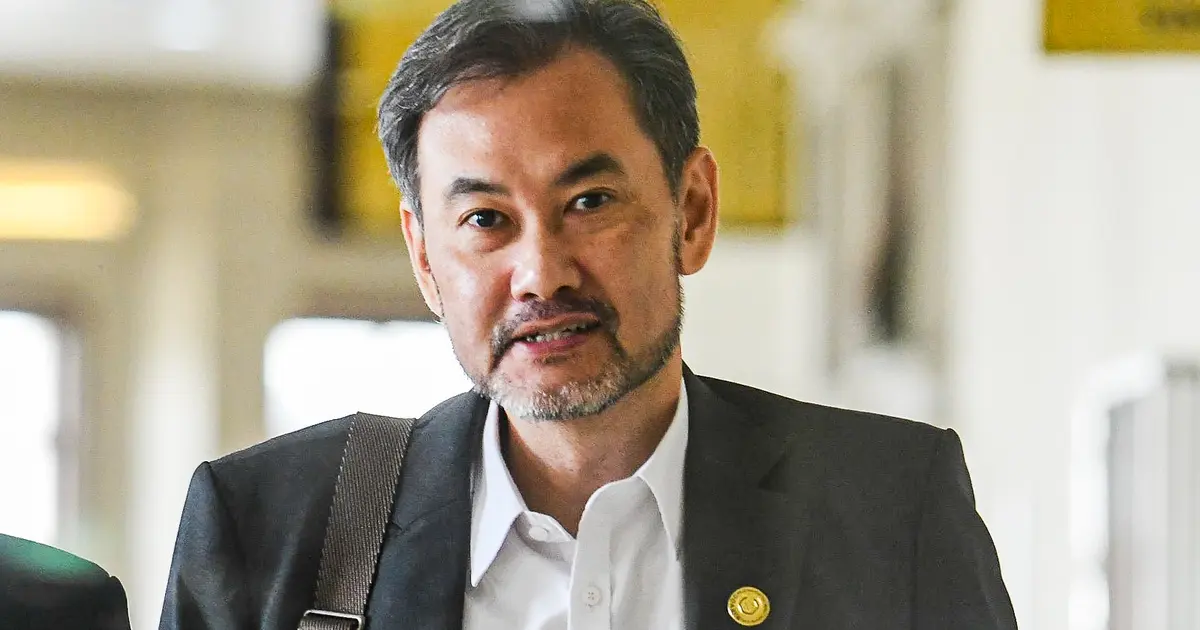
Shahrol Azral Ibrahim Halmi, who previously led 1Malaysia Development Berhad during the critical years of the fund's establishment and early operations, has firmly pushed back against allegations that he treated Low Taek Jho—the controversial Malaysian businessman at the centre of the global money-laundering scandal—with the kind of deference reserved for the nation's chief executive. The distinction marks a significant moment in the ongoing legal proceedings surrounding one of the world's most audacious financial fraud cases, as former officials attempt to reconstruct their roles within the complex hierarchies and power structures that governed the now-defunct sovereign wealth vehicle.
In his account to investigators and the court, Shahrol Azral explained that his engagement with the then Prime Minister Najib Razak relied fundamentally on informal channels rather than official governmental protocols. These less formal routes of communication, he maintained, frequently involved Jho Low as an intermediary or conduit—a practical arrangement born from the specific operational context of 1MDB's early years rather than evidence of extraordinary institutional authority vested in the businessman. This clarification addresses a critical element of prosecution narratives that have sought to establish the extent to which Jho Low exercised control or wielded influence over major decisions affecting the sovereign wealth fund's strategic direction and financial commitments.
The statement carries particular weight given Shahrol Azral's position as chief executive of 1MDB during formative periods when the fund's investment strategy, international partnerships, and financial structures were being determined. His testimony thus provides insight into how communications functioned within the upper echelons of Malaysia's most prominent financial institution in the early-to-mid 2010s. Understanding these communication patterns has proven essential for courts and investigators seeking to map the precise mechanics through which decisions were reached, approved, and implemented at 1MDB.
Jho Low's role in 1MDB operations has remained a subject of intense international scrutiny, generating investigations across multiple jurisdictions including the United States, Singapore, and Switzerland. The businessman, who has consistently denied wrongdoing, became emblematic of the scandal when investigations revealed that billions of dollars had been misappropriated from the fund through an intricate web of shell companies, forged documents, and falsified investment agreements. His ability to access high-level officials, secure approvals for major transactions, and influence strategic decisions became a focal point for prosecutors building their case against multiple defendants.
For Malaysian readers and policymakers, these procedural clarifications offer important context for understanding how institutional safeguards failed during the period when 1MDB was established and operated. The distinction between treating someone as possessing prime ministerial authority and using that individual as a communication channel reflects subtly different governance failures—one suggesting near-complete capture of institutional decision-making by a non-official actor, the other indicating breakdowns in formal protocols and accountability structures that allowed informal arrangements to substitute for proper administrative processes.
The nature of Shahrol Azral's communications with Najib Razak takes on added significance when examined against the backdrop of Malaysia's centralised political system and the considerable discretionary authority traditionally exercised by prime ministers over major state institutions. The reliance on informal channels rather than structured institutional processes meant that decisions affecting billions of ringgit in public resources could be made without the documentary trail, technical vetting, or internal consensus-building that formal government procedures typically ensure. This administrative informality, legal observers note, created environments where irregular transactions could proceed more readily than they might have under more rigorous institutional frameworks.
Jho Low's presence in these informal communication networks remains controversial precisely because it introduced a private actor without official position into decision-making channels affecting public assets. Even if Shahrol Azral's characterisation of their interaction is accurate—treating him as a messenger rather than a decision-maker—the arrangement itself raises questions about the governance philosophy that permitted such arrangements to develop in a state-owned institution managing sovereign wealth. The case has prompted subsequent Malaysian administrations to review and strengthen the institutional independence and procedural integrity of major public funds and development agencies.
The proceedings involving Shahrol Azral represent one thread in an expansive legal process that has taken years to unfold across continents. His testimony helps clarify the operational realities of 1MDB's management structure while simultaneously raising broader questions about institutional accountability, the appropriate role of informal decision-making in public finance, and the mechanisms through which non-governmental actors gained leverage over state resources. For Malaysia's financial and governance sectors, the case continues to serve as a cautionary examination of systemic vulnerabilities and the importance of robust administrative oversight.
The distinction Shahrol Azral draws between informal communication and improper delegation of authority may prove relevant to judges and juries evaluating criminal liability and institutional complicity in coming trials. His clarification that Jho Low functioned as an intermediary rather than as someone wielding prime ministerial prerogatives attempts to circumscribe the scope of alleged malfeasance while acknowledging that informal channels existed. Whether such technical distinctions ultimately carry legal weight remains uncertain, but they illustrate how former officials continue framing their involvement in the scandal's mechanics.

