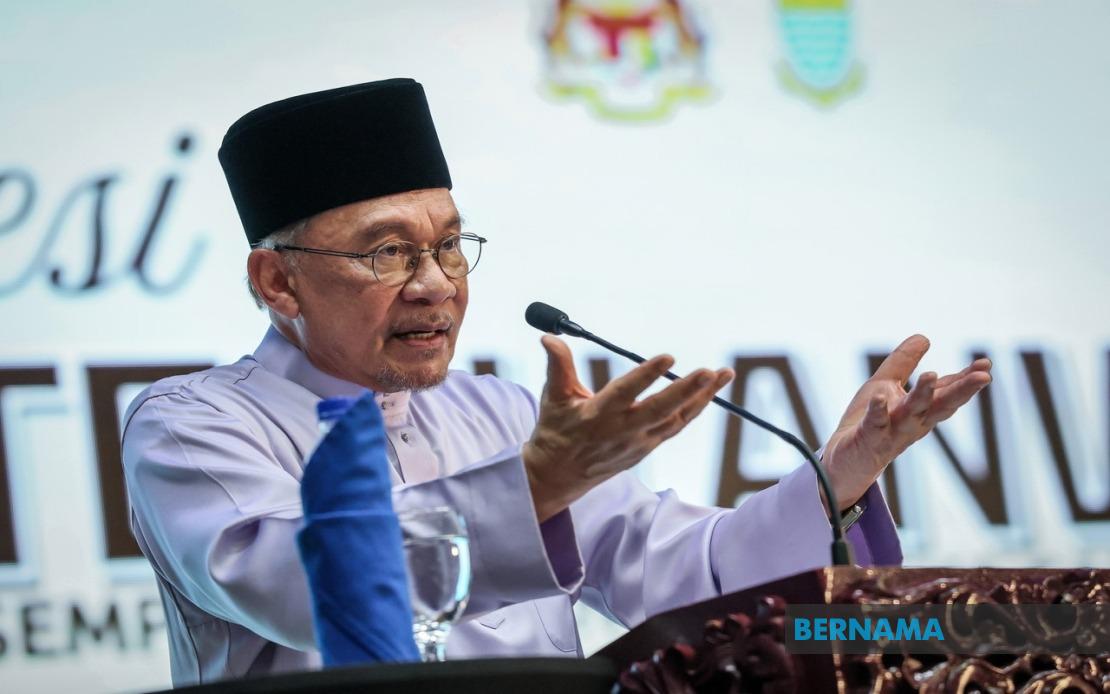
Prime Minister Datuk Seri Anwar Ibrahim has committed to allocating funds for Form Six student allowances in the 2027 Budget, which parliament will receive in October. The announcement was made during a town hall session at the Tuanku Bainun Teacher Education Institute in Bukit Mertajam, where Anwar, who also holds the portfolio of Finance Minister, outlined the government's intention to bridge a longstanding gap in educational support infrastructure.
The decision reflects recognition that Form Six students currently find themselves in an unusual position within Malaysia's education assistance framework. While primary and secondary students through Form Five receive state support, and university students benefit from various scholarship and allowance schemes, Form Six learners have been overlooked. This gap became particularly apparent during Anwar's recent engagements with pre-university students, who raised concerns about the disparity in treatment across education levels.
Education Minister Datuk Seri Fadhlina Sidek, present at the event, contextualised the initiative within a broader student-driven agenda. The allowance proposal emerged as one of twelve resolutions presented at the MADANI Pre-University Congress held in Klang earlier that morning. The ministry signalled receptiveness to all twelve recommendations and pledged to conduct detailed assessments of their feasibility and implementation pathways, indicating a collaborative approach to education policy development.
For Malaysian students and families, the pledge carries significant implications. Form Six represents a critical juncture in academic trajectories, serving as a preparatory stage for university entrance examinations and professional pathways. Many Form Six students face financial pressures as they balance intensive study requirements with limited employment opportunities. An allowance scheme would potentially ease household financial burdens and enable students from lower-income backgrounds to focus more completely on their studies without the distraction of seeking supplementary income.
The scope of the allocation remains undefined at this stage. Anwar deliberately avoided committing to specific figures, instead framing the quantum of support as contingent on government financial capacity closer to Budget tabling in October. This cautious stance reflects broader fiscal constraints and competing budgetary priorities, yet signals genuine commitment to finding resources for the initiative within the spending envelope available to the finance ministry.
The announcement arrives amid growing discourse about equity in education financing. Malaysia's education budget has historically concentrated support on foundational levels, with university assistance expanding significantly in recent years. The pre-university sector, comprising both Form Six students and those in private colleges pursuing equivalent qualifications, has remained comparatively neglected in terms of direct financial support. Addressing this gap aligns with government commitments to social mobility and inclusive economic participation.
The timing reflects political sensitivity to student concerns and youth engagement. By announcing the initiative through direct dialogue with pre-university students rather than formal parliamentary channels, the government emphasised responsiveness to grassroots input. This approach builds on the MADANI framework's emphasis on inclusive governance and demonstrates willingness to incorporate student voices into policy formulation, potentially strengthening institutional legitimacy among younger voters.
Regionally, Malaysia's initiative may influence peer nations grappling with similar education financing questions. Singapore and Thailand have implemented targeted allowances for secondary and tertiary students, while Indonesia has expanded scholarship coverage. Malaysia's move to include Form Six students positions the country as responsive to evolving educational needs, particularly as competitive regional economies increasingly emphasise human capital development.
The implementation mechanics remain to be determined, raising questions about eligibility criteria, payment mechanisms, and coordination between the Education Ministry and Finance Ministry. Previous allowance schemes in Malaysia have employed means-testing to target support toward lower-income households, though the announcement contained no specifics about whether similar targeting would apply. The detailed design process will likely involve consultations with education stakeholders and student representatives during the months preceding Budget 2027's presentation.
Beyond immediate financial impact, the allowance signals official recognition that Form Six deserves parity with other education levels within Malaysia's support architecture. This conceptual shift may catalyse subsequent policy developments addressing other aspects of pre-university student welfare, from accommodation support to examination subsidies. Student organisations and education advocacy groups will likely monitor implementation progress closely, making the delivery of this commitment essential to maintaining government credibility on education promises.
For policymakers across Southeast Asia observing Malaysian developments, this initiative underscores the political importance of comprehensive education financing that addresses demographic transitions and changing labour market demands. As economies compete for talent and countries seek to reduce educational inequality, direct student support at critical transition points like Form Six increasingly features in national development strategies. Malaysia's commitment demonstrates recognition that educational access extends beyond tuition fees to encompass living expenses and study prerequisites that disproportionately affect disadvantaged students.

