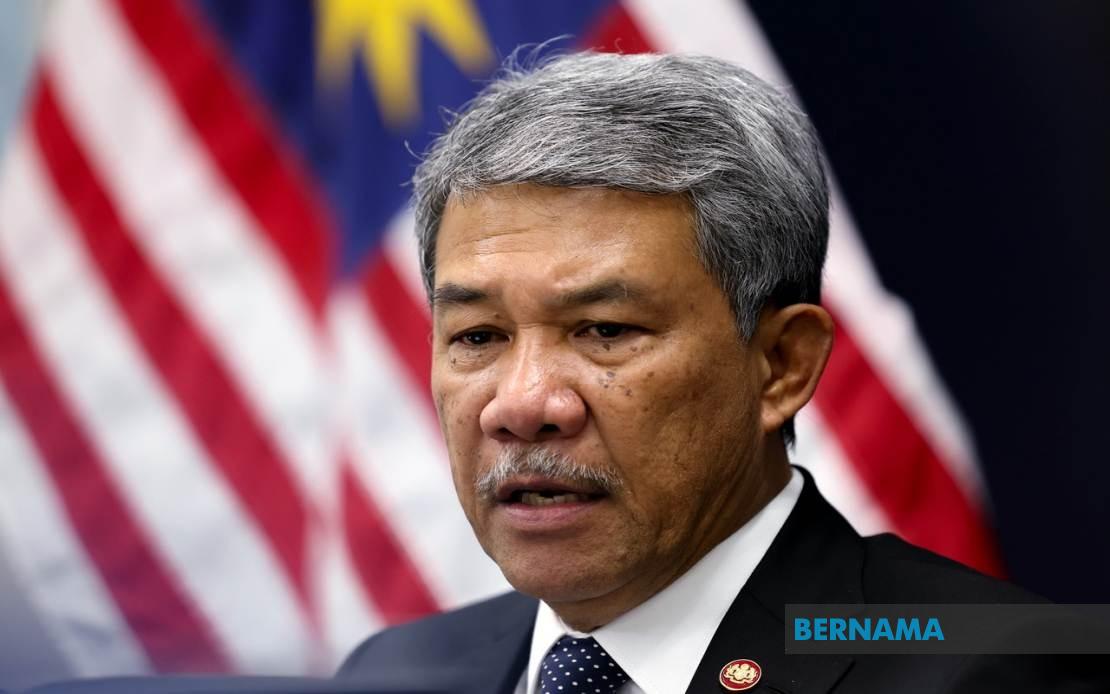
Malaysia's Foreign Minister Datuk Seri Mohamad Hasan touched down in Manila on July 20 to head the Malaysian delegation attending the 59th ASEAN Foreign Ministers' Meeting (AMM), a gathering expected to grapple with escalating regional and global tensions. Arriving at Ninoy Aquino International Airport at 4.15 pm local time, Mohamad was received by the Philippines' Department of Foreign Affairs Assistant Secretary and Chief of Protocol Ariel Rodelas Peñaranda, with Malaysian Ambassador to the Philippines Datuk Abdul Malik Melvin Castelino Anthony also in attendance.
The three-day meeting, running until Thursday under the Philippines' 2026 ASEAN Chairmanship with the theme "Navigating Our Future, Together," signals the bloc's intention to address mounting challenges across multiple fronts. Malaysia's participation as a major economic and diplomatic player within ASEAN underscores the nation's continued engagement in shaping regional consensus on pressing issues. The convergence of foreign ministers from across Southeast Asia provides a critical opportunity to coordinate responses to conflicts that directly impact the stability and prosperity of member states.
The ongoing humanitarian and political catastrophe in Myanmar will occupy significant portion of discussions, with foreign ministers expected to review the implementation status of the Five-Point Consensus (5PC). An extended informal consultation is scheduled to allow detailed examination of how well member states have adhered to the 5PC framework and whether recent developments have moved the needle towards resolving the conflict or deepened the crisis. The last ASEAN Leaders' Review and Decision on Myanmar provided new recommendations, and these meetings will assess their feasibility and effectiveness in addressing both the immediate humanitarian emergency and the underlying political crisis that has displaced hundreds of thousands and created a severe refugee burden for neighbouring nations including Malaysia.
Perhaps reflecting growing anxieties about the Israel-Gaza conflict and its regional implications, the West Asia situation is anticipated to take centre stage. For Malaysia, a nation with significant Muslim populations and deep historical ties to Palestinian causes, the discussions will be particularly consequential. The foreign ministers will need to navigate ASEAN's traditional non-interference doctrine while acknowledging the humanitarian catastrophe unfolding and the strategic implications for global order. How ASEAN crafts a unified position—or whether it splinters into competing viewpoints—will influence Malaysia's own diplomatic positioning and that of other regional players.
Modamad's participation in the ASEAN-AICHR interface meeting reflects intensifying focus on human rights implementation within ASEAN frameworks. Given the Myanmar crisis, which has involved documented atrocities and mass displacement, these discussions take on urgent significance. Malaysia's engagement with AICHR dialogue demonstrates commitment to regional norms around governance and accountability, though tensions often simmer between ASEAN's emphasis on non-interference and international human rights advocacy. Similarly, participation in the Southeast Asia Nuclear Weapon-Free Zone (SEANWFZ) Commission meeting addresses long-standing concerns about regional security architecture, particularly given great power competition and occasional calls for expanding nuclear arsenals among neighbouring non-ASEAN states.
The wider multilateral calendar reflects ASEAN's role as the central convening institution for broader Indo-Pacific diplomacy. The 27th ASEAN Plus Three Foreign Ministers' Meeting (APT FMM) brings China, Japan, and South Korea into dialogue with ASEAN, making it a critical venue for managing tensions in one of the world's most economically dynamic and strategically contested regions. The 33rd ASEAN Regional Forum (ARF) and 16th East Asia Summit Foreign Ministers' Meeting (EAS FMM) expand the diplomatic circle to include established powers like the United States, Russia, and India, creating both opportunities for constructive engagement and potential flashpoints if major powers use these forums to advance narrow national interests at ASEAN's expense.
Malaysia's special responsibility as the country coordinator for ASEAN-China Dialogue Relations for 2024-2027 adds particular weight to Mohamad's presence. His scheduled co-chairing of the ASEAN Post Ministerial Conference (PMC) with Chinese Foreign Minister Wang Yi on Wednesday positions Malaysia as a crucial diplomatic intermediary during a period of great power competition. Malaysia must balance its economic reliance on China with strategic partnerships with the United States and other Indo-Pacific powers—a perennial tightrope walk that diplomats navigate with varying degrees of success. The bilateral PMC with China will likely address South China Sea tensions, trade relationships, and broader strategic alignment concerns.
The extensive roster of ASEAN PMC meetings with Dialogue Partners—Australia, Canada, the European Union, India, Japan, New Zealand, the Republic of Korea, the Russian Federation, the United Kingdom, and the United States—demonstrates ASEAN's indispensability to global diplomacy. Each bilateral meeting represents an opportunity for Malaysia to advance specific national interests while contributing to ASEAN's collective position on major issues. These are not merely ceremonial exchanges but practical venues where specific disputes are raised, cooperation frameworks are negotiated, and alignments are tested.
The inclusion of the fifth Conference on Cooperation among East Asian Countries for Palestinian Development (CEAPAD) in Mohamad's itinerary reflects Malaysia's unwavering commitment to Palestinian causes and signals that this regional gathering will not shy away from the Middle East conflict. Whether this conference produces substantive commitments or remains largely symbolic will indicate the appetite among East Asian nations for deeper engagement with Palestinian development priorities. For Malaysia, a consistent supporter of Palestinian rights, the platform offers opportunity to demonstrate leadership on a cause deeply valued by its Muslim-majority population.
Bilateral meetings scheduled on the sidelines of these formal forums often prove as consequential as the main conference sessions. These private exchanges allow foreign ministers to address bilateral friction, negotiate specific agreements, and build personal relationships that facilitate smooth diplomatic relations. Mohamad's schedule will likely include meetings with counterparts from countries with whom Malaysia maintains complex relationships—particularly China, the United States, Vietnam, and potentially Indonesia—allowing opportunities to clarify positions and resolve misunderstandings outside the glare of multilateral scrutiny.
The broader significance of Malaysia's participation in this Manila gathering extends beyond immediate diplomatic engagement. These meetings shape the regional consensus that guides ASEAN decision-making on everything from economic integration to security cooperation. As ASEAN approaches critical decisions on China-related maritime disputes, the role of external powers in regional affairs, and responses to humanitarian crises, Malaysia's voice—informed by its unique position as a developed ASEAN member with significant ties to both East and West—carries considerable weight. The meetings will ultimately test whether ASEAN can maintain unity and centrality in an increasingly fractured global order, a challenge that will define regional stability for years to come.

